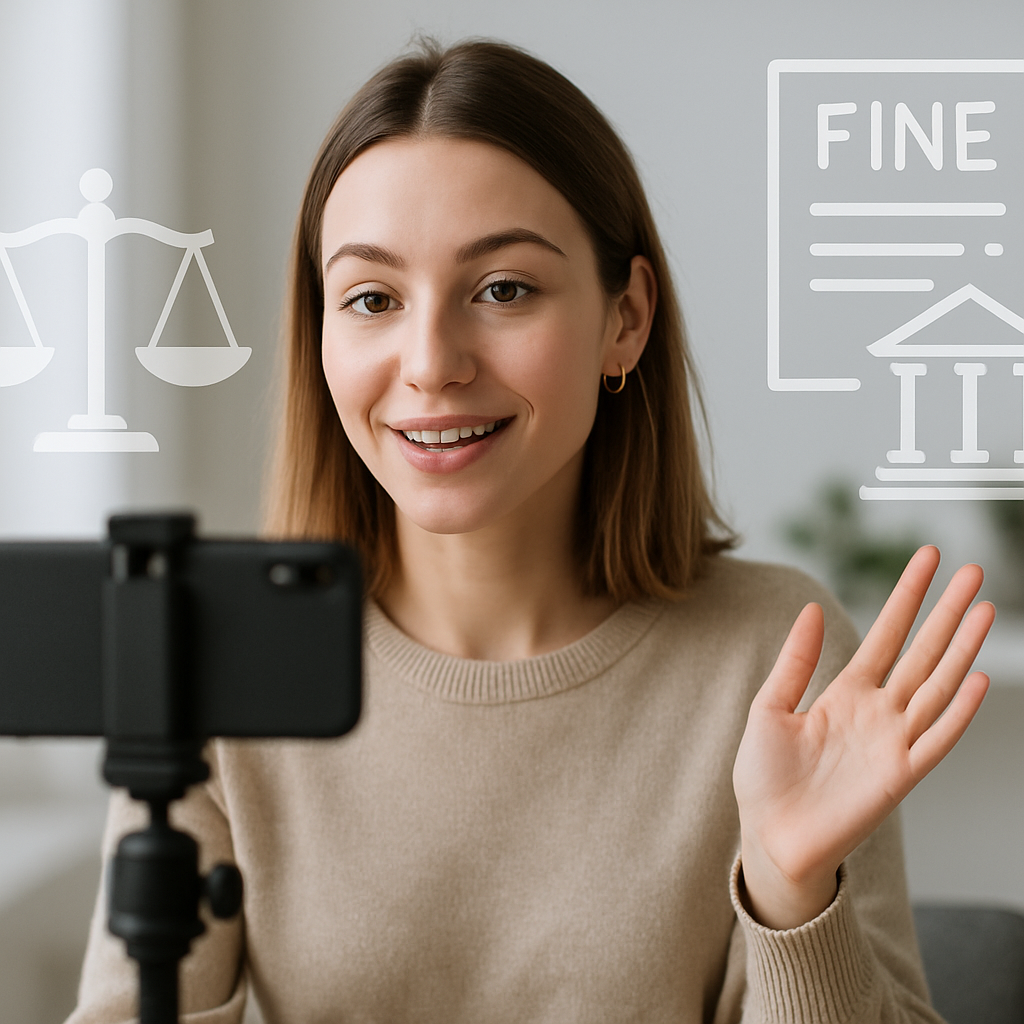
California has just upgraded its laws around political content by influencers—those social media figures who post about politics for pay—with meaningful new penalties for nondisclosure. Signed into law by Governor Gavin Newsom under Assembly Bill 1130, the measure imposes fines and possible criminal consequences for influencers who fail to clearly label content as paid political ads.
What’s Changed
Previously, California required influencers to disclose when they were promoting state or local races, but there was no enforcement mechanism beyond that. There were no fines, nor were there criminal penalties—so the rule often went unenforced. AB 1130 changes all that. Under the new statute, regulators may impose fines of up to $5,000 per violation, and in some cases refer matters to law enforcement for misdemeanor charges.
Why It Was Enacted
The push for stronger rules was energized by recent examples where political campaigns hired influencers who posted support without disclosing payment. A case in point: the campaign by billionaire Tom Steyer during the Democratic primary for California governor. Multiple influencers involved reportedly began posting paid material without the required disclosure. The law’s sponsor, Assemblyman Marc Berman, acknowledged that while the old rules existed, there was confusion about how, or whether, they would be enforced.
Political Context
Newsom signed AB 1130 as part of a broader legislative package intended to strengthen California’s resistance to election-related interference at a time when concerns about misinformation and foreign influence in campaigns are rising. The law aims to close loopholes that state and possibly national campaigns might exploit.
This change aligns California with a growing number of states, including Texas, which already require disclosure for paid political content on social media. Others are watching closely: this may be a model for handling political ads and influencer promotions nationwide.
While some may argue the new law raises free speech concerns, its core aim is transparency: to make clear when a viewer is being reached by an effort backed by political money. The risk for influencers who miss the disclosure is no longer just reputational—it now carries real legal stakes.
This matters because social platforms are an increasingly common battlefield for politics. Influencers often reach niche audiences with high engagement; the ability to hide paid messages threatens to undercut fair electoral processes. With AB 1130 in force, platforms, content creators, and campaigns will need to build better compliance practices with disclosures baked into content creation and contracts.