Our Next Energy (ONE), a U.S.-based battery developer, is taking the leap into public markets via a SPAC merger with Wen Acquisition Corp. The deal values the company at $600 million before the merger, with plans to raise $400 million in proceeds (assuming no redemptions), pushing its equity valuation post-merger to $1 billion. The combined entity is expected to begin trading on the Nasdaq under the ticker “ONEE.”
Founded by engineer Mujeeb Ijaz, a former executive at Ford and Apple, ONE built its reputation around an innovative dual-battery system designed for electric vehicles (EVs). It paired lithium iron phosphate (LFP) cells—known for durability and safety—with a more energy-dense, manganese-rich blend intended for long-distance travel. A prototype using this hybrid chemistry reportedly achieved more than 600 miles on a single charge.
Rough Waters and Strategic Reset
Despite early promise, ONE encountered turbulence. In late 2023, it struggled to secure its Series C funding amid slower-than-expected EV adoption and heavy competition from lower-cost providers abroad. The company laid off employees and abandoned its planned $1.6 billion Michigan factory. In a leadership shakeup, Ijaz was removed as CEO in December 2023 but returned in March 2025 with renewed focus and capital from his brother’s investment firm.
Under Ijaz’s leadership after returning, ONE shifted its emphasis away from automotive batteries toward grid-scale deployments and industrial applications. This pivot reflects broader trends in the U.S. where demand for energy storage—fueled by grid strain, data center expansion, and national security concerns—has surged. Far from abandoning EVs altogether, the company has deemphasized that segment due to tight margins and intense global competition.
Diversification: Grid, Defense, and Rail
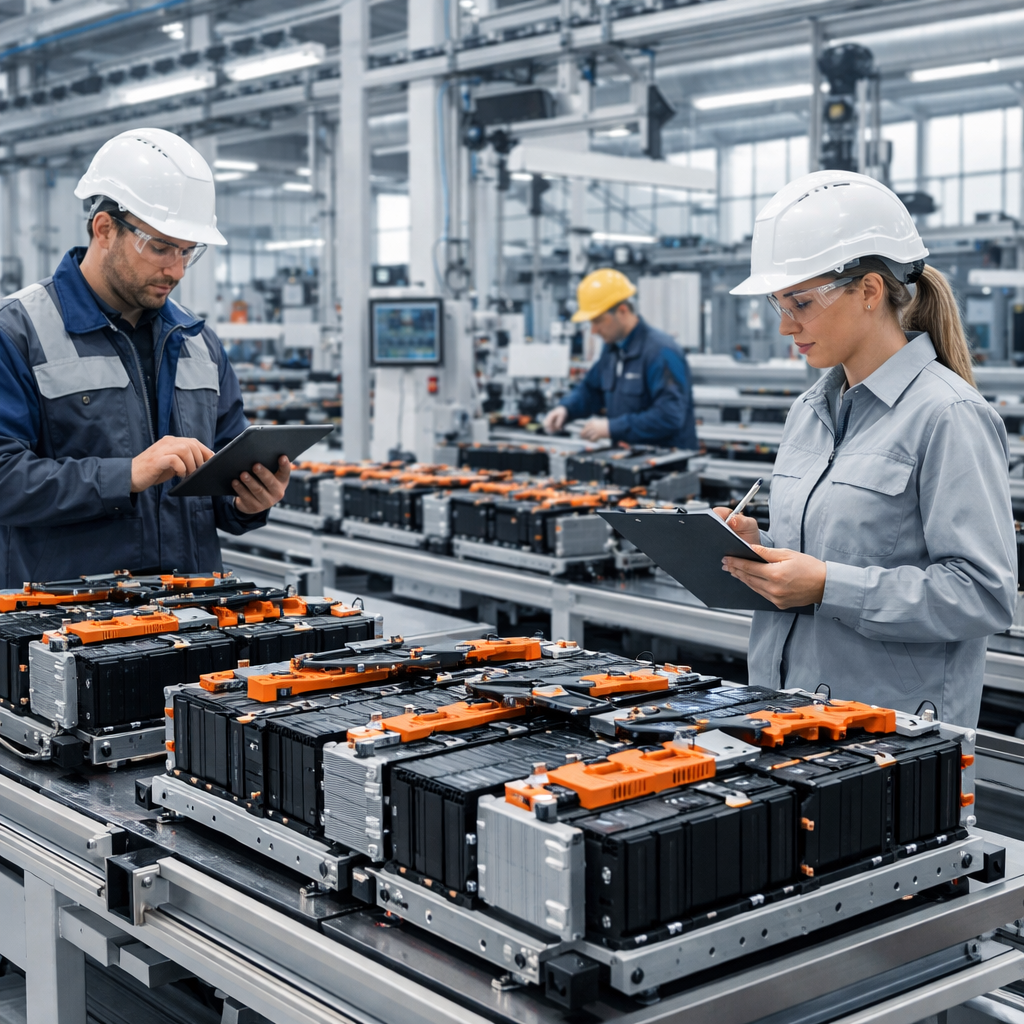
ONE now operates across three primary markets: grid storage, defense contracting, and rail. Its Novi, Michigan facility assembles battery packs at an annual capacity of 3 gigawatt-hours using both domestic and international cell suppliers, complemented by a smaller plant producing its own battery cells. That facility is being expanded to 50 megawatt-hours annually.
The rail sector presents a $28.2 billion opportunity, while defense—which includes markets like drones, submarines, and secure data centers—could amount to roughly $16.2 billion with a $4.1 billion slice assigned to defense data infrastructure. ONE has already locked in binding multi‐year contracts worth $200 million with customers in both sectors. Revenue is projected at $30 million this year, with expectations of doubling in 2027.
A key element of ONE’s strategy lies in U.S. government policies restricting procurement from “foreign entities of concern” (FEOC). These policies block Chinese-made batteries or those relying on Chinese-controlled supply chains, positioning ONE to win premium business domestically. This regulatory backdrop is increasingly pushing battery firms to localize manufacturing and supply chains.
Despite its past volatility—including steering between markets and changing leadership—ONE argues that it has now pared back its ambitions and sharpened its focus. Its success as a public company will depend not just on promising technology, but on consistent execution in grid, rail, and defense, all while navigating global competition and supply chain politics.
For this SPAC rollout, securing investor trust will be crucial. The public market will look closely at whether ONE can sustain growth, defend higher costs compared to global incumbents, and deliver on its contracts. If it can, the company may emerge as a rare battery developer that not only survives, but thrives in the U.S. scale-up environment.