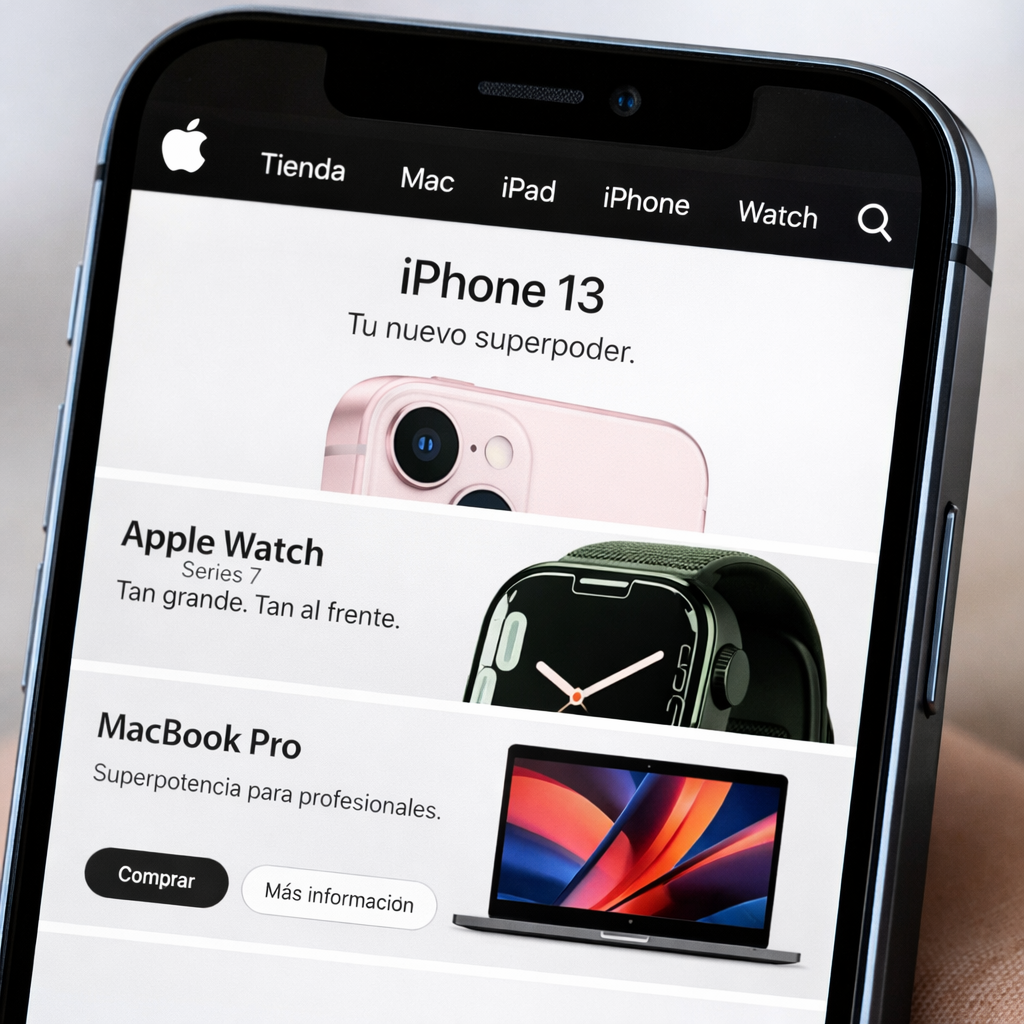
Apple has quietly rolled out Spanish-language browsing for its U.S. website for users who have their device language set to Spanish. Starting Monday, those users will see site content in Spanish—except for the online store, which remains exclusively in English. Apple Support materials, however, are available to provide assistance in Spanish.
What’s Changing and What Isn’t
The update affects general site content—product pages, company information, tech specs, support articles—but does not extend to the purchase experience. When it comes to buying products, pricing details, checkout pages, and related store features, everything continues to be presented only in English. It’s still perfectly possible to browse product features and details in Spanish, but the commercial side of Apple’s U.S. site doesn’t change with language settings.
For Spanish-speaking customers seeking help, Apple Support channels are equipped to assist in Spanish. Whether through documentation, help topics, or customer service options, those systems will offer support in the user’s preferred language.
Why This Matters Now
This move marks a step toward inclusivity for millions of Spanish-speaking consumers in the U.S. It’s part of broader industry trends toward localizing digital content for large linguistic communities. Spanish is the second-most spoken language in the country by a wide margin, and adapting website content for native speakers can enhance comprehension and engagement. However, leaving the store experience in English suggests Apple may still be managing technical, legal, or logistical challenges.
For context, Apple has long provided multilingual support internationally, with its sites tailored to local norms across many countries. But in the U.S., where English has traditionally dominated its online presence, offering parts of the experience in Spanish represents a shift.
It also raises questions about what’s next—whether we’ll see fully bilingual store functionality, payment processes adapted for Spanish interface, or regulatory pressures pushing toward more comprehensive localization.
Analytically, this change is meaningful not because it radically remakes Apple’s interface, but because it signals a recognition of linguistic diversity in its home market. Until the store also supports Spanish navigation and transactions, the experience remains partial. But this step may be a harbinger of deeper localization in U.S. tech platforms. Moving forward, observers should watch whether Apple will expand Spanish support in store features, UX consistency, and possibly other languages beyond just Spanish.