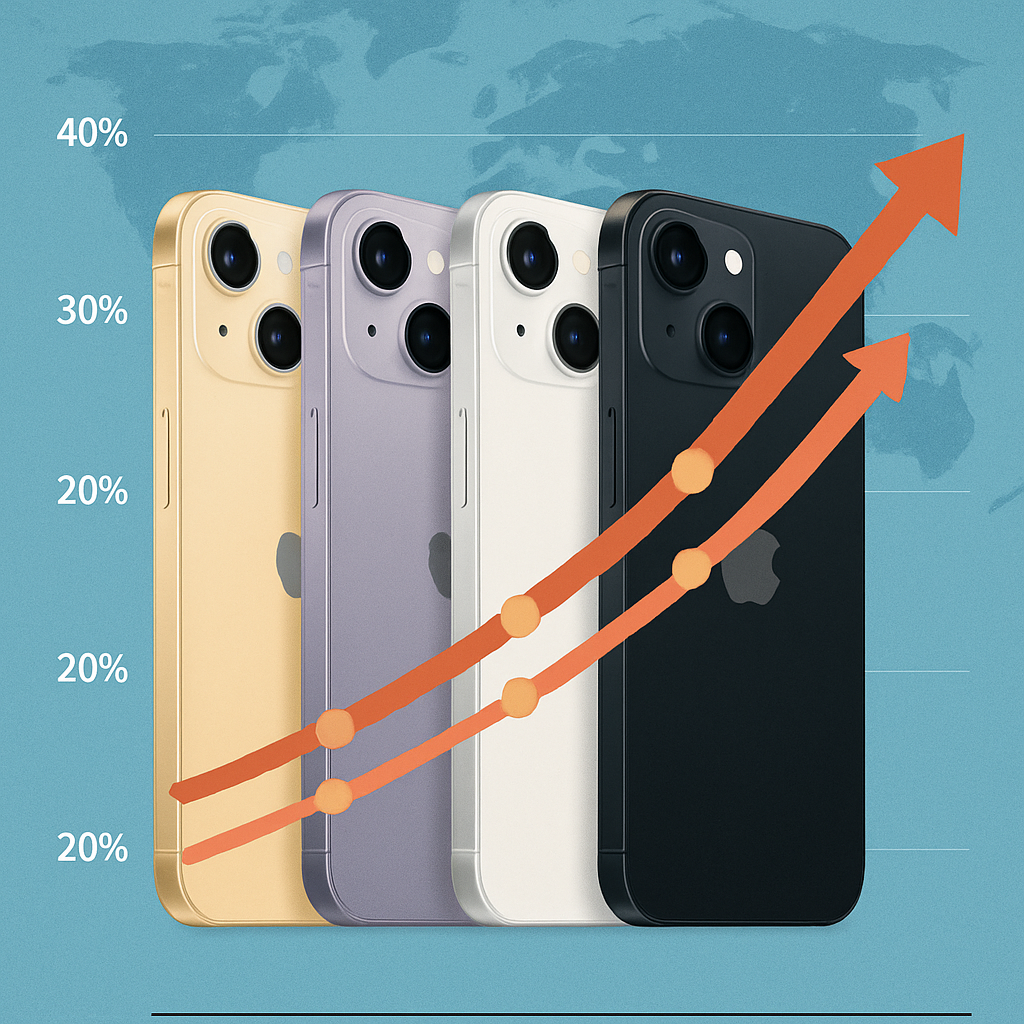
In the second quarter of 2026, Apple achieved a record 20% share of the global smartphone market, marking its strongest performance for this period. This milestone comes despite a 4% year-over-year decline in worldwide smartphone shipments, largely attributed to an ongoing memory chip shortage.
Apple’s success is primarily driven by the robust performance of the iPhone 17 series. Notably, the company has maintained consistent pricing for its iPhone lineup, even as competitors have been compelled to raise prices due to escalating component costs. This strategic decision has bolstered Apple’s market position during a challenging time for the industry.
The memory chip shortage has significantly impacted the electronics sector, leading to increased production costs. While Apple has managed to keep iPhone prices stable, it has implemented price hikes across other product categories. For instance, in June 2026, the company raised prices on several devices, including the iPad and MacBook lines, citing the rising costs of memory and storage components.
Competitors have also felt the strain. Samsung, the only other major vendor to experience growth during this period, holds a 22% market share. Meanwhile, Chinese smartphone manufacturers have scaled back their product lines and increased prices to navigate the supply chain challenges.
Looking ahead, the industry anticipates further constraints as the peak shopping season approaches, potentially leading vendors to focus on higher-margin products. This trend could result in fewer affordable options for budget-conscious consumers.
Apple’s ability to maintain steady iPhone pricing amidst these challenges underscores its strategic foresight and operational resilience. However, with the upcoming iPhone 18 launch on the horizon, it remains to be seen whether the company can continue this approach or if adjustments will be necessary to address the evolving market dynamics.