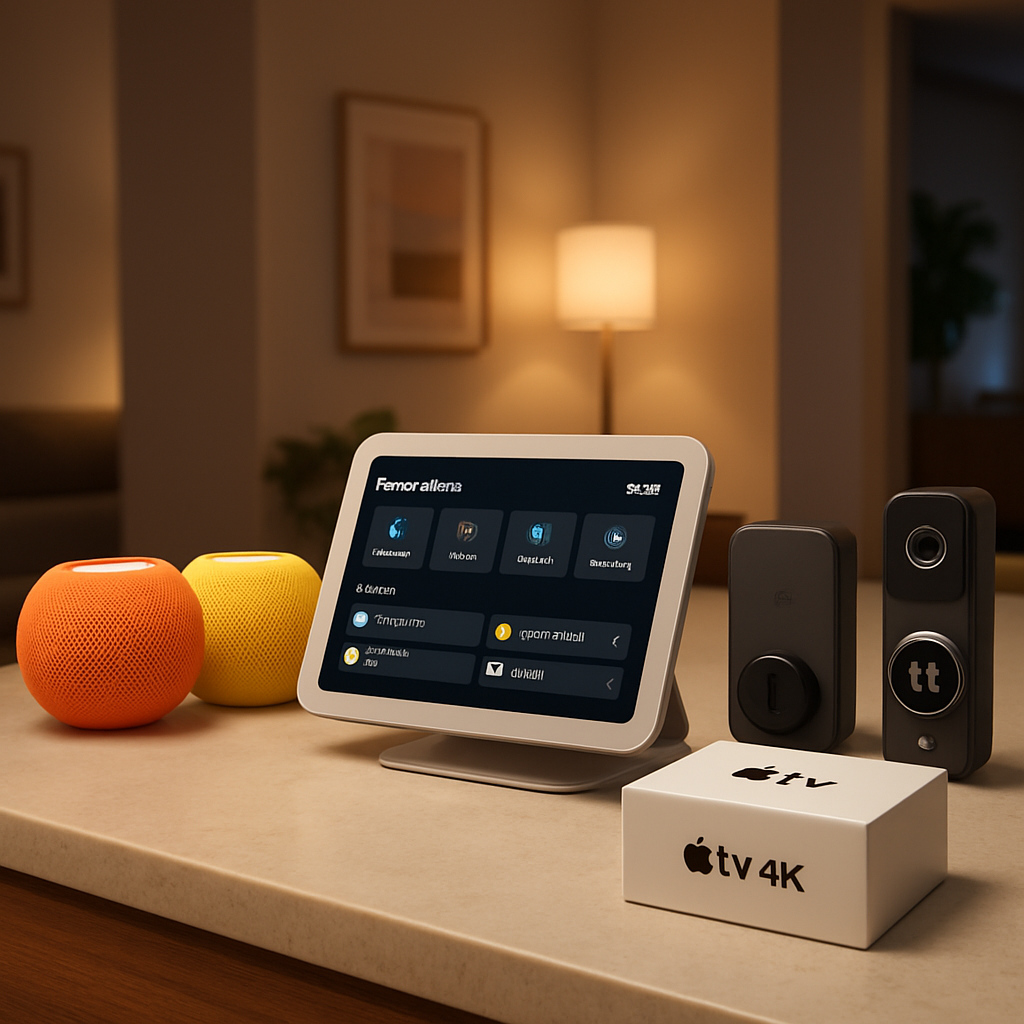
Apple has just overhauled its smart-home ecosystem with a slate of new hardware and accessories designed to knit its Home platform more tightly together. The centerpiece is the HomeView smart display, joined by the HomePod mini 2, a refreshed Apple TV 4K, and the Apple Home Collection, a new line of smart cameras, locks, and thermostats. Together, these launches signal Apple’s most aggressive push yet into turning homes into unified, connected hubs.
What’s new
HomeView is Apple’s latest entry into the smart display market. It features a 7-inch square Liquid Retina screen atop a domed speaker base, connected by a stainless-steel hinge that lets you tilt the display. A wall-mounted version will also be available. Both are priced at $299 in the U.S. and will ship starting November 13. The wall-mount model requires a separate mount (starting at about $59), which isn’t included in the box.
HomeView integrates Siri AI and supports biometric face recognition, recognizing up to six users. It surfaces personalized info for each person, such as messages, calendar, reminders, and Finds My device status. It also delivers HomeKit Secure Video feeds (up to nine at once via the Home Camera face), detects smoke or CO alarm sounds and ties into Apple’s Home app for full smart-home control. Private Cloud Compute and other security measures are in place to protect user data. The device supports a wide range of accessories that are “Works with Apple Home” including those in the new Home Collection and Matter certified ones.
HomePod mini 2 improves on its predecessor with enhanced audio features, new colours, and Siri AI support. It arrives October 30 in the U.S. The new Siri features will not be available from day one, but will roll out in a later software update. HomePod mini 2 is designed for rich sound, whether used alone, in stereo pairs, in a multi-room setup, or coupled with a new Apple TV 4K model for full home theater surround sound.
New Apple TV 4K (4th gen) also debuts November 13, and carries an A19 chip, far-field microphones for hands-free Siri activation, and the updated Siri Remote (which is also sold separately). It joins the HomeView and HomePod mini 2 in supporting the new Siri AI features and broader Apple Intelligence integrations.
Apple Home Collection rounds out the lineup. Built in collaboration with LG Electronics and Schneider Electric, this accessory suite includes smart cameras, a video doorbell, smart thermostats, and a lock. These are designed to work directly with Apple’s HomeView display and Home app, aiming for privacy, seamless setup, and compatibility with Matter. The collection will start arriving in December, with prices ranging roughly from $39.95 to $399.95.
Pricing, colours & availability
All three major devices — HomeView, Wall-Mounted HomeView, and the 4th-gen Apple TV 4K — are priced at $299 in the U.S. HomePod mini 2 starts at $149. HomeView and the new Apple TV begin shipping November 13; HomePod mini 2 will ship October 30; Home Collection accessories start in December. HomeView comes in silver, starlight, rose pink, and space gray. The Wall-Mounted HomeView editions are available in space gray and silver.
On the environmental front, HomeView features 100 percent recycled aluminum in its base, recycled gold plating and tin solder on its PCBs, and recycled rare-earth elements in its magnets. Packaging is fiber-based and designed for recyclability. The wall-mounted version shares many of these components. Apple says the new offerings meet its high standards for energy efficiency and materials safety.
While several features depend on software updates or paired devices (for example, Siri AI won’t ship immediately on launch day for HomePod mini 2), the hardware is positioned to deliver a fully integrated smart-home backbone. Major use cases include hands-free control, face-based personalization, and camera-driven monitoring with secure video.
What this means: Apple has finally delivered a clear vision for an entire home built around its ecosystem. The hardware isn’t just incremental—it creates roles for devices across rooms and users. But users should watch closely: pricing is steep, many features depend on software rollouts, and the new Home Collection will need to prove that its partners (LG, Schneider) can match Apple’s quality. If everything works, this could reshape — not just augment — what owning a smart home means in the Apple world.