At its Welcome Home event on October 13, Apple rolled out a refreshed vision for its smart home ecosystem. The new lineup checks off some key boxes: a dedicated smart home hub called HomeView, upgraded Apple TV 4K with built-in AI, revamped HomePod support, and a curated Apple Home Collection of accessories. Still, the core software—the Apple Home app—remains largely untouched, leaving many of the system’s longtime limitations unresolved.
HomeView: A New Hub, With Room to Grow
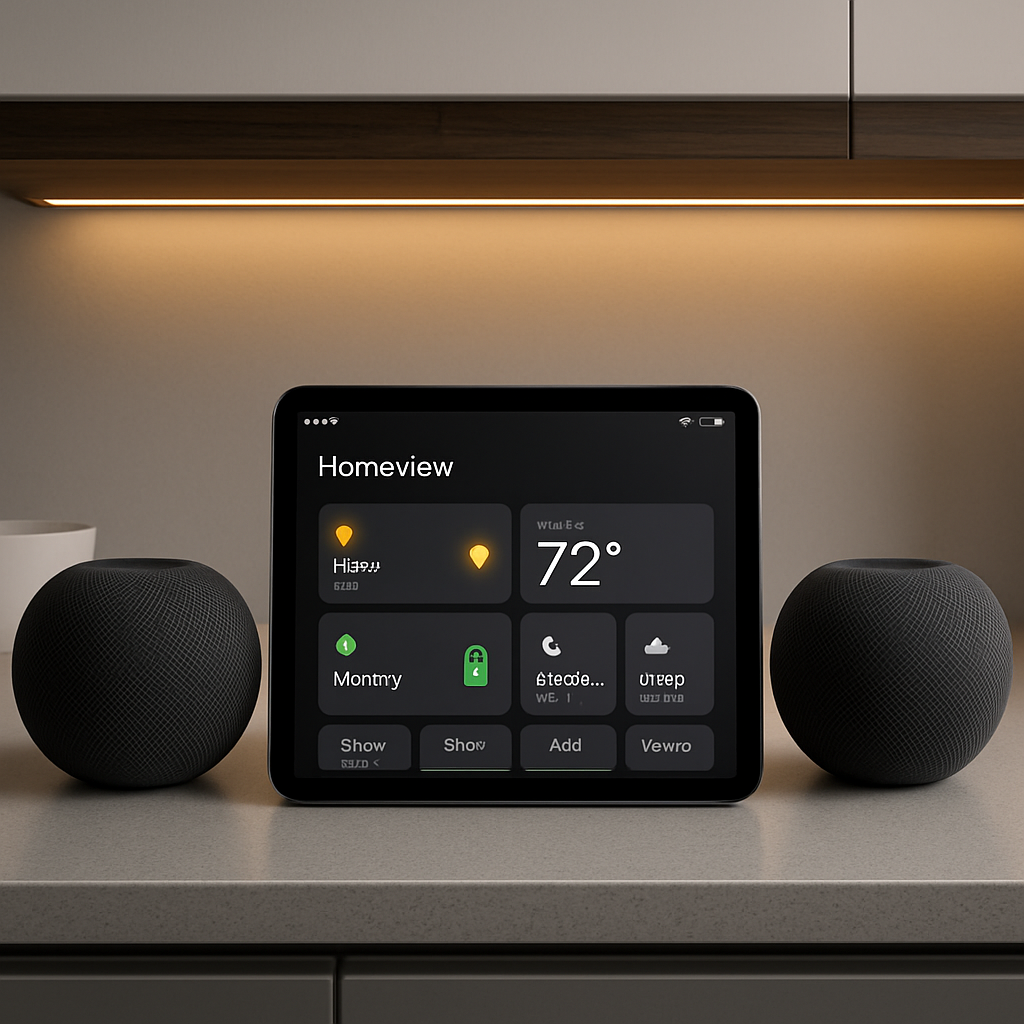
HomeView is Apple’s new center-of-home device. Featuring a 7-inch display that rests on a base or can be mounted on the wall, it resembles a kitchen display more than a full tablet. The screen shows Apple Watch-style clocks, widgets reminiscent of StandBy on iPhone, and interfaces via the CarPlay API. Those hoping for a full App Store to expand functionality won’t get it—at least not yet. Later updates may add more APIs and widget capabilities, but at launch HomeView lacks biometric log-ins and standard mounting hardware.
Home Theater Upgrades and Audio Expansion
Apple has given the Apple TV 4K the updates it badly needed. Chief among them: new A19 chip, Siri AI support, built-in microphone, 128 GB storage, and Ethernet. These upgrades come at a price—an increase of about $150 over previous pricing. On the audio side, Apple is expanding its multi-HomePod surround sound setup. Users can now pair four HomePods in various configurations, including mixing large HomePods with HomePod minis, for a Dolby Atmos setup that simulates surround sound—even though a physical center channel is still absent.
HomePod mini 2 and Remote Smarter, but Not Revolutionary
The HomePod mini has received modest upgrades: reactive waveforms, Siri AI integration, and new color options. Meanwhile the updated Siri Remote finally includes precision Find My tracking and an audible chime, features long requested by users.
Apple Home Collection: Accessories That Play by Apple’s Rules
Apple’s new Home Collection offers first-party-grade accessories built to work naturally with the Apple Home app and the Matter smart home standard. The initial offerings, from brands like LG and Schneider, include perks like Home Key, HomeKit Secure Video, and clean, proximity‐based pairing. They don’t require separate apps for full functionality—a big win in a space where many third-party accessories hide features behind external apps.
And What Wasn’t Fixed
The Apple Home app got no major overhaul. Its interface has remained more or less the same since 2022, and managing devices—especially with many rooms or accessories—can still feel tedious. Expectations for richer Siri AI commands and smarter automation are high, but Apple provided little clarity on when those will be addressed. In short, the hardware refresh is impressive—but the software foundation that ties it all together still feels like the missing piece.
This refresh marks a meaningful step forward for Apple in the smart home space. HomeView and the Home Collection signal that Apple wants greater consistency and polish in how devices interact. But until the Apple Home app gets a UI overhaul, expanded categories, deeper integration with the Matter spec, and new APIs, Apple’s smart home revival will only ever be half finished. Users looking for more than gadgets—they want a smart home platform that works seamlessly—should watch closely for where Apple heads next.