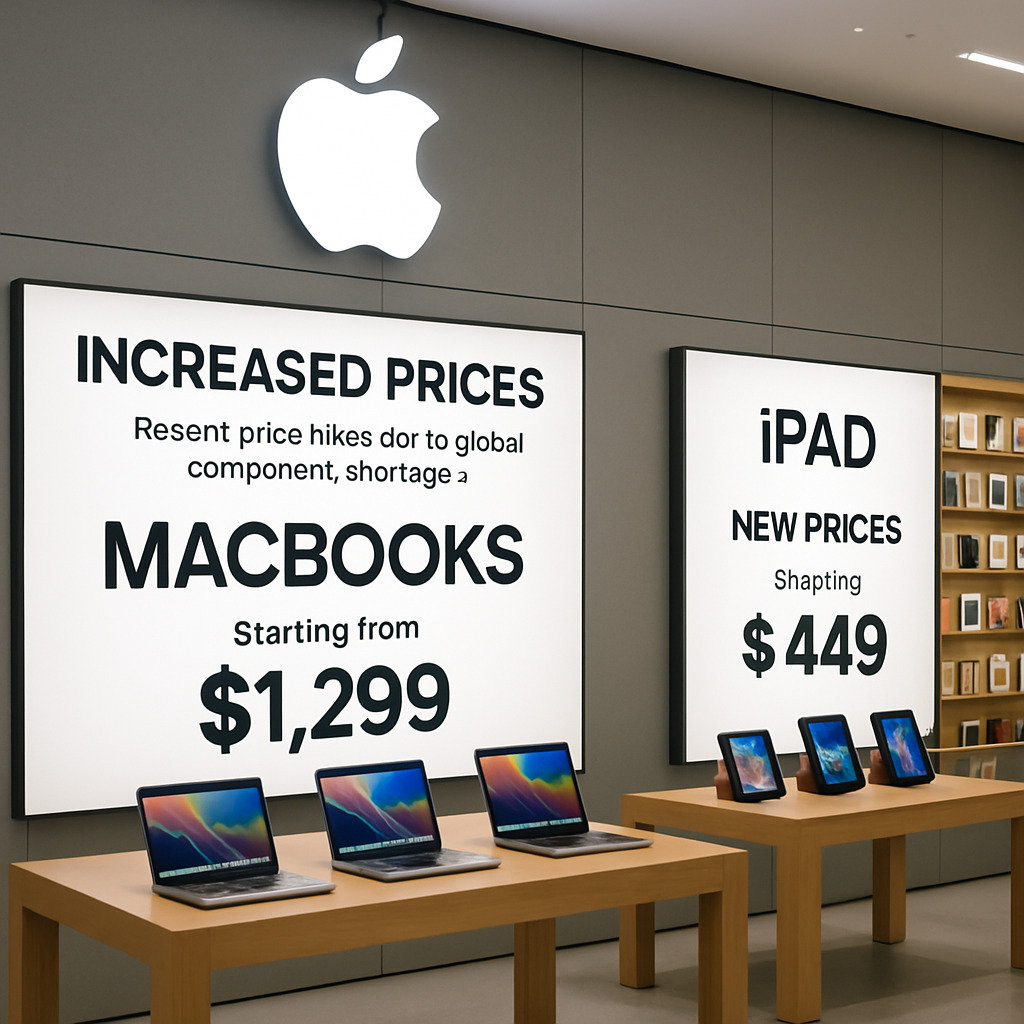
Apple has recently implemented significant price increases across its product lineup, including MacBooks, iPads, and other devices. These adjustments are primarily attributed to a global surge in memory and storage component costs, driven by escalating demand from AI data centers. The company has indicated that these elevated prices may persist for the foreseeable future.
Among the notable price changes, the MacBook Neo has risen from $599 to $699, the 13-inch MacBook Air from $1,099 to $1,299, and the Vision Pro from $3,499 to $3,699. iPads have also seen substantial hikes, with the iPad Air 13-inch increasing by $200 to $949. These adjustments have been implemented without formal announcements, with Apple updating its online store to reflect the new pricing.
Apple has stated that it has attempted to shield customers from these cost increases but can no longer sustain existing prices. Notably, the iPhone, Apple Watch, and AirPods remain unaffected by these changes. However, the company has not ruled out future price adjustments for these products.
The primary driver behind these price hikes is the unprecedented demand for memory and storage components, largely fueled by the expansion of AI data centers. This surge has led to a global shortage, causing component costs to skyrocket. Apple has acknowledged the severity of the situation, with CEO Tim Cook describing it as a “hundred-year flood” and expressing that the company has never witnessed such rapid increases in component prices.
Looking ahead, the outlook for price reductions appears bleak. Industry analysts predict that RAM prices will continue to rise substantially through this year and the next. While some hope for pricing relief by 2028, the anticipated increase in supply may be offset by continually growing demand from AI data centers. Additionally, efforts to secure alternative memory chip sources, such as purchasing from Chinese companies currently restricted by the U.S. government, seem unlikely to succeed.
Given these factors, it is improbable that Apple will reduce prices in the near future without sacrificing its profit margins. By the time component costs stabilize, the increased prices may become the new standard, and the company may lack motivation to lower them unless a significant decline in demand occurs.
For consumers planning to purchase Apple products, it may be advisable to act sooner rather than later. Some third-party retailers are still offering products at pre-hike prices, providing a temporary opportunity to avoid the increased costs. However, these deals are likely to be short-lived as existing inventories are depleted.
In summary, Apple’s recent price increases are a response to global component shortages driven by AI demand. With no immediate relief in sight, consumers should anticipate these higher prices to persist, making early purchases from third-party retailers a prudent strategy.