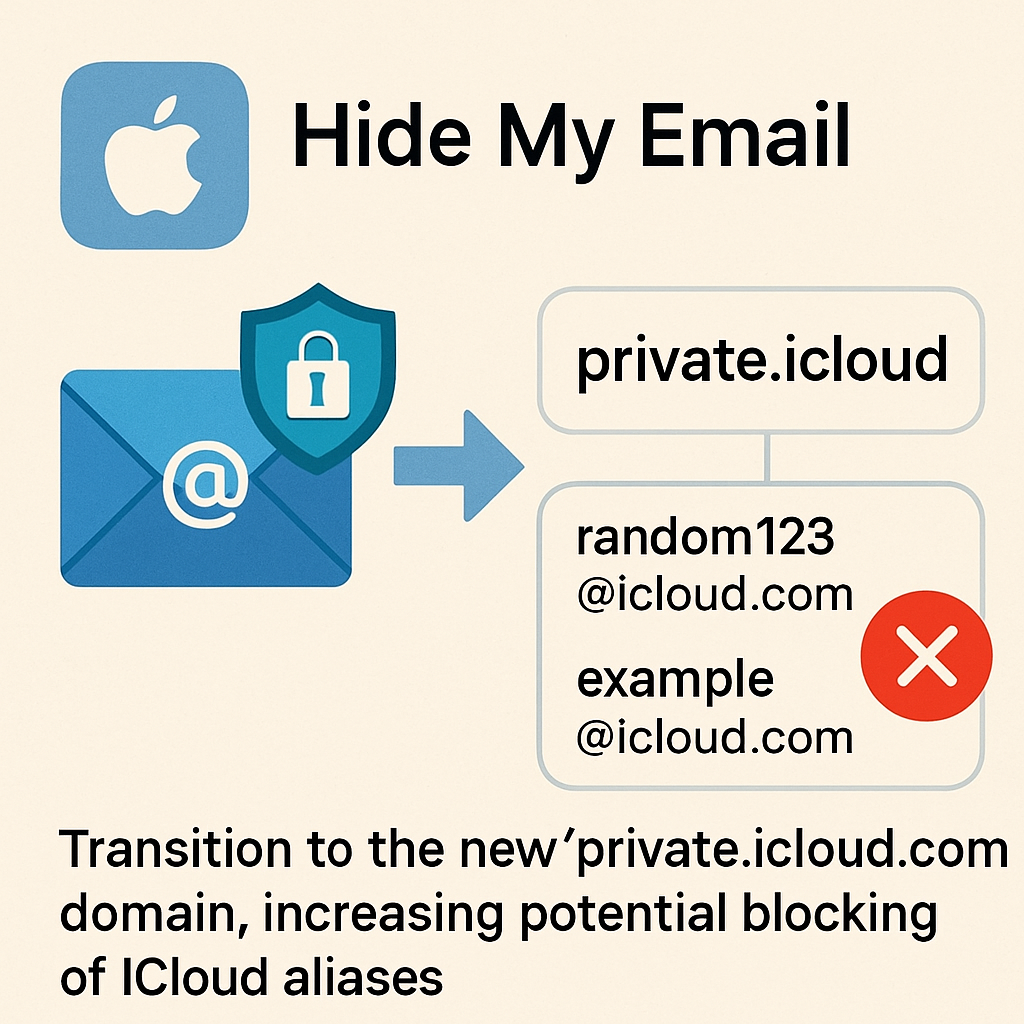
Apple is set to unify the email domains used by its ‘Sign in with Apple’ and ‘iCloud+ Hide My Email’ services under a new subdomain, ‘private.icloud.com,’ later this summer. This change aims to streamline the user experience by consolidating the domains previously used: ‘privaterelay.appleid.com’ for ‘Sign in with Apple’ and ‘icloud.com’ for ‘Hide My Email.’ Existing addresses on the legacy domains will continue to function without interruption, ensuring a seamless transition for current users.
However, this consolidation introduces a potential drawback. By assigning a distinct subdomain to these services, it becomes easier for platforms to identify and potentially block email addresses generated through ‘Hide My Email.’ Previously, these addresses shared the ‘icloud.com’ domain with standard Apple email accounts, making it challenging for services to selectively block disposable iCloud addresses without affecting legitimate users. With the introduction of ‘private.icloud.com,’ platforms can now target and restrict alias-generated addresses without impacting users with standard Apple email accounts.
‘Hide My Email’ is a privacy feature that allows users to generate unique, random email addresses that forward to their personal inboxes. This functionality enables users to keep their actual email addresses private when signing up for online services, thereby reducing the risk of spam and enhancing privacy. The feature is part of Apple’s iCloud+ subscription service, which offers additional privacy and security features to users.
While the move to a dedicated subdomain may simplify the management of these services for Apple, it also raises concerns about the potential for increased blocking of iCloud aliases by third-party platforms. Users who rely on ‘Hide My Email’ for privacy may find their alias-generated addresses more susceptible to being blocked, which could diminish the effectiveness of the feature. As this change rolls out, it will be important for users to monitor how platforms respond and to consider alternative privacy measures if necessary.