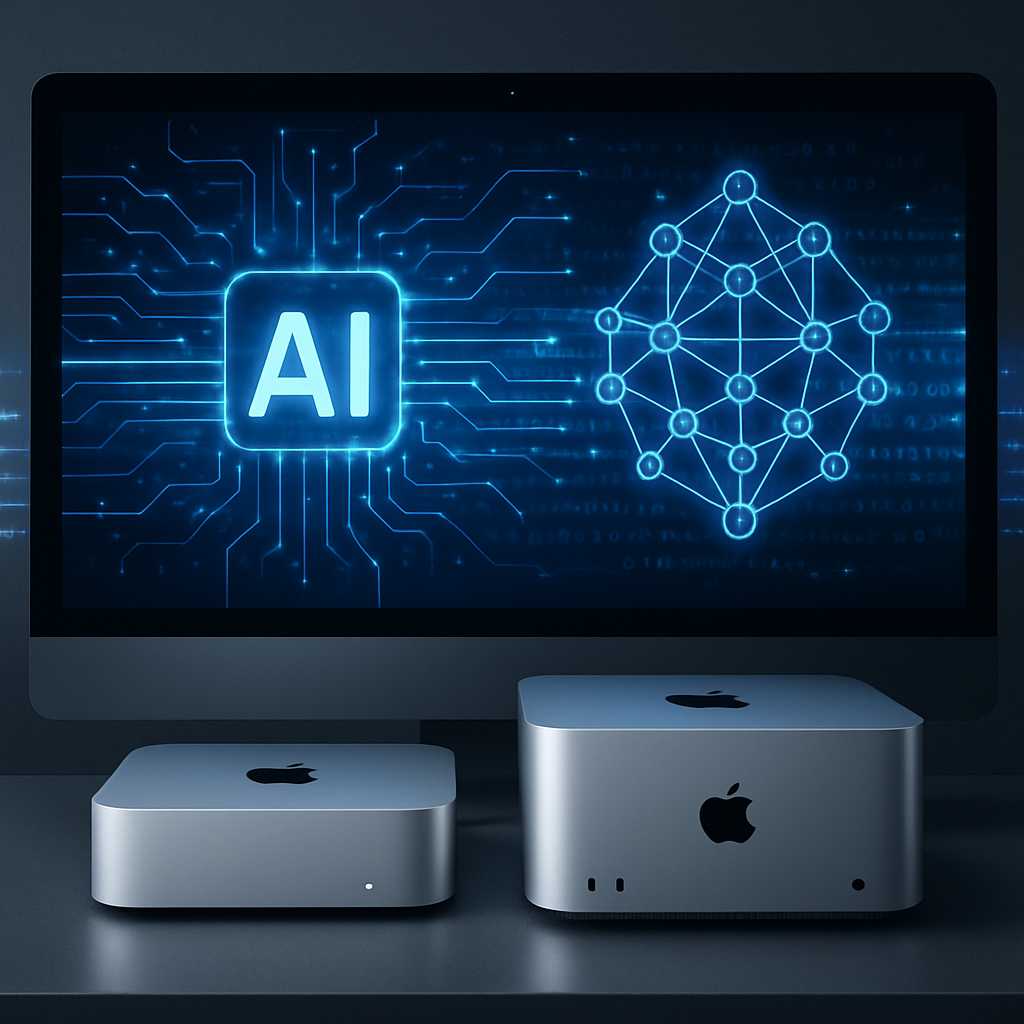
Apple’s Mac mini and Mac Studio have emerged as preferred platforms for running AI agents, according to Doug Brooks, Apple’s senior product manager for Apple silicon. In a recent interview conducted just before WWDC 2026, Brooks highlighted the significant demand for these desktop machines, attributing their popularity to users’ desire for systems that are under their control, separate from primary devices, and capable of continuous operation.
Brooks emphasized that many AI tools are designed primarily for macOS, reinforcing the Mac’s position among developers, including those in leading AI research labs. He noted that the integration of Apple’s hardware and software enhances the performance of AI tasks, with the entire chip contributing to various aspects of the workload, not just the GPU processing large language models.
Apple’s strategic decisions in chip design, such as the development of the Neural Engine for efficient matrix computations and the inclusion of neural accelerators within the CPU for time-sensitive tasks like speech processing, have positioned the company favorably in the AI landscape. The recent addition of neural accelerators to the GPU has further improved AI performance across Apple’s product range, from iPhones to high-end Macs.
Brooks also discussed a trend towards on-device AI processing, driven by concerns over privacy, security, and the escalating costs associated with cloud-based inference as AI agents handle more data. He envisions a hybrid approach where AI agents intelligently decide which tasks to process locally and which to offload to the cloud.
Additionally, Brooks highlighted the concept of “transparent AI” in Apple’s ecosystem, referring to features within iOS and iPadOS that operate seamlessly without overtly presenting themselves as AI-driven. Examples include applications like Draw Things, an image generator compatible across iPhone, iPad, and Mac, and SwingVision, which utilizes the iPhone’s cameras to analyze tennis and pickleball gameplay in real time.
Brooks acknowledged the rapid pace of AI development, expressing uncertainty about the technological landscape even in the near future. This underscores the dynamic nature of the field and the importance of adaptable hardware and software solutions.
The increasing reliance on Mac mini and Mac Studio for AI workloads highlights Apple’s strategic foresight in hardware design and its commitment to integrating AI capabilities across its product lineup. As AI applications become more prevalent, Apple’s emphasis on on-device processing and seamless user experiences positions it as a key player in the evolving AI ecosystem.