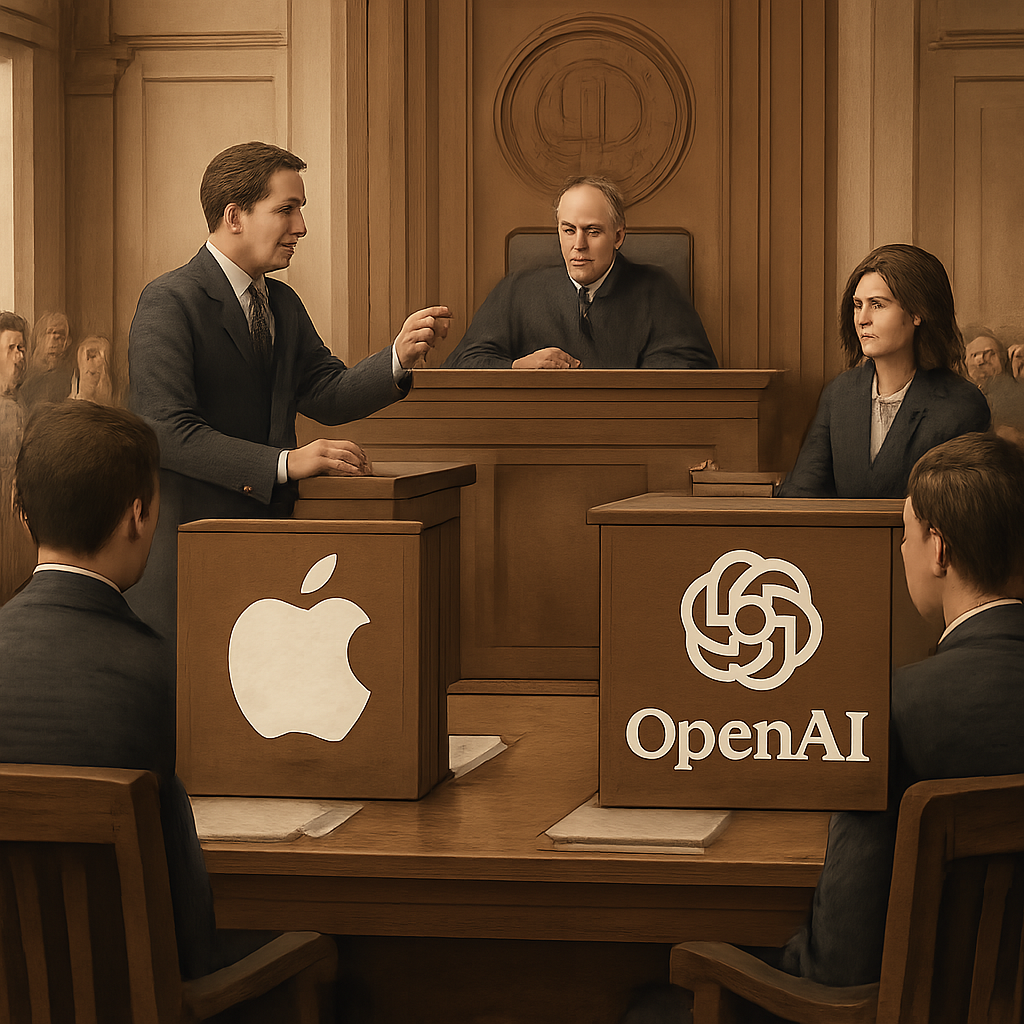
Apple has initiated legal proceedings against OpenAI, alleging that the AI company engaged in a systematic effort to acquire confidential information from current and former Apple employees. This lawsuit raises significant questions about the future of OpenAI’s hardware development plans.
The core of Apple’s complaint centers on accusations that OpenAI’s leadership, including Chief Hardware Officer Tang Tan, orchestrated a scheme to obtain proprietary information. Apple claims that Tan, who previously served as Vice President of Product Design for the iPhone and Apple Watch during his 24-year tenure at the company, encouraged Apple employees to share details about unreleased products and manufacturing processes during recruitment interviews. Additionally, former Apple engineer Chang Liu is accused of retaining an Apple-issued laptop post-departure and using it to access confidential technical documents.
These allegations come at a critical juncture for OpenAI, which has been rumored to be developing its first hardware product—a mobile smart speaker that could potentially rival the iPhone. The company bolstered its hardware ambitions by acquiring io Products, a startup co-founded by former Apple design chief Jony Ive, in a $6.5 billion deal last year.
The lawsuit could have immediate and long-term implications for OpenAI. In the short term, the legal battle may delay the development and launch of its hardware products. The litigation also casts a shadow over OpenAI’s potential plans to go public, as investors may be wary of the risks associated with ongoing legal disputes.
Furthermore, the case highlights the competitive tensions in the tech industry, particularly in the rapidly evolving AI and hardware sectors. As companies like Apple and OpenAI vie for dominance, the protection of intellectual property becomes paramount. This lawsuit underscores the challenges that arise when employees transition between competitors, bringing with them valuable knowledge and expertise.
In conclusion, while the outcome of the lawsuit remains uncertain, its ramifications are already being felt. OpenAI’s hardware aspirations are now under scrutiny, and the case serves as a stark reminder of the importance of safeguarding trade secrets in an increasingly competitive technological landscape.