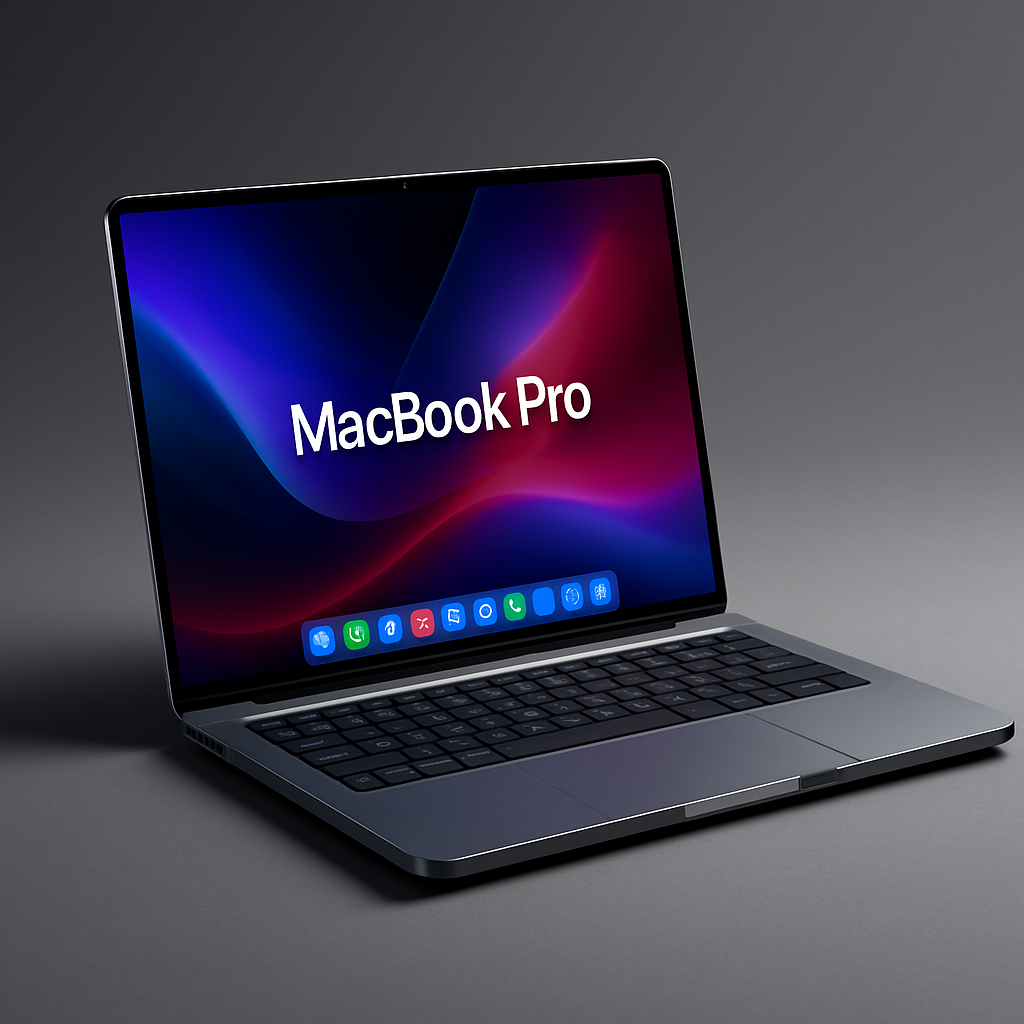
Apple is accelerating the redesign of its entry-level MacBook Pro. A new version powered by the upcoming M7 chip is now expected to arrive in spring 2027, bringing it in line with the premium MacBook Pro models launching earlier. This shifts the usual timeline, where lower-end models lag behind high-end refreshes by years.
What’s changing and when
Rather than wait through a long transition, the entry-level MacBook Pro is set to adopt the new industrial design in early 2027, shortly after Apple debuts redesigned high-end units later this year. The refreshed design will likely feature a thinner body, OLED screens, touch capability, and potentially Dynamic Island functionality.
Meanwhile, this fall, Apple is planning to release an entry-level model that retains the current chassis but is upgraded with the M6 chip. At the same time, its higher-end counterparts will showcase the new design powered by M5 Pro and M5 Max chips.
M-chip lineup and timing
Big changes are coming on the chip front. Apple has shelved earlier plans for high-end M6 chips and instead fast-tracked development of M7. That decision means the full redesign will ultimately be paired with the M7 silicon, starting with the entry-level models in spring 2027. The high-end MacBook Pro refresh—featuring M7 Pro and M7 Max—is expected in fall 2027.
A rough roadmap emerges:
- Fall 2026: Entry-level model with current design and M6 chip; high-end with new design and M5 Pro/Max.
- Spring 2027: Entry-level MacBook Pro with M7 chip and new design.
- Fall 2027: High-end models upgraded to M7 Pro/Max.
That means the gap between design updates for Apple’s most and least expensive MacBook Pros will shrink from years to just months.
Why this matters
For buyers who want modern Apple design but can’t stretch to premium pricing, this is welcome news. The newly redesigned high-end MacBook Pro is likely to carry a steep cost—expected well over $2,500. But the spring 2027 refresh should deliver similar design upgrades in a more affordable package once it arrives with the M7 chip.
Still, price adjustments in Apple’s lineup in recent months have already blurred the lines between entry and pro models, especially given rising component costs. Despite that, the shift to move design changes down the ladder suggests Apple is trying to balance innovation and value more aggressively.
Analysis: Apple’s strategy to synchronize the launch of redesigned features across both premium and base MacBook Pros marks a significant turn. Historically, the entry-level line lagged behind in design, screen tech, and premium features. By narrowing that delay to roughly six months, Apple preserves its flagship appeal while making its innovations more accessible. Going forward, key indicators will be whether the new entry-level models match the premium visual upgrades and screen quality, and how pricing holds up as design parity increases.