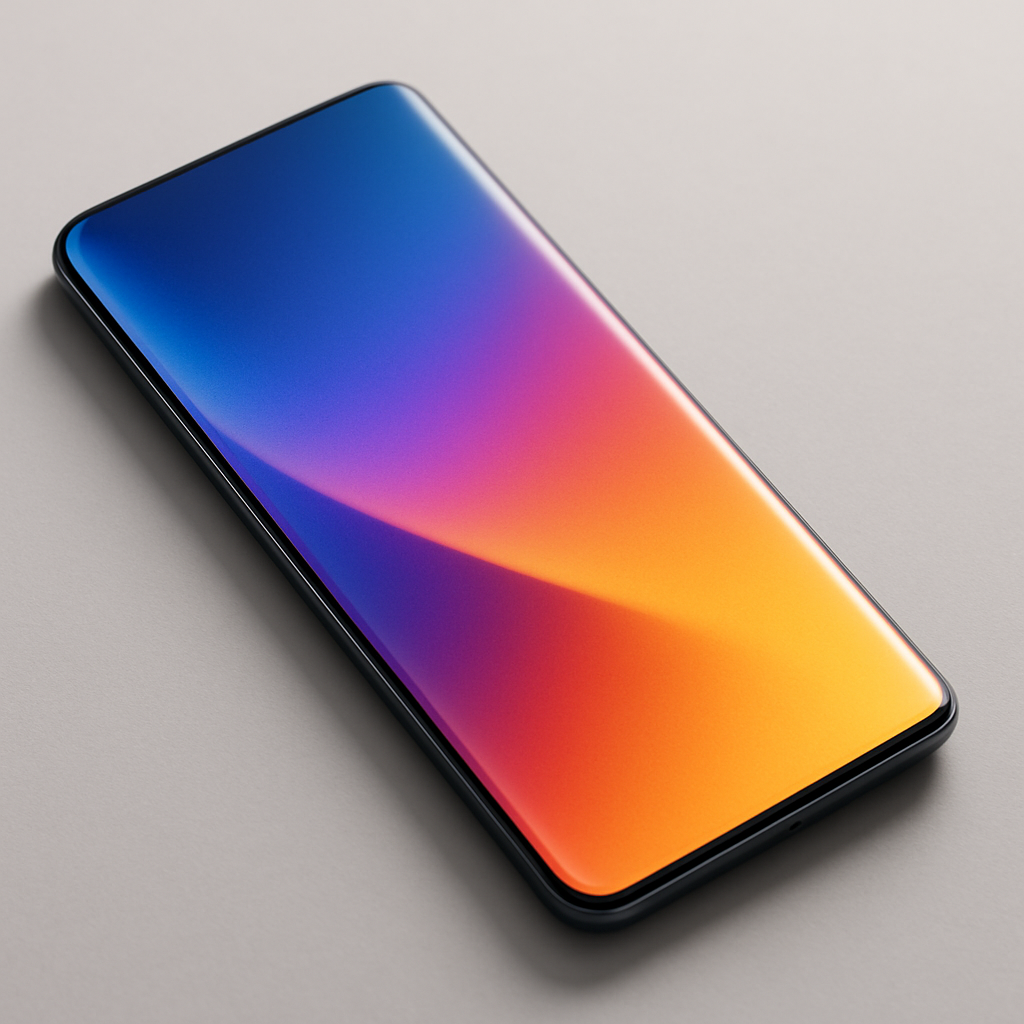
Apple is said to be waiting on Samsung for a bold display technology that could make the iPhone’s bezels effectively vanish. Sourced from a recent leaker’s report, Samsung is reportedly developing an OLED panel described internally as a “full-surround, full-screen display” that wraps sharply around all four sides and corners of a device. The main panel stays flat, while its edges bend close to a 90-degree angle, potentially making the phone’s sides part of its display.
The Full-Surround Display: What’s Different
This design is a step beyond standard curved “waterfall screens”—which only slope gently over the edges. In contrast, each bezel area would be replaced by the display itself folding downward, including over corners. The current goal is to eliminate the usual border entirely when viewed from the front. In some conceptings, this may open opportunities to remove traditional mechanical buttons altogether. There are hints that Apple may first introduce a “quad-curved display” in its 2027 iPhone 20, which is expected to serve as an intermediate form before this full-wrap version.
What Stands in the Way
Major engineering challenges remain. One issue is optical distortion and color shifts near the display folds—areas that bend sharply tend to distort light and color consistency. Another is preserving OLED module encapsulation: folding around corners places incredible strain on the material meant to protect delicate components from moisture and damage. Also, with every side covered by display, it becomes trickier to find secure places for antennas and other elements normally built into opaque bezels.
Behind the scenes, Apple is reportedly holding off until Samsung finalizes the tech. The leaker describes the flat-center, edge-folding configuration as a design that replaces both the frame and conventional bezels. If successful, this could translate into an iPhone that appears bezel-free from the front and features minimal borders overall.
Meanwhile, expectations are that the iPhone 20, due in 2027, will not yet include the full-surround display. Instead, it may incorporate a less extreme quad-curved edge design, seemingly as a stepping stone toward this more ambitious wraparound style.
These display innovations will depend heavily on manufacturing maturity, performance consistency, and how well Apple can integrate components like antennas and buttons into a reimagined shell. If done right, though, this could mark one of the most visually transformative leaps in iPhone design to date.
What this means:A bezel-free front could finally be within reach if Samsung delivers. But given the engineering hurdles, this may remain a futuristic vision until late 2027 or beyond. Watching how Apple balances form, durability, and usability in this pivot will be key—because if it succeeds, the whole smartphone display landscape may soon follow.