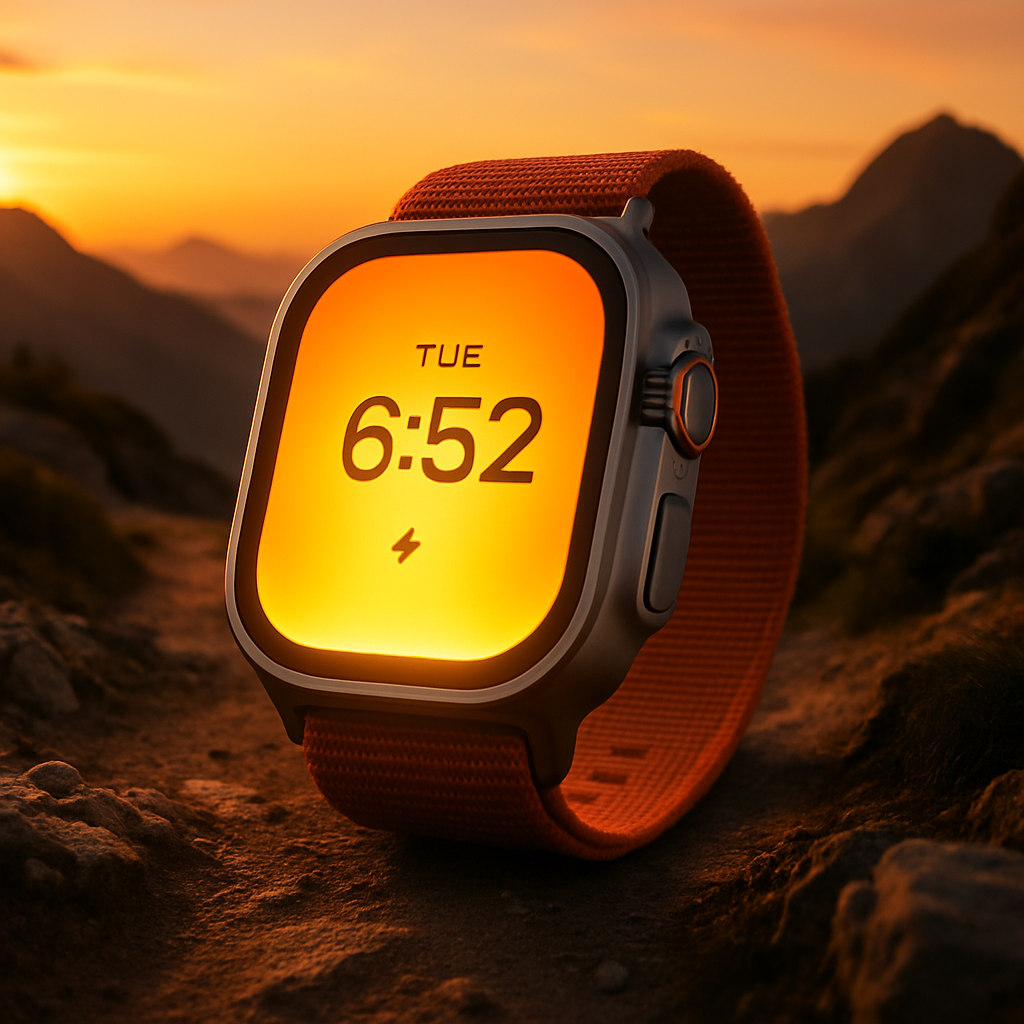
Apple’s upcoming Watch Ultra 4 is set to deliver enhanced battery performance compared to the current Ultra 3, according to reports from Bloomberg’s Mark Gurman. While no exact numbers have been revealed yet, sources suggest Apple will continue its trend of incremental improvements in power and efficiency.
What We Know About Ultra 3 Battery Performance
The Ultra 3 already marked a meaningful step up from its predecessor in Apple’s rugged smartwatch lineup. Released in 2025, it boasts up to 42 hours of use under normal daily conditions—a jump from Ultra 2’s 36-hour rating. In low-power mode, Ultra 3 stretches that endurance even further.
Under specifications shared by Apple, the Ultra 3 achieves its 42-hour rating through a test pattern that includes frequent time checks, a substantial number of notifications, app usage, workouts with music played via Bluetooth, and a night’s sleep tracking. These conditions aim to simulate the demands of active dailyWear.
What’s Expected From Ultra 4
While details are sparse, Gurman’s reporting indicates Ultra 4 will improve upon the Ultra 3’s battery life. No specific disclosures have been made about whether this will come through a larger battery, more efficient chipsets, better display power management, or software optimizations. Apple seems to be following its established playbook of leveraging incremental gains rather than dramatic leaps.
There are no signs of major hardware redesigns for the Ultra 4. The usual suspects for power improvements—display tech, connectivity chips, battery chemistry, and firmware tuning—are likely to be where enhancements happen. Apple has emphasized battery gains in recent Ultra releases, suggesting Ultra 4 will aim higher than the Ultra 3’s 42-hour mark.
Background: Battery Life in the Ultra Line
The Ultra series is Apple’s premium line designed for endurance seekers—outdoor adventurers, athletes, and those who push smartwatches to their limits. Battery has always been a focal concern: Ultra 2 offered 36 hours of typical use, and Ultra 3 raised that to up to 42 hours. Apple also provides a low-power mode, which significantly extends operating time for less demanding use.
References to past performance expectations and real-world testing show that life in the wild—long GPS workouts, steep trails, and heavy use—typically drain devices faster, though Apple’s specs offer a benchmark for users to judge by.
The shift toward more efficient wearable tech is industry-wide: competitors like Garmin and Polar have long surpassed Apple in absolute battery longevity, especially in outdoor-oriented models. But the Ultra line balances strong hardware, display quality, fitness, safety, and connectivity—often at the cost of ultra-long battery durations. Ultra 4 may tip that balance further toward battery improvements.
What To Watch For
When Ultra 4 is officially revealed—expected at Apple’s September 9 event—battery specs will be a key focus. Look for Apple to publish numbers for:
- Standard daily use
- GPS, heart rate, and outdoor workout modes
- Low-power and extended mode estimates
- Performance under 5G or cellular use
It will also be telling to see how Apple manages energy use across the board: display brightness, refresh rates, always-on modes, sensor polling, connectivity power draw, and how much the software is tuned for efficiency. If Ultra 4 pushes battery closer to 50 hours of standard use, that would represent a notable shift.
Why It Matters: Battery life remains one of the most critical differentiators in the smartwatch field. For Ultra users—often adventurers, athletes, and outdoor professionals—every hour counts, especially when off-grid. An Ultra 4 that meaningfully improves runtime without compromising features would reinforce Apple’s commitment to outdoor and endurance markets. If battery gains come primarily through efficiency rather than bigger batteries, it will indicate maturity in Apple’s design and chip engineering. Shortly, we’ll see if Ultra 4 truly delivers the ‘more battery, same ruggedness’ upgrade that many users want.