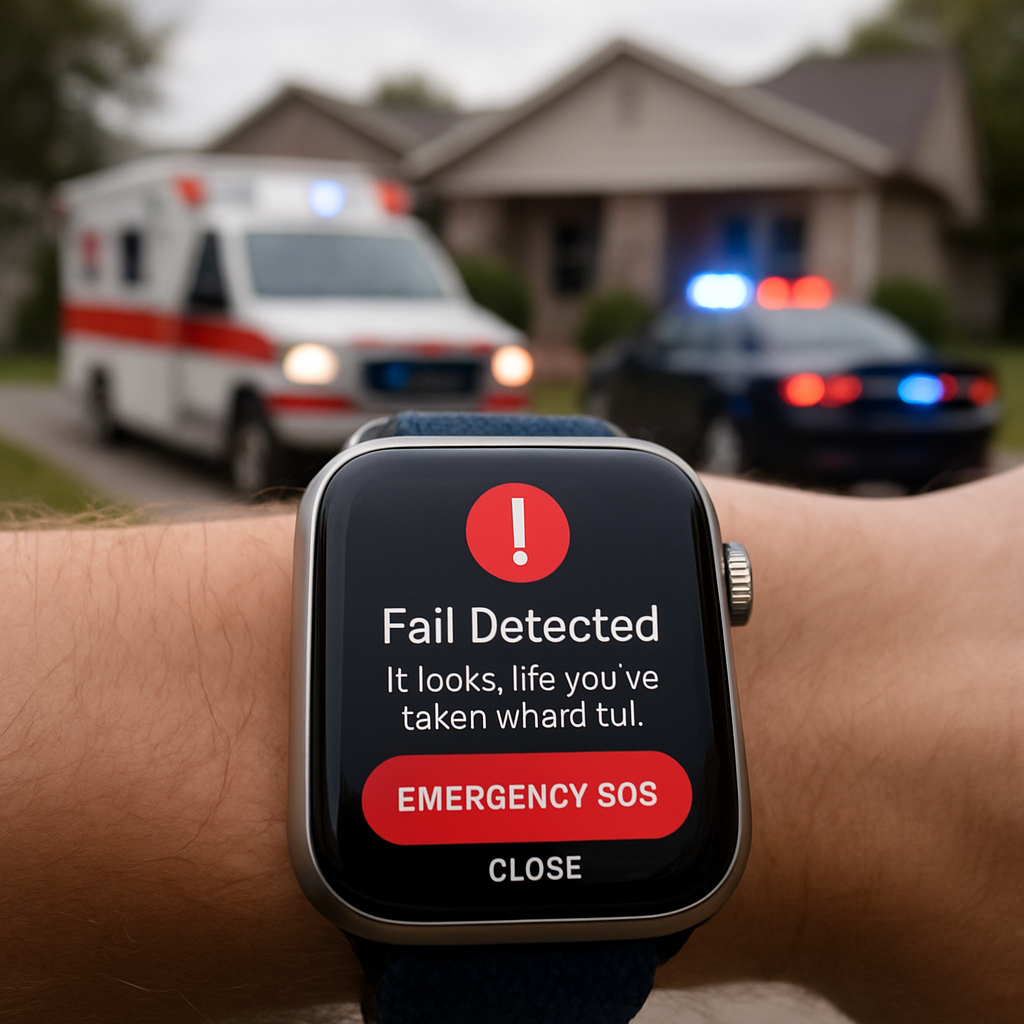
In a remarkable incident in Cincinnati, the Apple Watch’s fall detection feature played a crucial role in saving the life of Mohammad Islam. While taking out the trash at his home, Islam suddenly collapsed without warning. Unbeknownst to him, his Apple Watch automatically detected the fall and contacted emergency services.
Islam recounted that he was unaware of how long he had been unconscious. Upon regaining consciousness, he found himself on the ground, sweating profusely, and unable to stand. Shortly thereafter, he heard approaching sirens as emergency medical personnel arrived, having been alerted by his Apple Watch.
Medical professionals at the University of Cincinnati Medical Center diagnosed Islam with pulmonary embolism, a condition involving blood clots in the lungs. The exact cause remains undetermined, but he has been prescribed medication and is now recovering at home.
The Apple Watch was a gift from his daughters, who had also given one to their mother. They consistently encouraged their parents to wear the devices daily. Islam admitted that he was aware of the fall detection feature due to occasional false alarms during activities like yard work but did not fully comprehend its capability to automatically contact emergency services.
Apple’s fall detection feature, introduced with the Apple Watch Series 4 in 2018, has been credited with saving numerous lives. It activates automatically for users aged 55 and older, detecting hard falls and, if the wearer remains immobile, contacting emergency services with the user’s location.
Beyond fall detection, the Apple Watch offers various health monitoring features, including heart rate monitoring and atrial fibrillation detection. These functionalities have been instrumental in alerting users to potentially life-threatening conditions, leading to timely medical interventions.
Islam’s experience underscores the significant impact wearable technology can have on personal health and safety. As these devices become more integrated into daily life, their potential to provide critical health alerts and emergency assistance continues to grow, offering users and their families peace of mind.