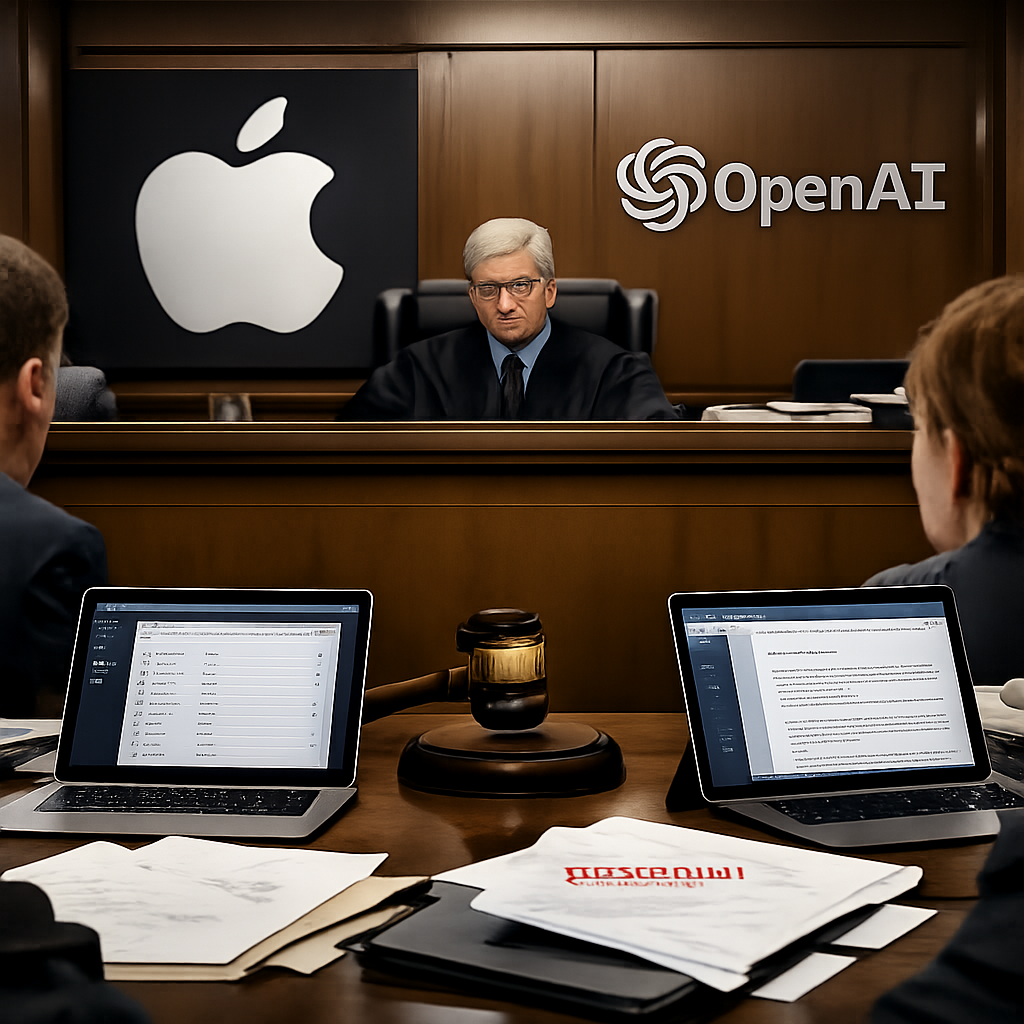
A federal court has set the trial between Apple and OpenAI over alleged trade secret theft for July 19, 2027. Judge Edward Davila made the decision after both parties were given until October 23, 2026, to propose a trial schedule. The court will convene at 9:00 AM that day to begin proceedings. A settlement meeting between lead attorneys is slated for June 1, 2027—standard procedure in big litigation, not necessarily a sign either side is leaning toward a deal.
Origins of the Dispute
Apple filed suit in July 2026 accusing former employees, including Tang Tan and Chang Liu, of bringing Apple’s trade secrets to OpenAI when they departed. OpenAI retorted that some of the files remained accessible unintentionally and pointed to internal communications, including an email confusion, to defend itself. It also released an open letter sharing messages between Liu and former teammates, emphasizing the complexity of proving intentional misuse.
Central to OpenAI’s defense is the assertion that Apple didn’t sufficiently safeguard the information it claims are trade secrets. Apple, on the other hand, has pointed to what it considers improper defense arguments in OpenAI’s motion against a preliminary injunction. OpenAI has also made counterclaims—one being that a returning Apple employee took hardware-related secrets, allegedly tied to the HomeView product, claims Apple disputes. Development of HomeView reportedly dates back to at least 2023.
Pre-Trial Moves and Discovery
After Judge Davila signaled that granting an injunction might be likely, OpenAI offered to refrain from using any of Apple’s contested trade secrets during the legal process. It also provided forensic images from drives of 14 former Apple employees. Apple later narrowed its claims to focus on those who went to OpenAI directly, prompting the judge to broaden discovery to include devices, messaging platforms, AI tools, and how OpenAI managed Apple’s confidential files.
The June 1, 2027 date for Attorneys’ meeting is mandated to discuss settlement options and ensure procedural alignment. This is seen as one of many steps toward the full trial, set nearly a year away, giving both parties time to prepare and negotiate. When the trial opens, Apple’s lawsuit will have already been active for roughly one year.
This case reignites discussions about trade secret law in the AI era. It raises questions around how corporations protect sensitive data when talent moves between companies, how cloud and data access policies are enforced, and what standard courts will apply for proving misuse vs accidental exposure. Legal experts will be watching how this lawsuit influences future norms around employee mobility and internal access controls.