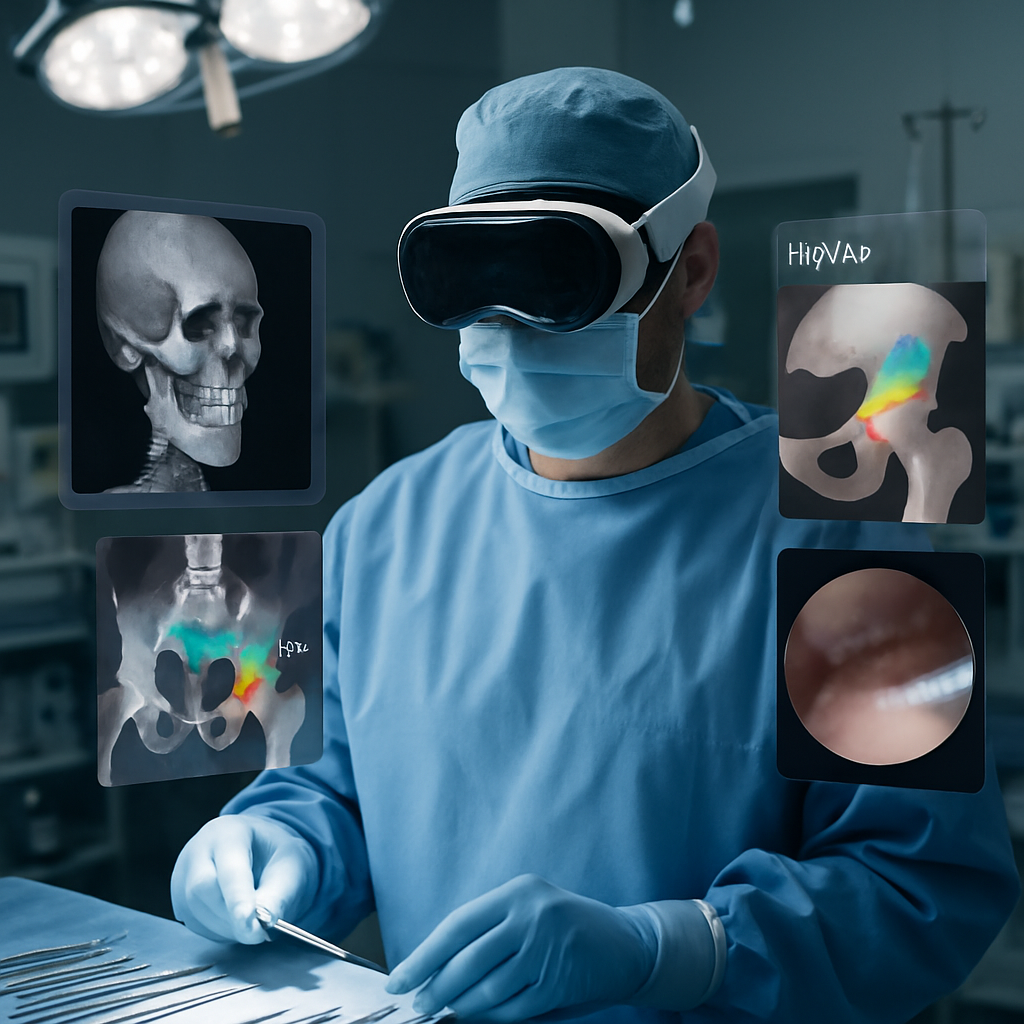
In a milestone for spatial computing in medicine, Apple Vision Pro has been used in a surgery for the first time under FDA‐authorized conditions. The procedure, a hip arthroscopy, was carried out at Duke Health leveraging a new application from Stryker called SportSuite Vision. This marks the first time Vision Pro has gained FDA De Novo authorization for intraoperative use. The app integrates various digital tools — arthroscopic video, HipCheck, HipMap, and CT imaging — directly into the surgeon’s field of view.
Transforming the Operating Room with Augmented Reality
During arthroscopic surgeries, multiple displays are normally scattered throughout the operating room for real-time imaging, diagnostics, and procedural references. With SportSuite Vision, surgeons can now centralize critical content within their line of sight via Vision Pro. The system allows visualization of physical OR elements alongside digital overlays, reducing the need to shift attention between screens. This spatial computing approach aims to streamline surgeon workflows and maintain focus within the sterile field.
The FDA formally approved SportSuite Vision on July 17, granting it De Novo status for intraoperative applications with Vision Pro. That puts this tool at the frontier of regulatory clearance for mixed reality technologies in surgery. Surgeon Chad Mather III performed the hip arthroscopy, reporting that placing clinical data within the surgical workspace improved ergonomics and workflow while keeping essential information visible without interrupting sterile practices.
Broader Momentum for Vision Pro in Healthcare
This surgical debut builds on previous experiments with Vision Pro in medical settings. Another project by Pfizer used the headset to build an immersive mixed-reality presentation, aimed at patients and healthcare providers, to illustrate new strides in oncology. While this use was for education and communication — not surgery — it underscores the growing interest in Vision Pro’s ability to blend digital and physical realities in health care.
As manufacturers and regulatory bodies continue to adapt, tools like SportSuite Vision highlight the potential for spatial computing to shift from experimental to practical use in operating rooms. The key will be ensuring accuracy, safety, and integration into existing surgical protocols without compromise.
What this means is more than a one-off surgical success. It signals a turning point for augmented reality in healthcare: Vision Pro, previously confined largely to training, communication, and visualization, is now stepping into hands-on clinical utility. Going forward, we’ll need to watch how adoption scales, how healthcare systems approach cost and training, and how regulators interpret ongoing data to support or limit further surgical applications.