Global smartphone shipments continue to drop, yet Apple is one of the few players bucking the trend, expanding its presence in key international markets even as demand softens. A recent report from Counterpoint Research spotlights Apple’s growth in India, Latin America, and Europe while the broader smartphone industry struggles. ([macrumors.com](https://www.macrumors.com/2026/08/21/smartphone-sales-falling-but-apple-grows/))
Sales Slide Across India, Latin America & Europe
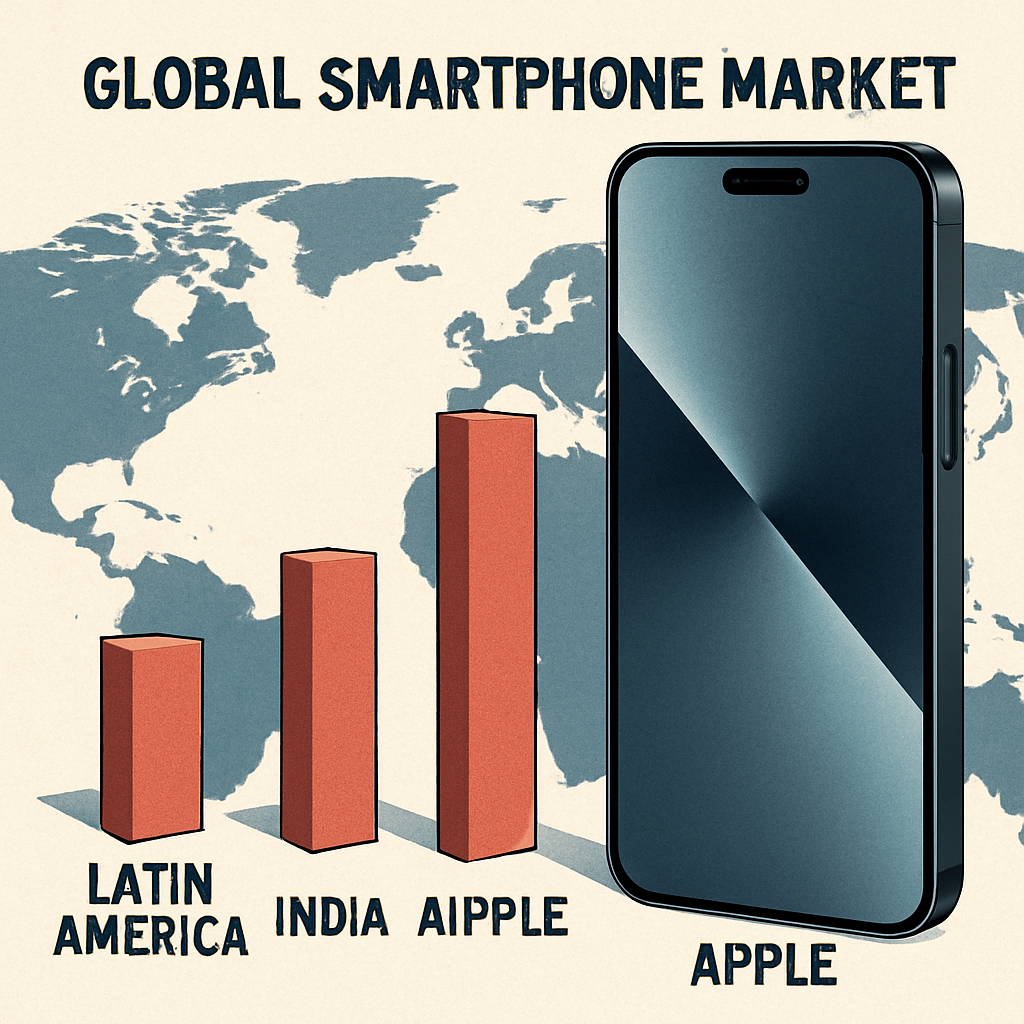
In India, smartphone sales between late March and early August fell roughly 14% compared to the same period in 2025. Once promotional campaigns ended in July, the market experienced three straight weeks of decline. Apple, however, saw its sales rise about 15%, supported by strong demand for the iPhone 17 and lower-cost offers. Samsung and OPPO also gained, but only by around 4% each. ([macrumors.com](https://www.macrumors.com/2026/08/21/smartphone-sales-falling-but-apple-grows/))
Latin America recorded a 10% dip in shipments in Q2—its worst year-over-year performance since late 2023. Apple and Samsung were the only major brands to grow in the region, with sales increasing by approximately 5% and 6%, respectively. Other brands including Motorola, HONOR, and Xiaomi failed to avoid declines. Apple now controls about half of all devices sold above $600 in Latin America. ([macrumors.com](https://www.macrumors.com/2026/08/21/smartphone-sales-falling-but-apple-grows/))
Europe’s smartphone market dropped 10% year-to-year, falling to about 35 million units in Q2—the weakest second quarter Europe has seen in three years. Apple gained significant share, rising by nine percentage points to match Samsung at 34%, with Xiaomi holding 15%. No other brand exceeded a 4% share in the region. ([macrumors.com](https://www.macrumors.com/2026/08/21/smartphone-sales-falling-but-apple-grows/))
China Slows; Apple’s Promotions Wane
China’s market has slipped 8.6% so far this year through the first 30 weeks. The decline worsened once the 618 shopping festival ended. Apple’s momentum in the region weakened since July, as retail discounts receded and much of consumer demand had already been met during promotional windows. Huawei has maintained its leadership, claiming over 20% of weekly sales since April. ([macrumors.com](https://www.macrumors.com/2026/08/21/smartphone-sales-falling-but-apple-grows/))
Component costs remain elevated globally, and competition for consumer spend is intense. Despite that, Apple is largely absorbing rising costs rather than passing them fully onto consumers. This strategy has helped it gain traction in premium segments—particularly above the $600 threshold—in both Latin America and Europe. Market analysts forecast that broader industry recovery could be delayed until 2028, in part due to memory chip constraints and inflated pricing. ([macrumors.com](https://www.macrumors.com/2026/08/21/smartphone-sales-falling-but-apple-grows/))
Meanwhile, Apple is gearing up for its fall lineup. The company is expected to unveil the iPhone 18 Pro, iPhone 18 Pro Max, and a foldable model dubbed iPhone Ultra in September. ([macrumors.com](https://www.macrumors.com/2026/08/21/smartphone-sales-falling-but-apple-grows/))
The current landscape shows an industry under pressure. Widespread economic headwinds and price sensitivity are shrinking markets. But for Apple, continued strong performance in certain regions, especially in higher-end segments, suggests its premium strategy remains resilient. As phones above $600 become a bigger slice of wallets, this approach may drive Apple’s polarizing position: while brands chase volume, Apple appears focused on value and margins.