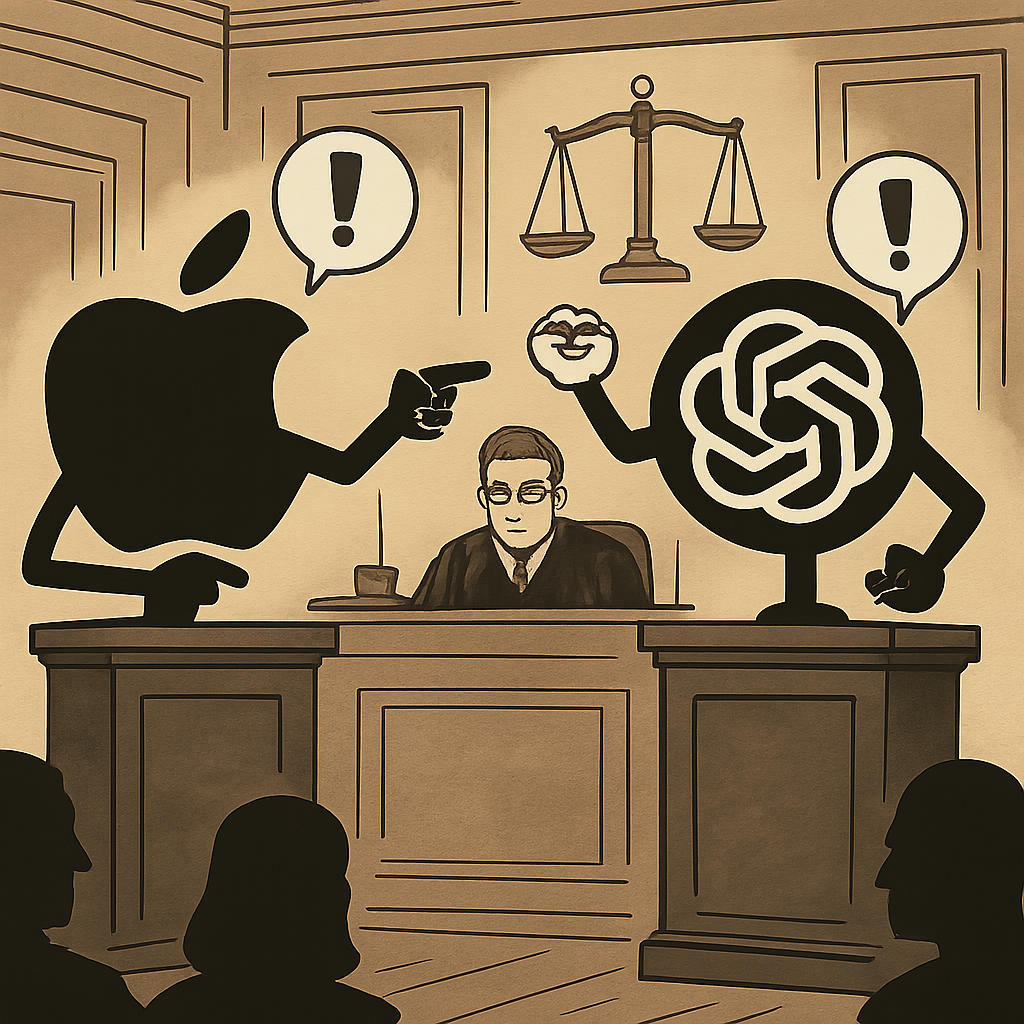
Apple has initiated legal proceedings against OpenAI, alleging that the artificial intelligence company engaged in the misappropriation of trade secrets by recruiting former Apple employees and encouraging them to disclose confidential information. The lawsuit, filed in the U.S. District Court for the Northern District of California, names two former Apple employees, Tang Tan and Chang Liu, as defendants.
Tang Tan, who previously held a significant role in Apple’s product design division, is now serving as OpenAI’s Chief Hardware Officer. Apple contends that Tan utilized proprietary project code names during OpenAI’s recruitment processes, instructed candidates to bring Apple hardware components to interviews, and coached departing Apple employees on circumventing Apple’s security protocols. Additionally, Tan is accused of soliciting details about Apple’s unreleased products.
Chang Liu, another former Apple engineer, is alleged to have retained an Apple-issued laptop after his departure and used it to download confidential technical documents. These documents reportedly contained information on unannounced technologies, features, and products, including technical specifications and engineering presentations. Liu is also accused of sharing Apple’s confidential information with other Apple employees applying for positions at OpenAI, advising at least one on what to study before their interview.
Apple asserts that OpenAI’s actions are part of a broader strategy to extract its confidential information. The company claims that OpenAI and its partners have used this information in developing their own hardware products. For instance, the lawsuit references a proprietary metal finishing technique that OpenAI allegedly employed after misleading a partner into believing it had Apple’s permission to do so.
Despite raising concerns with OpenAI in February, Apple states that it received no response. The lawsuit seeks to prevent further use of its trade secrets, retrieve proprietary materials, and obtain compensation for damages caused by the alleged breaches.
This legal action underscores the intensifying competition in the technology sector, particularly in the realm of artificial intelligence and hardware development. As companies like OpenAI expand their hardware ambitions, the battle for top talent and proprietary information becomes increasingly contentious. This case highlights the challenges tech giants face in protecting their intellectual property amidst a rapidly evolving industry landscape.