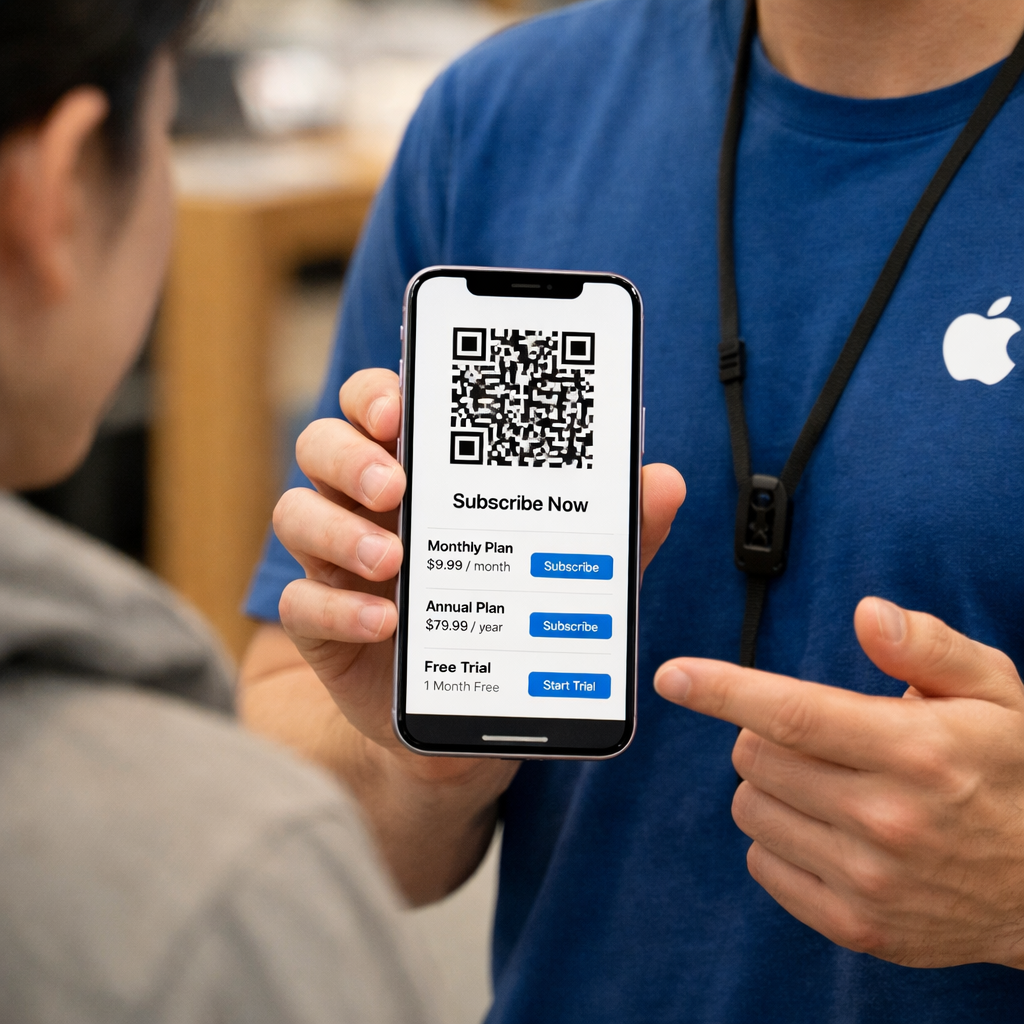
Video and whistleblower evidence has brought to light allegations that Apple Store employees in the U.S. have been enrolling customers in auto-renewing trials—sometimes without explicitly informing them. These trials include services like Apple One. The claims were detailed by electronics technician and consumer rights advocate Louis Rossman, who shared videos over the past two weeks arguing that some employees enabled trial subscriptions during in-store purchases without clear disclosure of automatic renewal terms.
What’s Alleged to Be Happening
Under the program highlighted, when customers enter an Apple Store, employees may ask if they want to scan a QR code tied to “Connect and Personalize,” which allows staff to view limited personal information—what devices they own, what services they already subscribe to, and what promotions or subscription offers they qualify for. Offers, including trial periods for services, are then shown on the employee’s device with “Agree” and “Decline” buttons. The customer’s default payment method is automatically linked for any subscription or trial, provided that method is still valid.
Concerns center on employees allegedly not clearly disclosing that these are trials that will charge after a period, sometimes rushing through the conversation, positioning trial offerings as gifts, or in some cases, tapping “Agree” themselves without proper customer consent. These practices were reportedly tied to a performance goal called the “services attach rate,” which required some employees at U.S. stores to get 40% of device-sale customers to also take on a subscription.
Apple’s Response and Immediate Changes
Following the public revelations, Apple has made a few rapid adjustments. First, the “services attach rate” metric was removed early last week by internal order, not long after the allegations were circulated. The company said the metric was less relevant during the holiday season, given that many customers are shopping for others.
Additionally, Apple issued a memo to retail employees reminding them of the obligation to obtain explicit consent before enrolling customers in subscription trials, ensure clarity when using “Connect and Personalize,” and handle other consent-sensitive processes—such as Genius Bar authorizations and device upgrade program sign-ups. The timing corresponded with the beginning of Apple’s holiday shopping season, when stores bring in extra staff.
What Customers Can Do
If you’ve recently visited an Apple Store, it’s a good idea to double-check your subscriptions. On iPhone, opening Settings, then tapping your name, then “Subscriptions” will display any active trials or services. From there you can cancel any subscription or trial you did not intend to begin.
If charges appear without your consent, there is a route for disputing them. You can submit a request via Apple’s “Report a Problem” portal. Also, reviewing bank or credit card statements can help catch any unexpected charges early.
Apple’s recent changes underscore ongoing tensions between sales metrics and customer trust. As subscription services become bigger profit drivers, ensuring transparency in how those services are offered has never been more critical. The extent to which this issue will damage Apple’s reputation or prompt regulatory action remains to be seen—and it’s something to watch closely into the new year.