Apple is preparing to overhaul its retail experience. As part of a sweeping redesign, the company plans to remove the large video walls found in many stores, restore dedicated Genius Bars, and create discreet bays for both order pickup and “Today at Apple” classes. These renovations will unfold over several years, affecting both new and already existing Apple Stores.
Major Changes to Store Layout and Function
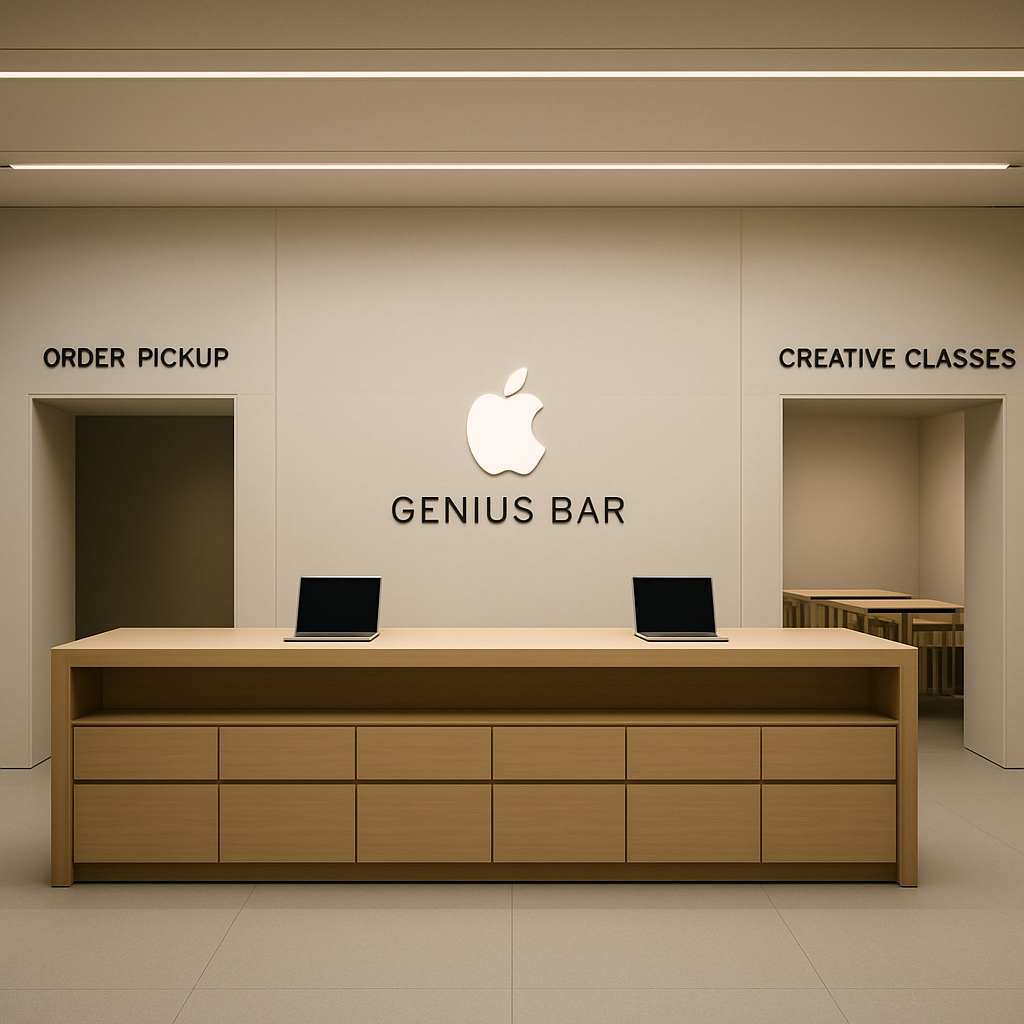
The redesign targets the “Avenue” section—Apple’s name for the store perimeter where accessories and services are currently displayed. In this area, Apple will carve out roughly 10-foot-wide custom bays for order pickups and classes, instead of the shared counter spaces currently in use. The pickup bay will feature an all-wood counter with a subtle Apple logo, lockable drawers beneath, and a front-facing staff station for handing out products. The Today at Apple classes bay will include a large display, fixed instructor table, stools, and storage drawers for class gear like iPads and laptops.
Giant screen walls—symbols of the design era under former retail head Angela Ahrendts, when stores were meant to function as public gathering spaces—will be phased out. The shift signals a move away from those more theatrical, open-concept features toward a more service-centric, functional layout.
The Return of the Genius Bar and Other Back-End Upgrades
Apple intends to reintroduce standalone Genius Bars to replace the current open-plan “Genius Grove” layout. These will include counters at accessible heights, a backdrop of storage cabinets, and product imagery to house repairs and technical support in a more traditional format.
Besides customer-facing changes, Apple is upgrading back-of-house spaces, including break rooms and staff areas. Internally, the company has also set stricter expectations for employees: at store openings, team members must be ready and attentive by five minutes before opening time—phones and drinks put away, standing and greeting first customers with applause.
These efforts aren’t theoretical. Trial runs of the updated layouts are already visible in a small number of Apple Stores globally. The full rollout—to both renovated and brand-new locations—will occur gradually over coming years.
The changes reflect Apple’s strategic shift from its Ahrendts-era vision, which emphasized stores as community hubs with high impact visual design, to a more restrained and service-oriented architecture. The cost and logistics of maintaining massive video walls may also be factors in this transition.
For customers, the enhancements aim to clarify store functions: separate zones for buying, learning, and support. Step inside a redesigned store and you’ll notice distinct, wood-accented Genius Bar areas, independent pickup and classroom bays, and fewer showpiece video displays. Productivity, efficiency, and clarity appear to be the goals.
Analytically, this revamp matters. Apple Stores have long been branded by grand visual theater and open spaces—but this tilt toward functional design may improve operational efficiency and customer satisfaction. What to watch for: how well these changes scale across different markets, whether customers respond positively to more utilitarian layouts, and how this approach influences Apple’s retail brand moving forward.