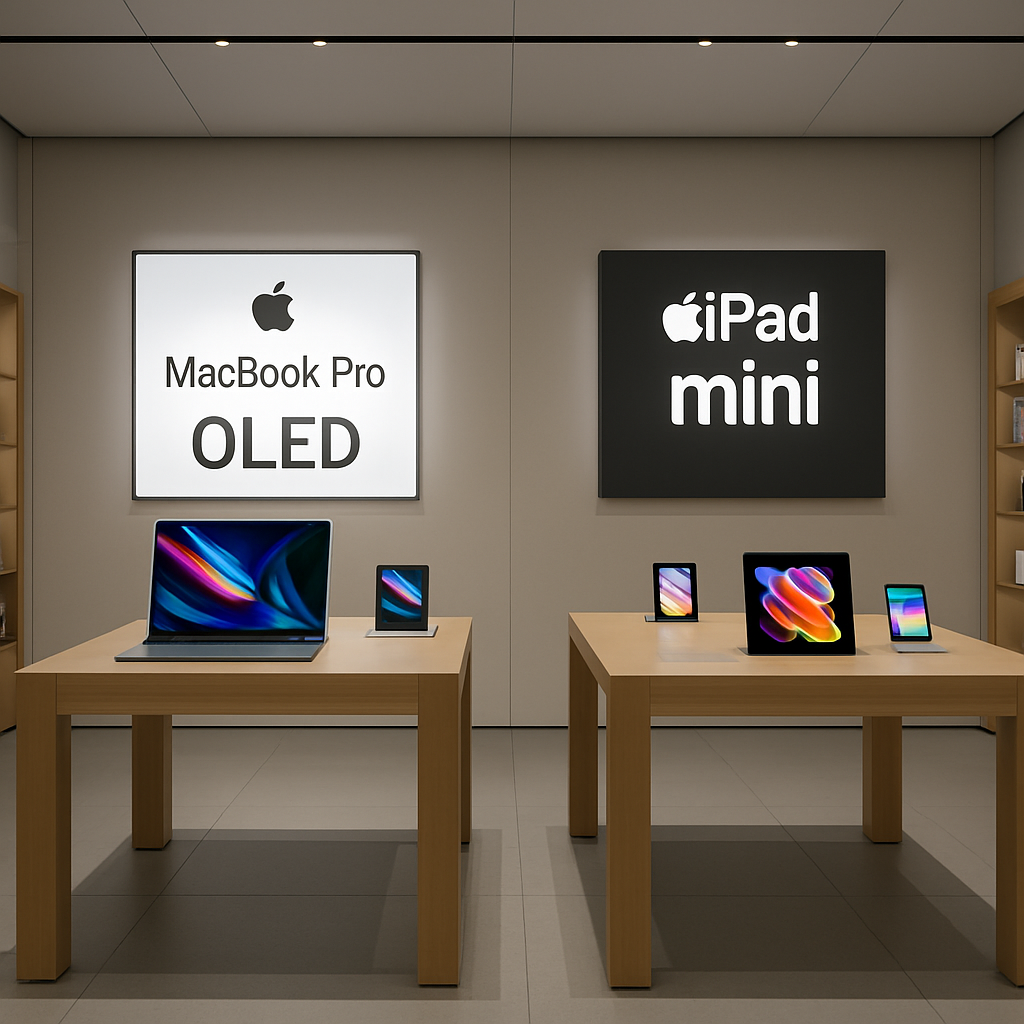
Apple is gearing up for a major in-store overhaul set for the evening of November 5 into the morning of November 6, signaling the likely arrival of several anticipated products, including an OLED MacBook Pro and a redesigned iPad mini. These changes—new signage, updated product displays, and refreshed floor layout—typically reflect the company’s strategy to align its retail experience with newly unveiled hardware.
Countdown to Launch: What’s Expected
The event that triggered this reset appears to be Apple’s upcoming hardware announcement, currently rumored for October 27. Following that, the company is planning this synchronized roll-out across its stores, coinciding with multiple consecutive product launches on Fridays throughout late October and early November. This schedule has already included the iPhone Duo releasing October 23, HomePod mini 2 arriving October 30, and both HomeView and a new Apple TV 4K expected November 13. The November 6 launch would make it the fourth straight Friday to deliver new gear.
Among the most anticipated releases are the OLED iPad mini and a MacBook Pro upgraded with both an OLED display and touch functionality. The iPad mini is said to feature a new landscape-oriented FaceTime camera, enhancing video chatting and usability for creative work. Meanwhile, the MacBook Pro model is rumored to be lighter overall—possibly moving away from the traditional notch toward a Dynamic Island display design.
Additional hardware updates expected with this reset include a 14-inch MacBook Pro powered by Apple’s forthcoming M6 chip, plus an update to the iMac line using the same processor architecture. These changes suggest Apple is extending its processor transition beyond laptops into desktops.
What the Retail Reset Means
For Apple’s retail experience, the reset involves more than just placing new products on shelves: it resets the store environment—display tables, signage, and lighting—to match the latest lineup. Starting after hours on November 5, stores will likely clear out older hardware, adjust demo units, and roll out the new models for customers to test and purchase on or around November 6.
This isn’t just about aesthetics. It drives excitement, plays a role in sales-momentum, and ensures that when customers walk in, the in-store experience reflects the cutting edge of the product portfolio.
The big picture is a packed fall for Apple. Several product lines are aligning for refreshes: iPhones, speakers, tablets, laptops, and possibly desktops too. The company seems intent on keeping weeks between product announcements tight, with multiple launches and store-resets designed to keep media and customer attention high.
Why this matters: a synchronized retail reset isn’t simply logistics—it reflects Apple’s strategy to tightly control narrative, demand, and first impressions. As display tech becomes increasingly central—OLED displays, Dynamic Island design, landscape-oriented cameras—Apple appears doubling down on user experience and visual innovation. Observing what exact features make the final cut (OLED specs, weight reductions, the M6 chip) will show how aggressively Apple is pushing forward this season. Potential buyers should watch closely for official announcements around the October event, and expect Nov 6 to mark true availability in stores.