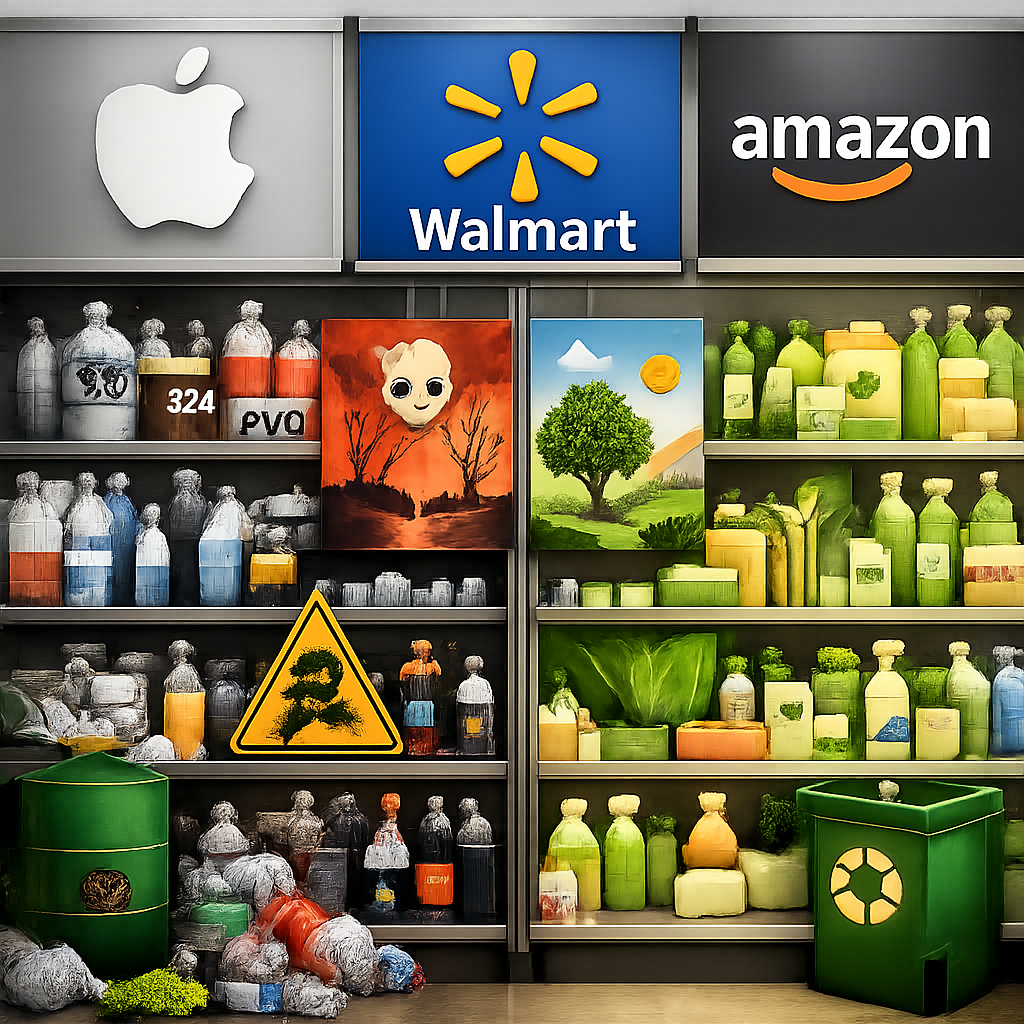
In the 2026 Retailer Report Card released this week by Toxic-Free Future, Apple leads among major North American retailers in its efforts to reduce hazardous chemicals and plastics in products, packaging, and supply chains. Apple achieved the highest score—and was the only company awarded an A grade. In contrast, the average rating among the 50 retailers assessed remained at a D+ level.
Walmart, Amazon, Walmart & Whole Foods Take Big Hits
While Apple surged ahead, many retailers slipped. Walmart and Whole Foods Market each dropped more than 20 points in their grading since the previous survey, and Amazon, Dick’s Sporting Goods, and Walgreens fell by over 10 points. These declines reflect weakening performance across key areas such as disclosure, goal-setting for reducing chemical risks, and public reporting of progress.
Other strong performers behind Apple this year included IKEA, Target, and Sephora, all earning A- grades for their commitments and transparency. Meanwhile, 16 retailers failed the assessment, repeating poor performances from 2024; Trader Joe’s, McDonald’s, and 7-Eleven are among this group. Dollar Tree stood out as the most improved, gaining 16 percentage points since the last report.
Transparency & Commitments See Sharp Drop
Major indicators uncovered worrying trends between 2024 and 2026. Retailers with measurable public targets to reduce or eliminate hazardous chemicals fell from 44 percent to just 10 percent. Similarly, the share of companies reporting progress dropped from 68 percent in 2024 to 44 percent this year. Experts behind the report described these as signs of backsliding, stressing that companies are still capable of improving chemical safety—if they prioritize it.
The report involves 50 leading retailers from the United States and Canada, evaluating them on how well they disclose chemical usage, set goals to reduce toxic substances in their offerings and packaging, and report outcomes to the public. Despite some notable successes, the data suggests that the overall trend is moving in the wrong direction.
Consumer health advocates warn that this erosion of performance isn’t just a failing in corporate social responsibility—it has real implications for public well-being. As regulatory scrutiny around materials intensifies globally, retailers that lose ground risk falling behind both regulatory and market expectations.
Looking ahead, the stakes are high. To regain confidence—and to truly drive progress—more retailers will need to not only set robust goals but also follow through with measurable actions. For Apple, the report solidifies its standing as an industry leader. For others, the report offers both a warning and a roadmap: transparency, accountability, and meaningful results are now table stakes.