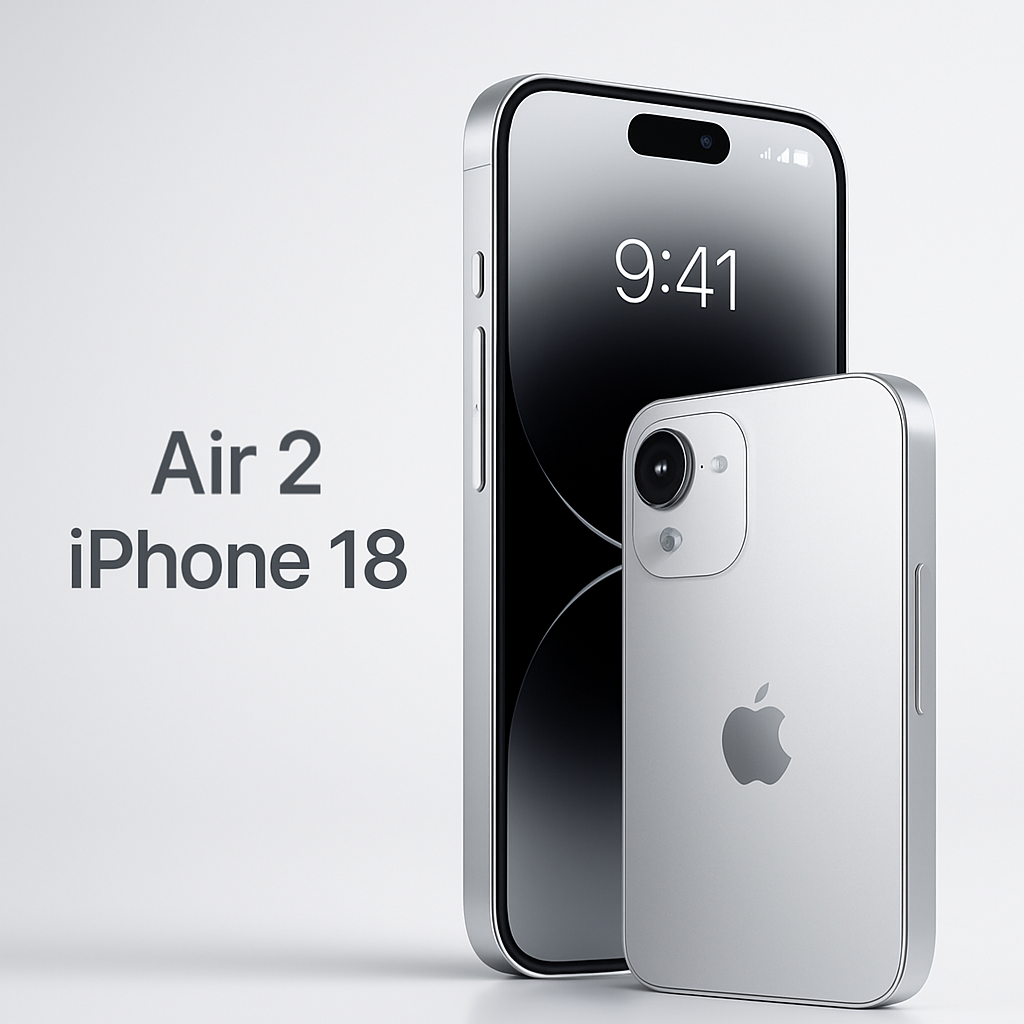
Apple may be preparing a major shake-up in its iPhone lineup: a leaker claims the upcoming “iPhone 18” could be replaced by a rebranded “iPhone Air 2.” Rather than being a distinct model, the base-model iPhone expected in spring 2027 might carry the Air name instead. If true, the Air line could absorb what we now consider the entry-level iPhone. However, according to the same source, such changes won’t arrive until after 2027.
What the Leak Suggests
Earlier reports anticipated the next base iPhones—sometimes referenced as iPhone 18 or an “e” version—will share far more hardware and design features with Apple’s Air models. The Air-style design is expected to be thinner, possibly with a smaller Dynamic Island.
The leaker dubbed EarlyAppleLeaks claims Apple is considering eliminating the “base iPhone” name tag altogether, instead calling what was going to be the iPhone Air 2 the iPhone 18. In effect, the Air model could step in as the entry point for the iPhone lineup—or at least take over its pricing and brand role.
Timing Makes the Difference
While this rebrand might streamline Apple’s product tiers—Base, Air, Pro, Ultra or Foldable—the leak insists any such shift won’t happen until *after* 2027. All iPhone models slated for release next spring are reportedly already deep in development, making a sudden name shuffle highly unlikely.
One concrete sign to watch for at Apple’s September 9, 2026 event is whether the base iPhones include a smaller Dynamic Island. Such a design tweak, increasingly aligned with Air models, could hint at this transition even before the full rebrand.
As things currently stand, Apple’s spring 2027 roadmap looks busy: multiple models across categories likely to include two Pro versions, a foldable, and potentially an “Air” instead of the entry-level base model. If Apple proceeds with this shift, it would be a big simplification of its current naming strategy.
What’s unclear is how battery capacity, thickness, and pricing will be handled under the new structure—items Apple historically differentiates tightly between base and Air/Pro models. Until Apple confirms, much of this remains speculative. But either way, the idea reflects Apple’s ongoing effort to consolidate design cues and product tiers.
Why this matters: if the base iPhone becomes the “Air” line, it changes what consumers expect for entry-level Apple phones—more premium design touches, thinner profiles, possibly thinner margins or revised battery life. For investors and rivals, this represents a repositioning that could reshape competition. We’ll know more when Apple flips the switch—or at least unveils what its near future looks like at this week’s event.