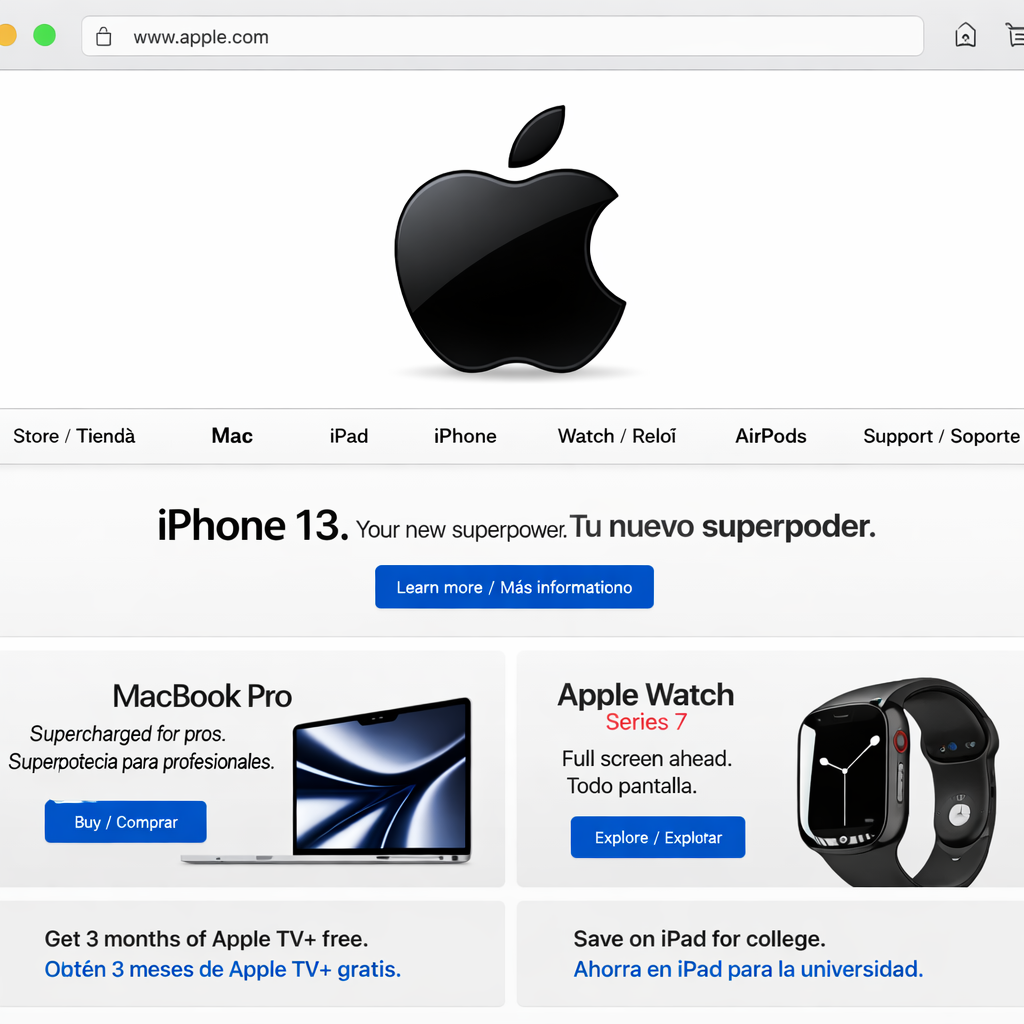
Apple has rolled out a Spanish-language version of its main U.S. website, making the site accessible as apple.com/us-es by default for customers who have Spanish selected as their device or browser language. Users who prefer Spanish but haven’t set that as their default can still choose it via the country and language picker located at the bottom of Apple’s U.S. site. This change goes live as of November 16, 2026.
While much of the site’s content—from product pages to marketing materials—will be translated into Spanish, two major areas remain unchanged: the Apple Online Store and Financial Services sections. These parts of the site will continue to display in English only. For Spanish-speaking users needing assistance in Spanish with the Online Store, Apple says they can contact an Apple Specialist by phone to make purchases.
Until now, only Apple’s Support portal offered a U.S. Spanish version. With this expansion, the broader Apple.com U.S. presence aligns more closely with what support has already been providing Spanish-speaking users.
Why This Matters
Spanish is the second-most spoken language in the U.S., and this move signals Apple’s recognition that significant portions of its U.S. audience prefer engaging in Spanish. It’s a logical step in improving accessibility and inclusivity across its digital offerings.
What’s Still Missing
The Online Store remaining in English could limit usability for Spanish-only speakers wanting to buy products directly on Apple.com. While phone-based help in Spanish helps bridge that gap, many users may still find it inconvenient compared to a fully translated e-commerce experience. Financial Services also remains English-only, which could be a barrier for Spanish-speaking customers managing Apple’s payment or credit offerings.
I believe this shift reflects Apple’s broader push toward multilingual support in digital channels—but it also highlights where gaps persist. What to watch next: whether the Online Store and Financial Services fully transition to Spanish, how Apple handles translation and localization across new products, and whether the same move expands to other major non-English languages. Inclusivity is increasingly table stakes, and Apple’s next steps will show how serious the company is about being multilingual by design.