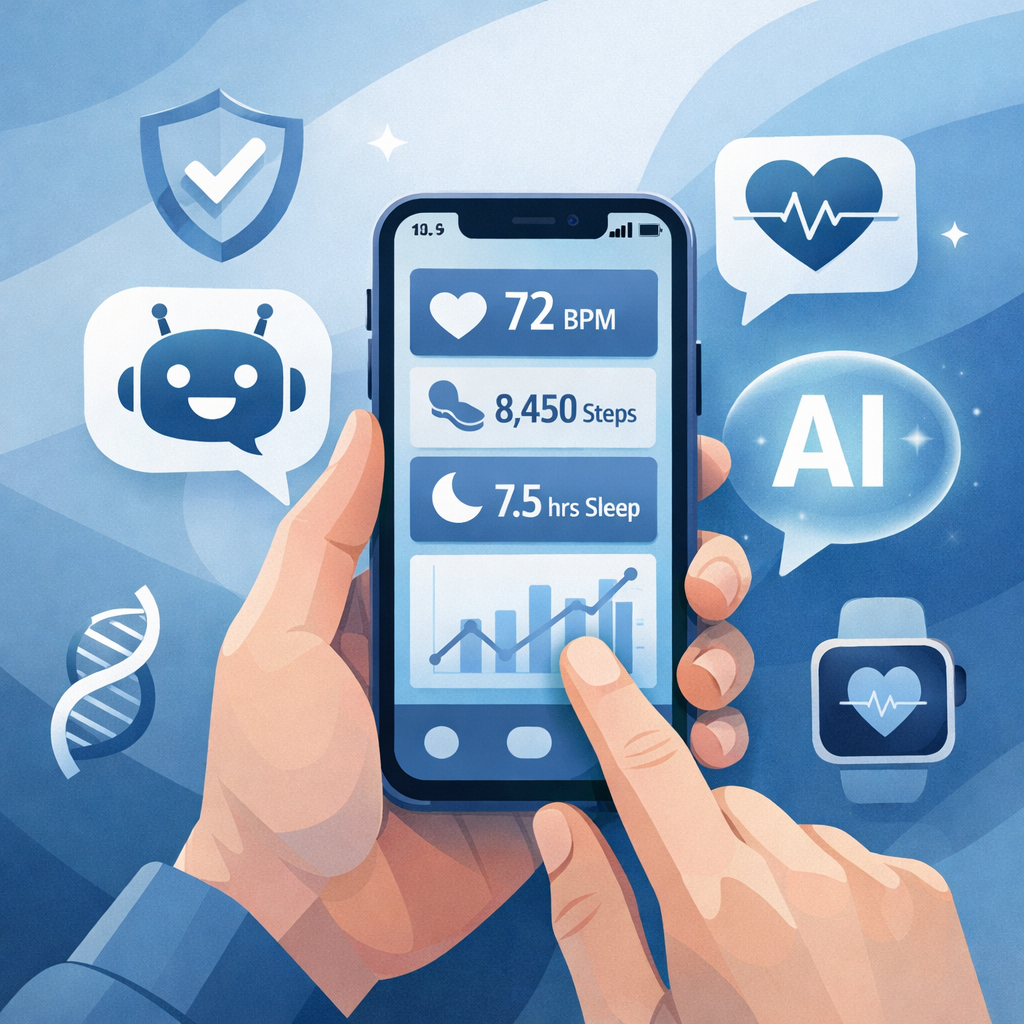
Apple has kicked off a year-long research initiative aimed at unpacking how people rely on artificial intelligence when it comes to health guidance. Despite numerous documented cases of misleading or dangerous outputs from AI chatbots, users continue to lean on them for medical information. This study seeks to gauge trust levels and how ordinary individuals engage with AI health tools in their daily lives.
Scope, Participants, and Goals
The project—dubbed the “Apple Health AI Usage Study”—is being developed in partnership with the clinical AI platform OpenEvidence. It plans to recruit up to 200,000 participants who are U.S. residents aged 21 or older. To qualify, users must have an iPhone 15 Pro or later model with iOS 26 or newer, and must have Apple Intelligence enabled. Apple will also seek permission for participants to optionally share health data from their Apple Watch or iPhone.
Participants will be prompted to ask health questions ranging from basic everyday concerns to more complex medical issues. Throughout the study, Apple intends to watch for signals—termed “concerning questions”—that may warrant steering users toward professional medical advice. Another aim is to explore how AI can assist people in preparing for clinical appointments, improving the bridge between patient and doctor.
Accountability, Responsibility, and AI in Health
The study is framed as a move toward “responsible innovation,” built on scientific and clinical foundations. Apple’s vice president of Health and Fitness emphasized that health is deeply personal, and that insights from this research will help craft trustworthy AI tools that genuinely support users. Meanwhile, a professor of medicine at UCSF highlighted the need for convergence between patient-facing tools and what clinicians use, so health conversations become more grounded and useful.
This comes as Apple is already enhancing its Health app—expanding its ability to offer guidance not just on fitness, but on overall health. One key point: when the research app detects worrisome patterns, it will prompt users to consult a medical professional rather than rely solely on AI. The goal is to ensure better outcomes through clearer communication and more responsible AI deployment.
Apple has made it clear that this is meant to be a careful, deliberate study—set up to understand how real people use health AI, and how it could be improved. It’s not about pushing AI solutions without checks; it’s about gathering evidence. If tools are to be trusted, they must not only perform—but also align with how people think about health, risk, and medical authority.
What this means, and what to watch: This study could set new benchmarks for how companies build health-related AI tools—especially around transparency, safeguarding users, and handling edge cases. It may signal that Apple aims to be a leader not only in hardware and features, but in the ethics and trustworthiness of health AI. Watch for early findings: what counts as “concerning”—how often prompts to see a doctor are triggered—and how users’ trust shifts over time. These data points might shape regulatory expectations, industry norms, and the next generation of health apps.