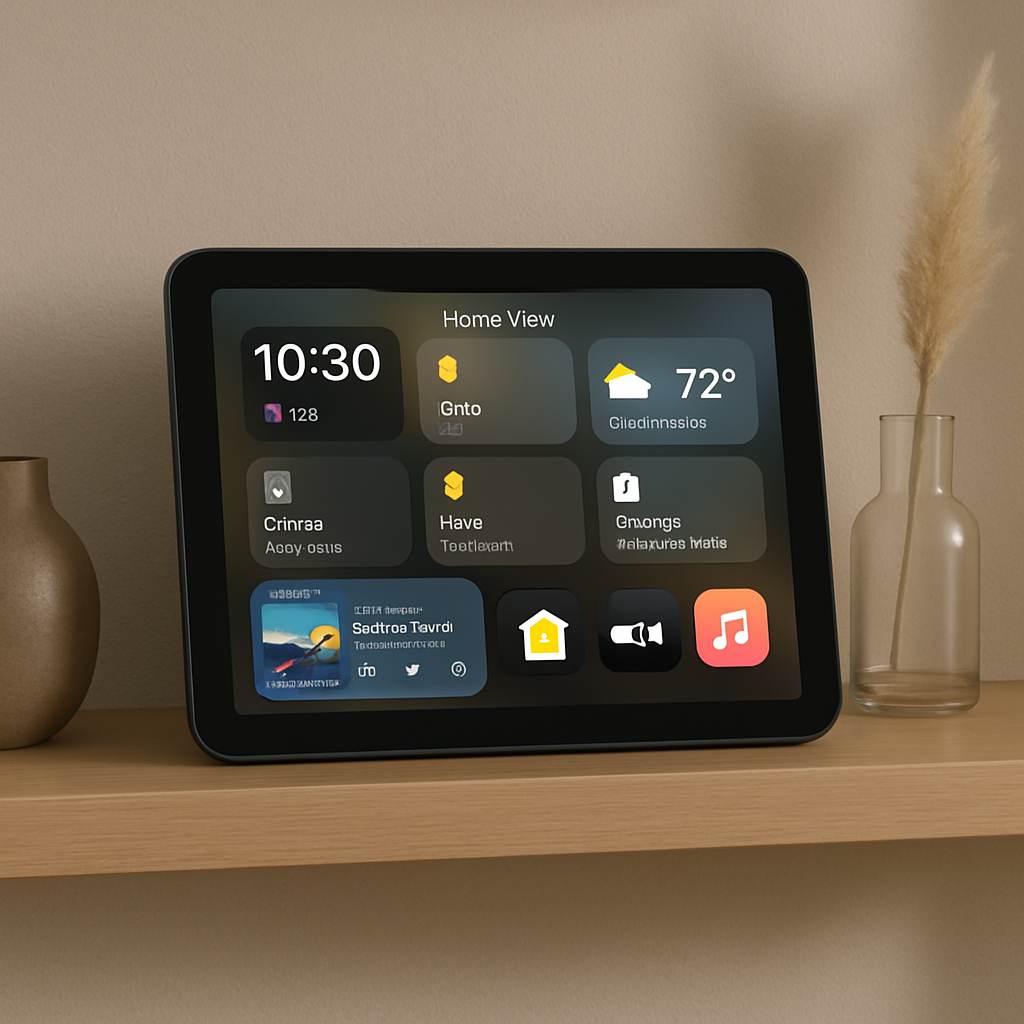
Apple’s freshly announced HomeView smart home hub uncovers a curated set of 15 built-in apps alongside select CarPlay-enabled media apps and widgets that mirror content from a paired iPhone. Though there’s no App Store onboard, users get access to a broad mix of Apple’s core services plus third-party offerings via CarPlay.
In-box apps: The essentials
The HomeView arrives preloaded with 15 native Apple apps aimed at core home utility and communication. Among them are Alarms, Calendar, FaceTime, Find My, Home, Intercom, Messages, Music, Podcasts, Reminders, Safari, Settings, Timers, Weather, and World Clock. These cover basic tasks like keeping time, staying in touch, managing reminders, and controlling smart home gear.
CarPlay multimedia content expands HomeView’s offerings
While HomeView doesn’t host an app marketplace, it nevertheless extends media access through CarPlay-enabled apps on a linked iPhone. Supported Apple apps like Apple Music Classical, Apple News, Apple TV, and Audiobooks will stream or mirror their content. On the third-party side, services such as Spotify are included among supported audio and video apps and their widgets, bringing more versatility to the media mix.
The legal framework enabling this sharing is rooted in Apple’s Developer Program agreement, which confirms CarPlay apps and widgets may be surfaced on HomeView under the correct permissions.
HomeView is available to pre-order now, with an official release date set for Friday, November 13.
Why this matters: By offering a set of built-in apps plus CarPlay media integrations instead of a full App Store ecosystem, Apple seems to be defining HomeView as an ambient control and entertainment hub rather than a general-purpose tablet. This approach prioritizes reliability and simplicity over extensibility. It will be interesting to watch if Apple decides to broaden third-party support later, or if HomeView remains focused on a streamlined experience. Ahead, observers should track how developers respond and whether this device finds its place alongside existing options in the smart home market.