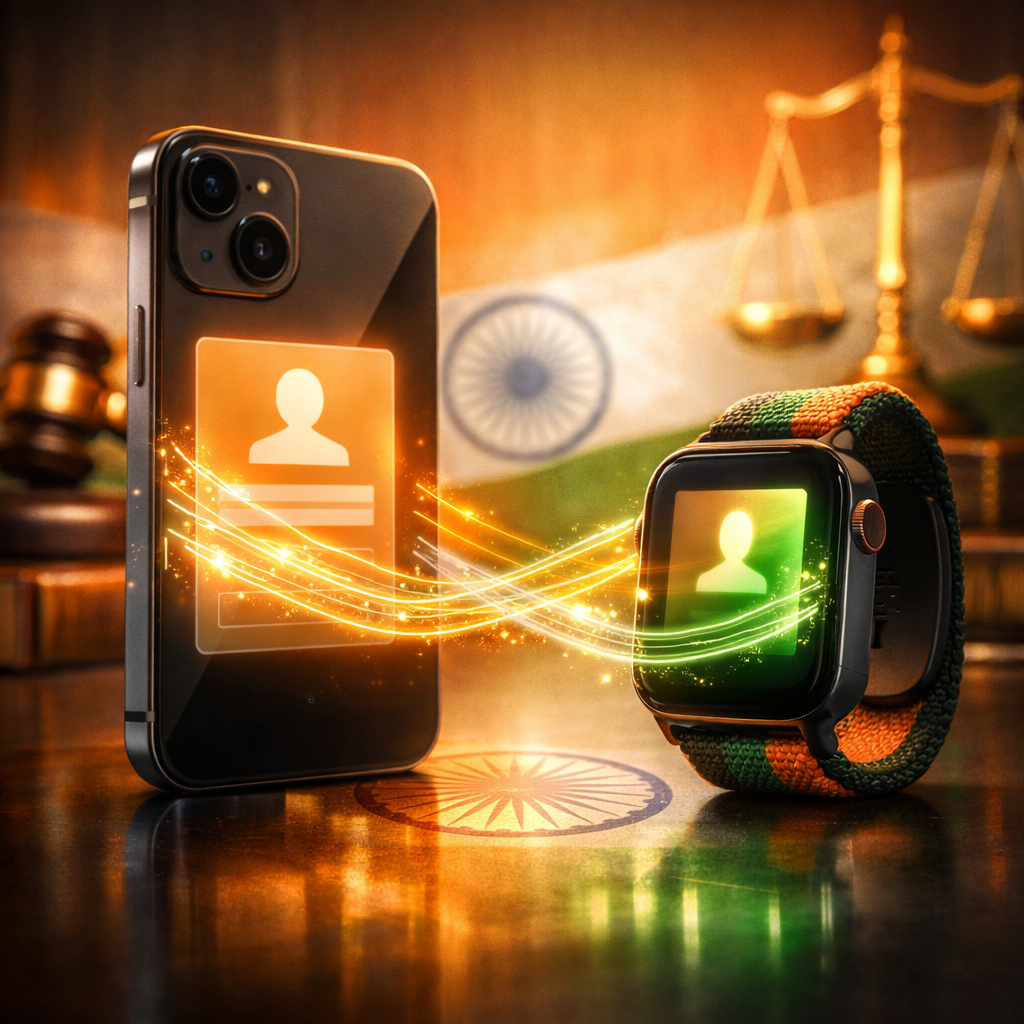
A startup in India is demanding ₹15 billion (about $161.9 million) plus an injunction against Apple for alleged patent infringement tied to its NameDrop contact-sharing feature. The lawsuit, filed in Bombay High Court by GG Technologies, claims Apple’s NameDrop violates an Indian patent covering methods to exchange contact info with nearby phones without manual pairing. The company seeks to block sales of iPhones and Apple Watches in India if they ship with the feature preloaded. The 781-page complaint has not yet secured a hearing date.
Feature at Issue & Patent Timeline
NameDrop is part of iOS 17 and lets users share contact details simply by bringing two iPhones into proximity. GG Technologies says it developed an app called StayTouch, available on iOS and Android and launched in 2019, that works through a similar contact-sharing technology. The company applied for a U.S. patent in 2019 and filed the related Indian patent application in 2021. That Indian patent was granted in July 2024. Apple formally revealed NameDrop at WWDC 2023.
Legal Battles & Procedural Details
GG Technologies says it first sought mediation in April; those efforts ended in September without resolution, paving the way for the formal lawsuit filed in October 2026. In Indian courts, mediation is a common first step in commercial disputes. Alongside this action, GG Technologies initiated a separate lawsuit in India earlier in 2026 and is also involved in a related case currently under investigation by the U.S. International Trade Commission.
The filing demands damage compensation of ₹15 billion, roughly $162 million, and aims to prevent Apple from distributing devices in India with NameDrop. While the complaint is voluminous — 781 pages — the court has not yet set a date for hearings.
Apple has not yet publicly responded to the allegations.
What this means: The case spotlights growing tensions over patent protection in rapidly evolving features like device pairing and contact-sharing. If GG Technologies succeeds, it could force Apple to alter or disable NameDrop in India, or face bans and substantial payouts. The litigation also underscores how startups can leverage both domestic and international patent systems to press claims. Observers will want to see how deeply this case affects NameDrop globally, and whether it nudges Apple toward more cautious feature deployment where patent landscapes are complex.