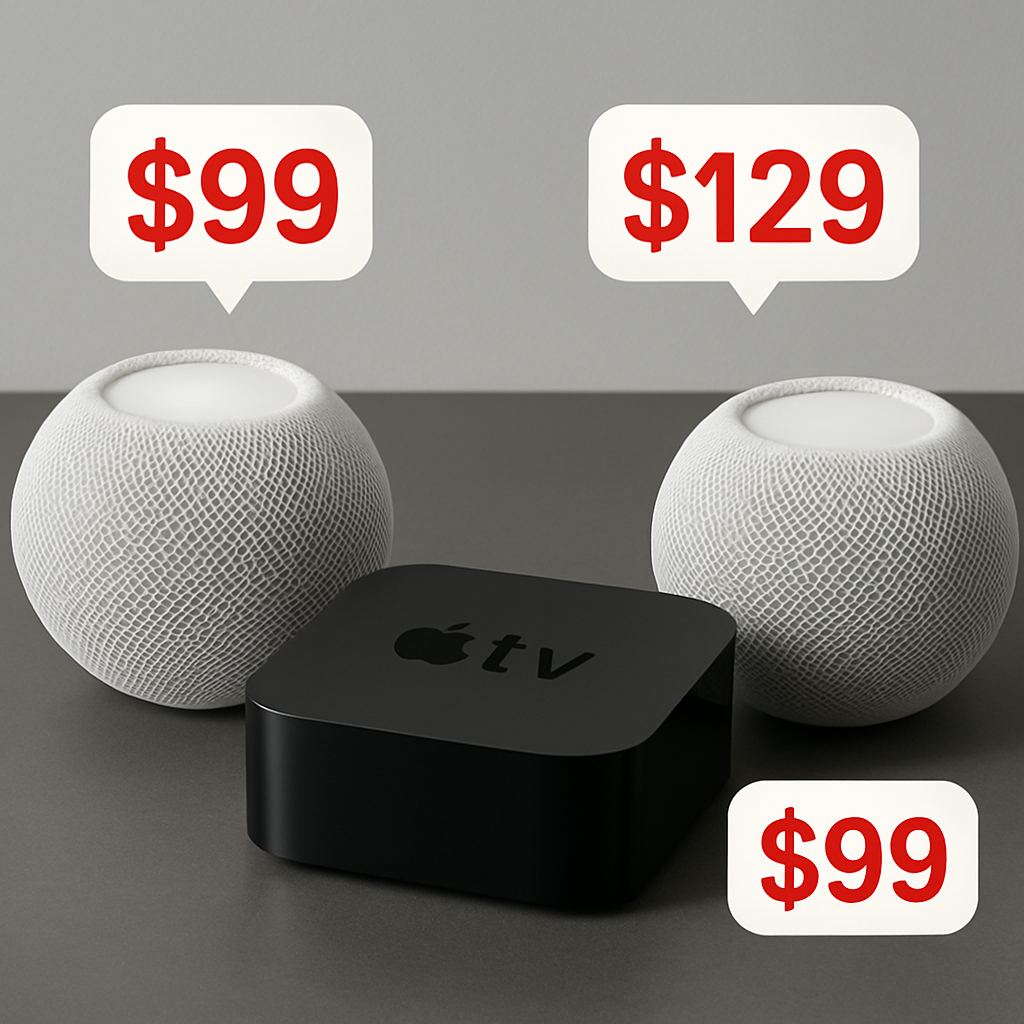
Apple has sharply raised prices for its Apple TV 4K and HomePod mini lineup, with increases vastly outstripping any new features. Before June 2026, the Apple TV 4K base model sold for $129, while the HomePod mini was $99. As of the latest launches, the updated Apple TV 4K now starts at $299 and the HomePod mini 2 is priced at $149—marking significant jumps in MSRP.
The latest Apple TV 4K is available only in a single configuration: 128GB of storage and an Ethernet port. To put the increase into perspective, a previous generation 128GB Apple TV 4K model originally retailed at $149 before its price climbed to $249 this past June—making today’s $299 entry price notably steeper.
Even buyers sticking with one HomePod mini now face higher costs. Pairing a stereo pair of the mini 2 speakers with a new Apple TV 4K will bring the total close to $600, nearly doubling what the same setup would have cost just four months ago. Previously, that combination—128GB Apple TV and two HomePod minis—ran around $350.
Observed price hikes overshadow the hardware updates in these new devices. While there are spec upgrades, the jump in cost has drawn more attention from consumers and commentators alike than the feature sets themselves. One analyst acknowledged that while the new Apple TV 4K carries a hefty price tag, it remains “worth it” for users who value its enhancements; the HomePod mini 2’s price is viewed as “reasonable,” though plainly higher than before.
What’s Driving the Cost Spike?
Earlier in 2026, Apple adjusted pricing across multiple tiers of the Apple TV 4K line. Models with added storage were already more expensive before the current combined configuration was introduced. The move toward a single SKU for the new Apple TV simplifies inventory but also lifts the floor price for entry.
For HomePod mini, evolution into the “2” version brings modest improvements—but not, apparently, enough to justify inflation to many customers. The older mini included features that made it competitive in its price class; the new generation makes enhancements but charges almost 50% more. Combined with the Apple TV price rise, the overall cost for outfitting an Apple home streaming setup has climbed steeply.
Gruber, the analyst who reviewed the changes, pointed out that while earlier Apple TV models had one configuration option, the latest version forces buyers to pay more even for entry-level performance—there is no lower-cost variant without Ethernet or lesser storage. The implication: every buyer now pays premium.
These price increases take effect during a period of rising hardware costs industry-wide. Inflation, supply chain constraints, and higher component and logistics costs likely play a part. But for many consumers, what matters more is that the headline price tag has gone up dramatically—without commensurate or visible changes in everyday use.
These changes may shift buying behavior. Consumers may delay upgrading, choose less expensive audio alternatives, or seek older stock. Resellers with remaining units of the prior-gen models might see demand spike. Apple seems to be betting that demand for its streaming box and smart speaker remains strong enough even with the higher price points. How the market responds could influence future pricing strategies from Apple’s peers.
Analytical Angle:This move illustrates Apple’s ongoing strategy to extract greater margins from key device segments heading into 2027. By bundling features like expanded storage and Ethernet into its entry-level models, Apple has raised the baseline price that users must pay just to get in the door. That risks alienating budget-conscious customers, but it may be part of a broader push toward premium pricing across its hardware lineup. What to watch: whether Apple will introduce lower-cost versions later down the line, or if competitors will capitalize on this gap in the market by offering more affordable streaming and smart speaker solutions.