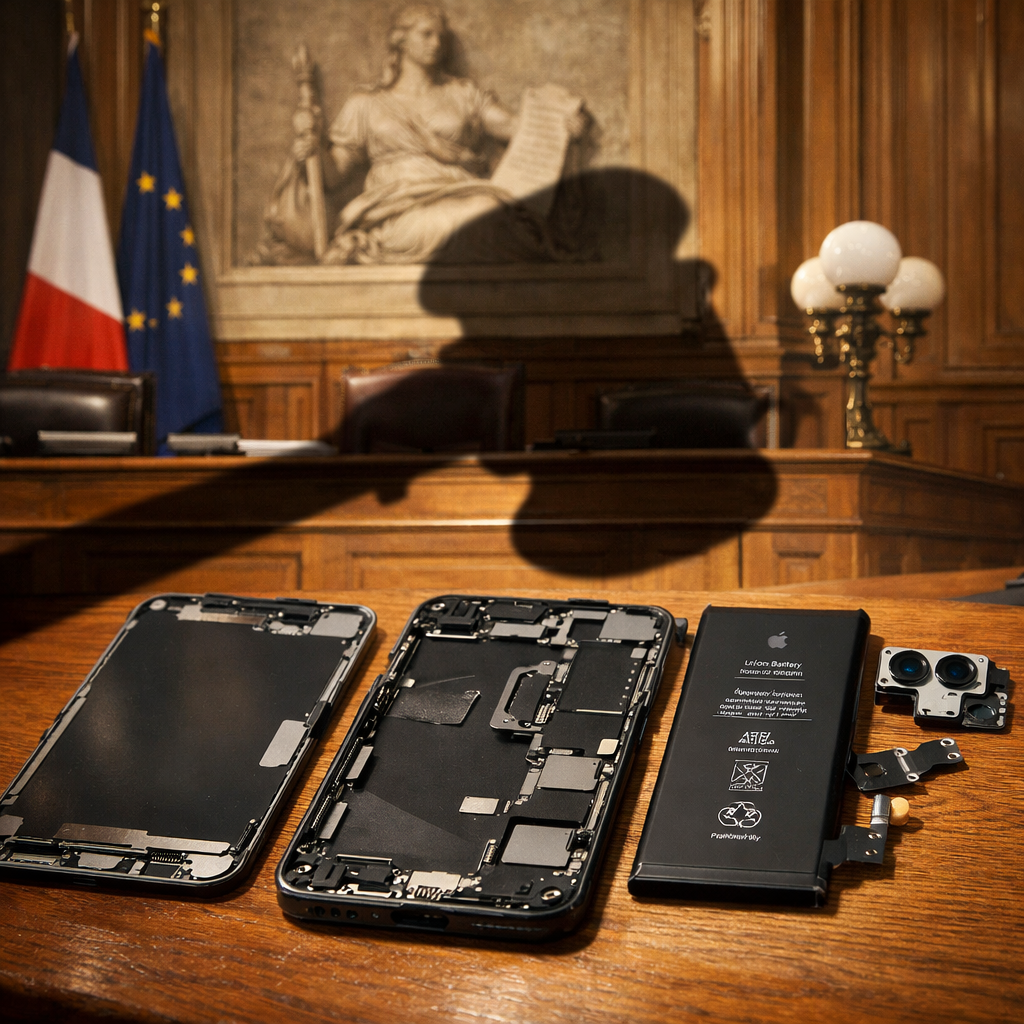
Apple is scheduled to stand trial in Paris in June 2027 on charges brought under French consumer law alleging that it restricted repairs of iPhones outside its official service channels. The case centers on claims by the consumer group Halte à l’Obsolescence Programmée (HOP) that Apple’s use of software-based restrictions, known as “serialization” or “parts pairing,” hindered repairs—even when genuine Apple parts were used. These limits are said to cover 24 iPhone models, for a period spanning from November 2021 to July 2024.
What’s Being Alleged
HOP’s complaint—originally filed in December 2022—accuses Apple of linking certain replacement components like screens, batteries, and cameras to the device through pairing software. According to the complaint, such serialization caused functional issues when a part was replaced by an independent service, even if it was an authentic Apple part. The group argues these practices forced users to rely on Apple-authorized repair channels and made repairs slower, harder, and more expensive.
The lawsuit is being pursued under Article L441-3 of the French Consumer Code, in place since 2021 under legislation aimed at reducing waste and protecting consumers. That article bans practices that deliberately obstruct repair and refurbishment outside of the manufacturer’s approved network. French prosecutors opened an investigation in 2023 based on HOP’s complaint.
Legal Timeline and Apple’s Defense
A procedural hearing is set for February 25, 2027, at the Paris Criminal Court, where the schedule for the case will be set. The full arguments are expected to be delivered over several days in June 2027. If convicted of obstructing repair, Apple could face criminal penalties—including fines and possibly other sanctions under French law.
Apple has strongly denied the allegations, calling them baseless. The company has pointed out that it has already made changes to its repair policies: introducing support for used genuine parts, limiting serialization practices on newer iPhones, and allowing certain third-party repairs to be validated. Additionally, replacing a screen with a generic part no longer disables the True Tone feature, a change implemented in 2024.
HOP, however, notes that while these adjustments are steps forward, their real-world impact remains to be seen. The organization claims that serialization practices still affect dozens of iPhone models and that many of the affected features (like screen, camera, battery repair) were most prone to failure when repaired outside Apple’s authorized channels. HOP also points to EU-wide regulations: the right to repair directive now bans serialization since August, though with exemptions for intellectual property or other objective justifications, leaving room for interpretation.
This prosecution could mark the first major case in France—or globally—where planned obsolescence is legally addressed through obstructing repair practices. If convicted, Apple could face penalties including up to two years in prison under French law, significant monetary fines, and possibly orders to change its approach to repairs.
Why this matters: Legal definitions of planned obsolescence are still evolving. Repair restrictions via software pairing are a growing concern globally—for consumers, repair businesses, and environmental advocates. How France’s courts interpret Article L441-3 could set precedent for other countries already drafting stricter right-to-repair laws or investigating similar claims against major tech companies.


