Apple has been using iPads internally with macOS for some time, reveals tech analyst Mark Gurman. However, the company is not moving toward offering macOS to regular customers on iPads. What does this internal experimentation mean, and why isn’t it being released?
macOS Lives Hidden Inside iPads
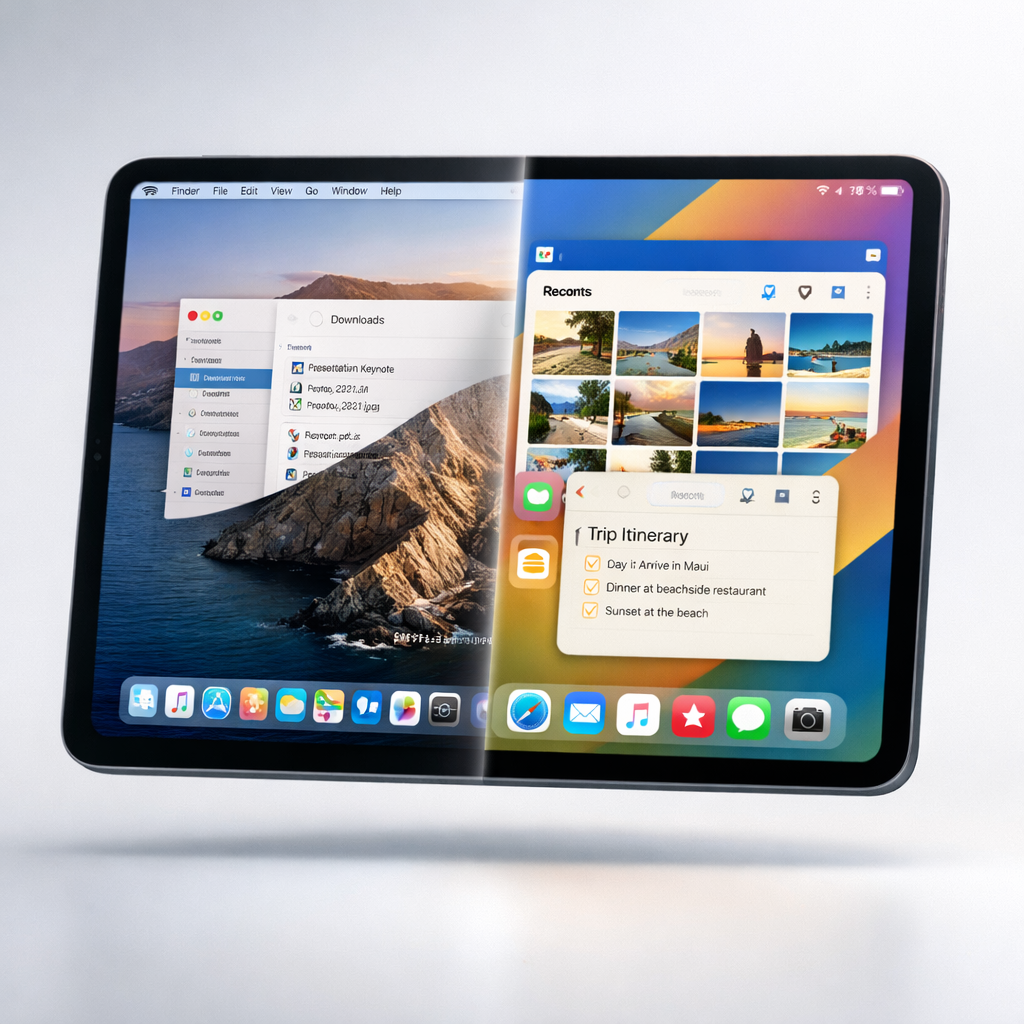
In his recent podcast appearance, Gurman stated that Apple engineers have iPads running macOS internally, a setup that has existed behind closed doors. Despite this, there is currently no effort underway to make macOS available on iPads for consumers. Gurman emphasized that macOS on iPad is not an ongoing project geared toward public release. Instead, Apple is choosing to bring individual Mac features and applications — like Final Cut — into iPadOS gradually.
Why Apple Keeps macOS and iPadOS Separate
Several reasons drive Apple’s decision to maintain distinct operating systems for Macs and iPads. One key factor is flexibility: iPadOS is optimized for touch-first interaction, while macOS has never been built with that paradigm in mind. Apple leadership believes merging them could erode what makes the iPad unique as a touch-driven device.
Regulatory concerns also play a part. EU digital regulations impose rules that treat each operating system separately, which influences Apple’s strategy. Mac and iPad systems are governed as distinct platforms under those laws, reinforcing the separation in code and functionality.
What Apple’s Refusing — and Refining
Apple has repeatedly dismissed the notion of merging iPadOS and macOS into a single OS. In official statements and interviews, senior executives have reiterated that combining them would compromise the simplicity and design philosophy behind both. Even as features like flexible multitasking, menu bars, keyboard and trackpad support, and windowed apps make the iPad experience more Mac-like, full convergence is off the table.
Instead, Apple seems to favor selective integration: adopting powerful Mac apps and capabilities in iPadOS, without turning iPads into Macs themselves. This gives users access to heavier software without sacrificing the platform’s touch-first identity.
In summary: yes, there are iPads running macOS internally — but don’t expect them to ship that way. The separation of macOS and iPadOS reflects deep architectural, design, and regulatory realities.
Why it matters: While internal macOS builds show Apple is exploring new flexibility, preserving separate operating systems keeps the product lines distinct, protects margins tied to software distribution, and ensures each platform meets its purpose. Users should watch how Apple brings Mac features into iPads, especially under evolving tech and regulatory pressures. Whether we’ll ever see a hybrid or optional macOS mode remains an open—and controversial—question.