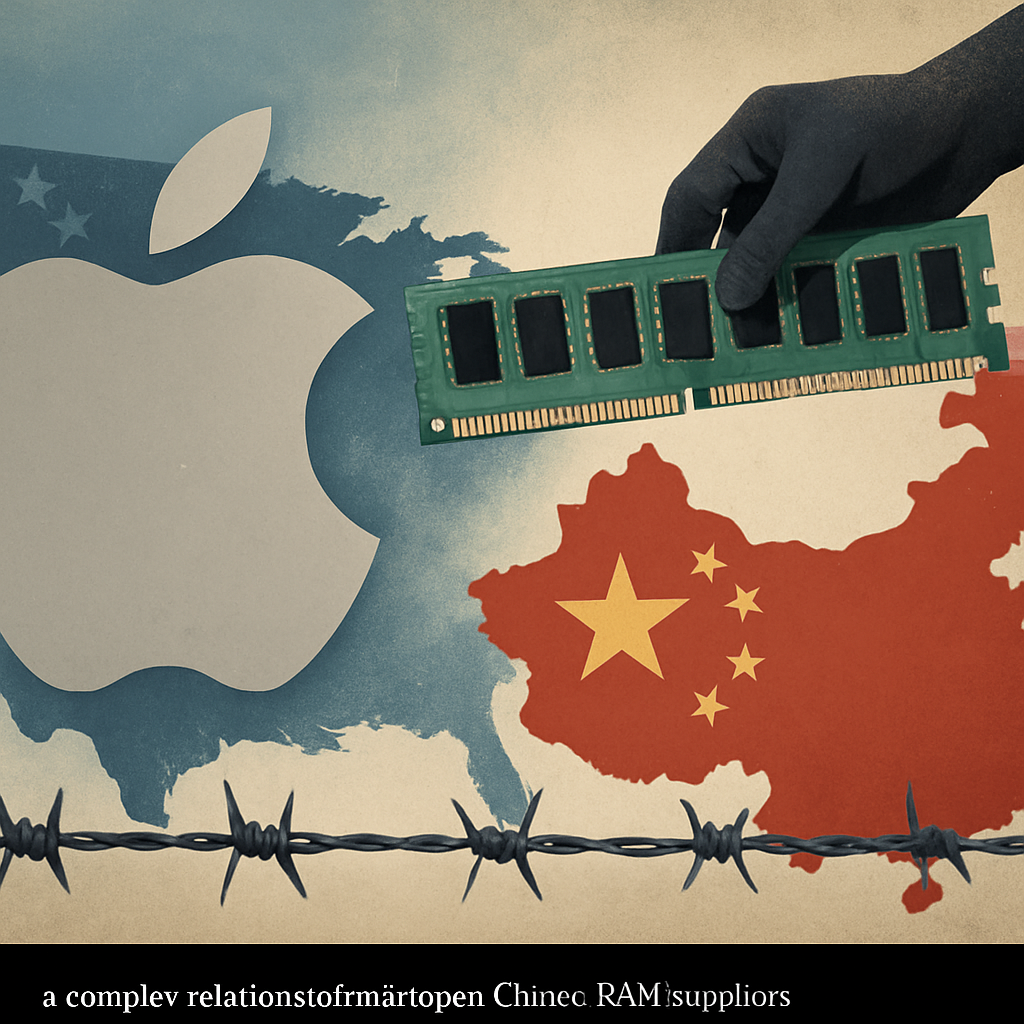
Apple is currently seeking approval from the Trump administration to procure memory chips from two Chinese manufacturers, ChangXin Memory Technologies (CXMT) and Yangtze Memory Technologies Co. (YMTC), both of which are blacklisted by the Pentagon. This move aims to alleviate the ongoing global memory shortage affecting Apple’s product manufacturing.
In 2022, Apple made a similar request to the Biden administration, proposing to use YMTC’s chips exclusively in iPhones sold within China. Despite this limitation, the proposal faced significant bipartisan opposition. The U.S. Senate Select Committee on Intelligence expressed concerns about potential privacy and security risks due to YMTC’s alleged ties to the Chinese Communist Party and other state-backed entities. Additionally, the committee highlighted that partnering with YMTC could be seen as endorsing China’s trade practices, which are perceived to disadvantage U.S. companies globally.
Although there is no legal prohibition preventing Apple from purchasing chips from CXMT and YMTC, the Pentagon’s blacklist implies that utilizing components from these companies could lead to restrictions on iPhone usage among federal employees. To maintain favorable relations with the current administration and avoid potential repercussions, Apple is proactively seeking official clearance for these transactions.
Given the previous strong bipartisan resistance and the involvement of key figures like then-acting National Security Advisor Marco Rubio, it appears unlikely that Apple’s current request will be approved. This situation underscores the complex interplay between global supply chain management and geopolitical considerations, particularly as technology companies navigate the challenges posed by international trade restrictions and national security concerns.
Apple’s persistent efforts to diversify its supply chain reflect the broader industry’s struggle with component shortages and the need to balance operational efficiency with compliance to regulatory frameworks. The outcome of this endeavor could set a precedent for how tech giants manage supplier relationships amid escalating geopolitical tensions.