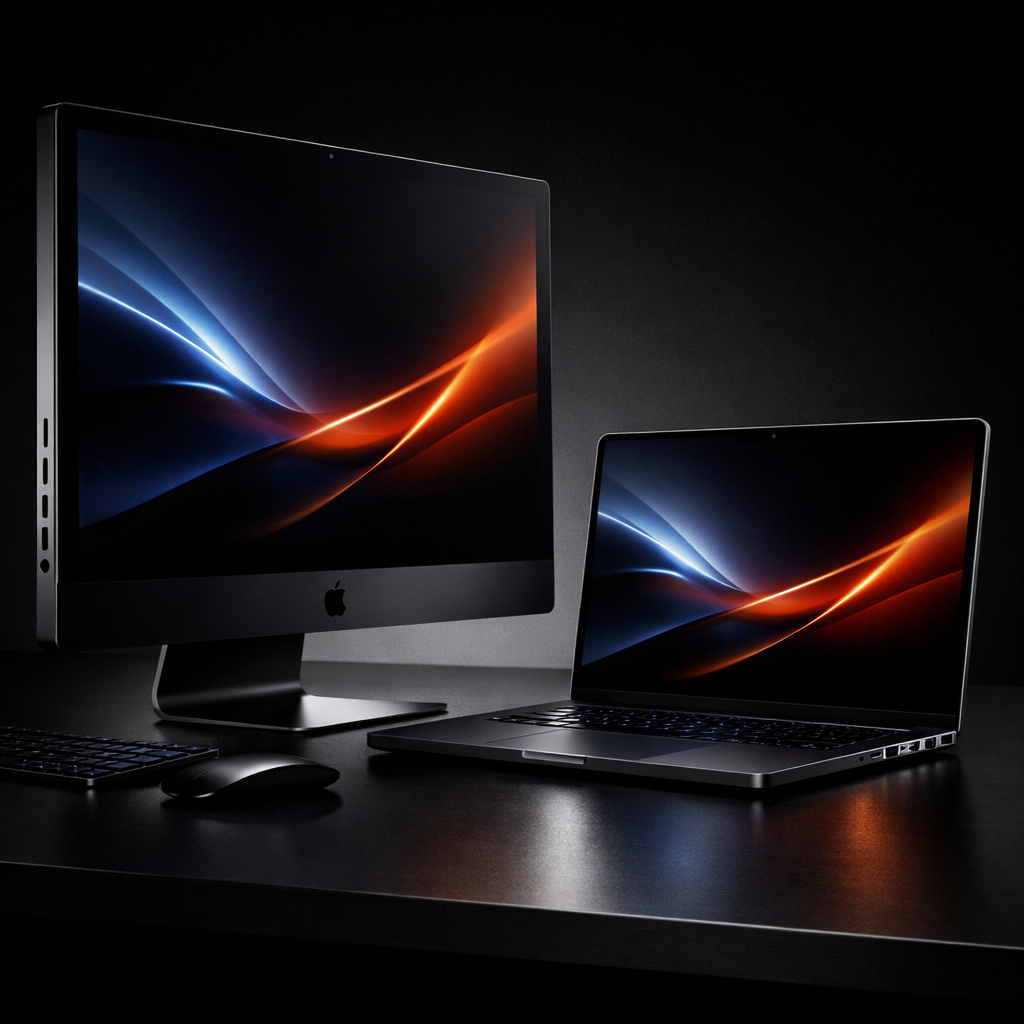
Apple has unveiled new iMac and MacBook Pro models powered by the M6 chip that are clearly designed to pull in the users who held out for Intel-based Macs. With the Silicon transition now more than six years old, the company is sharpening its message: upgrading from Intel—or even from older Apple Silicon—is finally worth it.
Upgrade Case for Intel Holdouts
The language around the new Macs makes the target audience unmistakable. For those still using Intel-based systems, Apple promises up to 18× faster performance with the M6 iMac compared to “the most popular Intel-based Mac.” While Apple doesn’t specify which machine that is, it’s likely something like the MacBook Air, based on sales volumes and industry trends.
To put things in perspective, benchmarks for the M6 iMac show Geekbench single-core performance of about 4,002 and multi-core scores near 21,880. That dwarfs the 2020 27-inch Intel iMac, whose best scores were around 1,538 (single-core) and 8,725 (multi-core). The speed increase isn’t the 18× claim in that comparison, but it’s still a huge leap. For many, this kind of boost transforms productivity and usability. For example, battery life jumps are dramatic—Apple claims “up to 14 additional hours” when upgrading from Intel systems.
Beyond Raw Speed
Additional perks for transitioning users include 16GB of unified memory as a baseline, and more Thunderbolt ports—hardware features that Intel generation machines often lacked. Some of the other noted upgrades are less essential but still part of Apple’s pitch, like a new space-black finish with an anodized seal that reduces fingerprints.
That said, timing isn’t perfect. With increasing prices on its Macs—such as the new M6 iMac now starting at $1,499 up from $1,299—Apple risks alienating those who were exactly waiting for a more compelling upgrade offer. The hike is partially blamed on ongoing global chip shortages, which complicate what Apple could do on pricing.
Apple’s messaging recognizes that many current Apple Silicon users feel little urgency to upgrade either—moving from Intel to M-series was transformative, but going from one generation of Apple Silicon to the next offers diminishing returns unless there’s a tangible gain.
Analysts see this as a two-front strategy: bring in Intel users, and figure out how to make newer Silicon models stand out enough to drive repeat upgrades. But with slightly higher price tags, Apple needs to balance performance arguments, design tweaks, and the emotional pull of novelty.
What this means for the industry is clear: Apple is no longer speaking to only the early adopters. It’s pressing its case to those who’ve been predicting this moment for years. The real question now is whether the performance gains and design upgrades are enough to justify the higher costs, or whether Intel holdouts will still bide their time. With the M6 generation, Apple is staking its reputation on being finally worth the jump—if its audience agrees.