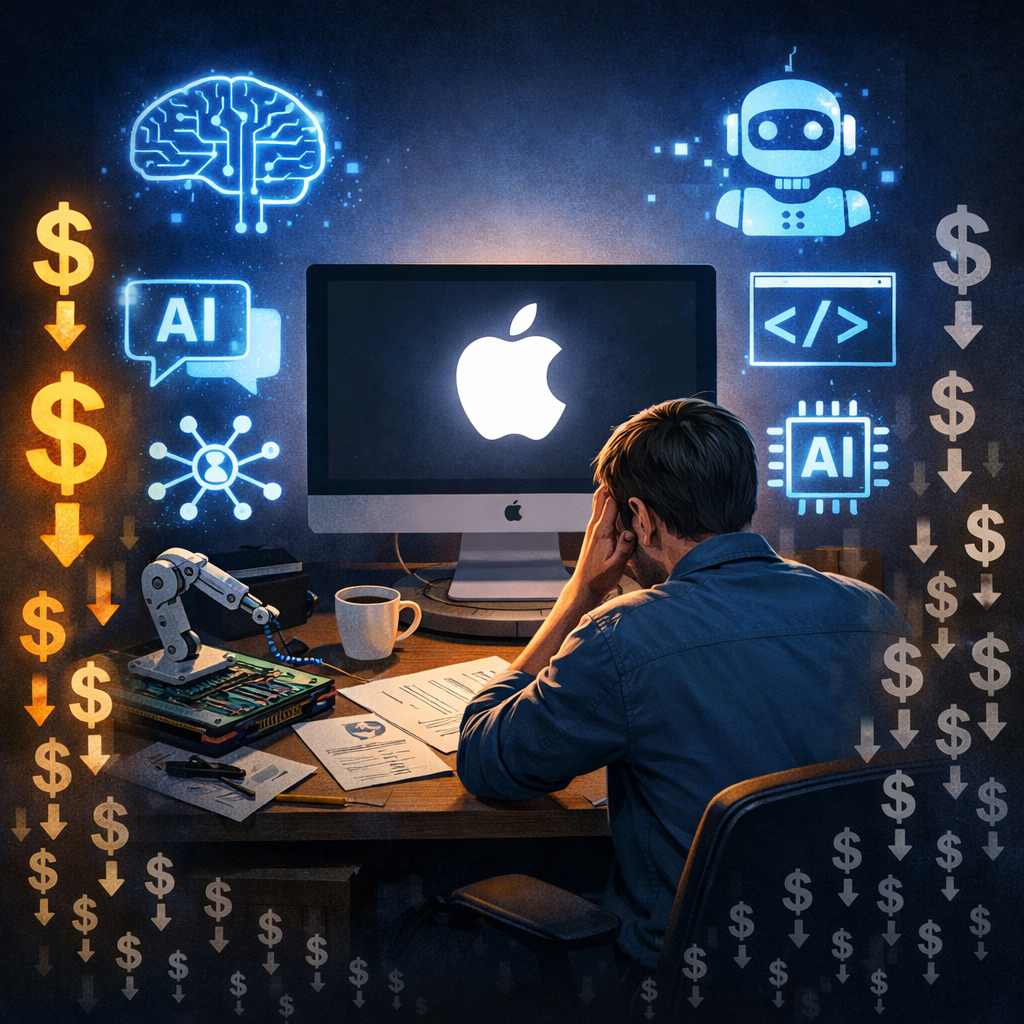
Apple is trimming how much employees can spend on third-party AI tools, a shift that reflects tightening belts across the tech sector. Engineers who had access to funds of up to US$300 for external AI services are now seeing those budgets reduced in some cases to US$200, US$100, or even as little as US$25. These cuts target tools used for tasks like code generation, bug chasing, and other AI-assisted workflows.
Waning Returns, Rising Costs
Spending on external AI has ballooned in recent years amid a surge in experimentation with AI-powered coding aids, debugging bots, and automated assistants. Despite the promises, many engineers haven’t been maxing out available budgets, prompting a rethink. By dialing back funding, Apple seems to be acknowledging that not all external AI delivers sufficient value to justify earlier levels of spending.
Internal AI & Prudent Shifts
Alongside cutting external AI budgets, Apple is increasingly focusing on in-house solutions. Its own foundational models — which can run locally on capable Macs — are being positioned as viable alternatives, reducing dependence on expensive third-party services requiring paid tokens. The strategy represents not just a cost-cutting move, but a signal of maturation: external experimentation gives way to internal optimization.
Though some view this as another sign of impending layoffs or sweeping cost-reduction, others interpret it more mundanely: why hold large budgets in reserve if they’re rarely used? To that end, Apple is reportedly allowing requests for higher allowances when needed, giving some flexibility.
At the heart, this change reflects how the AI investment boom of recent years is cooling. Early excitement is giving way to skepticism, inefficiencies are under the microscope, and companies are measuring impact more carefully.
This shift matters because it highlights a turning point: AI is no longer just about hype or exploration. Companies—especially leaders like Apple—are grappling with how to incorporate AI practices sustainably. As AI budgets shrink for external tools, what succeeds will be built on internal capabilities, optimized usage, and cost discipline. It’s a strong signal that the era of open-ended AI spending is coming to an end, and the era of results is beginning.