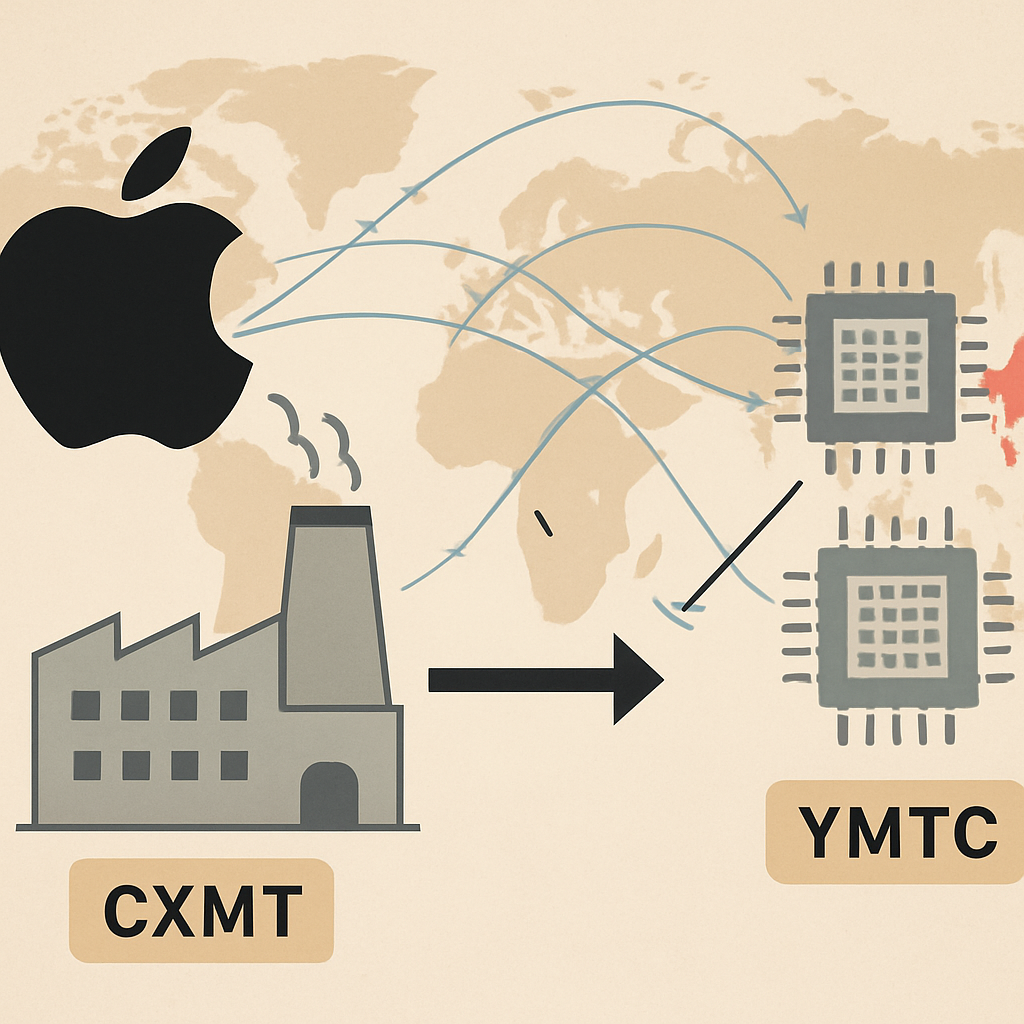
Apple is currently in discussions with Chinese semiconductor manufacturers ChangXin Memory Technologies Co. (CXMT) and Yangtze Memory Technologies Co. (YMTC) to procure memory chips, aiming to mitigate the impact of a global memory shortage that has led to increased product prices. These negotiations are ongoing, with no definitive agreements reached as of now.
The global memory shortage has significantly affected Apple’s supply chain, compelling the company to raise prices on various products, including Macs and iPads. This shortage is largely attributed to memory manufacturers prioritizing chips for AI servers, resulting in limited availability for consumer devices and escalating costs.
Both CXMT and YMTC are listed on the U.S. Department of Defense’s 1260H list, which identifies Chinese companies suspected of having ties to the People’s Liberation Army. Additionally, YMTC is on the U.S. Commerce Department’s blacklist, restricting U.S. companies from selling to listed entities without an export license. While Apple is not legally required to obtain U.S. approval to purchase from these companies, securing governmental consent could help avoid potential political repercussions.
Apple CEO Tim Cook has reportedly engaged with Trump administration officials, including Treasury Secretary Scott Bessent, to discuss the possibility of sourcing memory chips from CXMT and YMTC. The proposed plan involves using these chips in devices intended for the Chinese market, thereby freeing up supply from other vendors for products sold in the U.S. However, some officials within the administration have expressed reservations about this strategy, and it remains uncertain whether these discussions will culminate in a formal agreement.
In 2022, Apple explored a similar partnership with YMTC, but the initiative was abandoned following congressional opposition. The current negotiations underscore the challenges Apple faces in diversifying its supply chain amid geopolitical tensions and supply constraints.
Apple’s pursuit of alternative memory suppliers highlights the complexities of maintaining a resilient supply chain in the face of global shortages and political considerations. While sourcing from Chinese manufacturers could alleviate some supply pressures, it also introduces potential risks related to national security concerns and trade restrictions. The outcome of these negotiations will likely have significant implications for Apple’s production strategies and its ability to meet consumer demand in a volatile market.