Apple’s AI Strategy for iOS 27: Leveraging Google Cloud and Nvidia Technology
Apple is poised to unveil iOS 27 at the upcoming Worldwide Developers Conference (WWDC), introducing significant enhancements to Siri and a suite of new AI-driven features. A recent report sheds light on the infrastructure supporting these advancements, highlighting Apple’s collaboration with Google and Nvidia to bolster its AI capabilities while maintaining a strong emphasis on user privacy.
Balancing On-Device Processing with Cloud Support
Apple has consistently prioritized on-device processing for its AI features, aiming to deliver swift responses and uphold user privacy. However, the complexity and computational demands of advanced AI models present challenges for exclusive on-device execution. To address these limitations, Apple is integrating external cloud computing resources into its AI framework.
Utilizing Google’s Gemini for Model Training
According to The Information, Apple employs a variant of Google’s Gemini AI model to train smaller, efficient models capable of running directly on devices such as iPhones, iPads, and Macs. This technique, known as distillation, enables Apple to provide robust AI functionalities without relying entirely on cloud-based processing. Additionally, Apple is reportedly exploring acquisitions of AI startups specializing in local processing, including Liquid AI, to further enhance its on-device AI capabilities.
Cloud-Based Processing for Complex Tasks
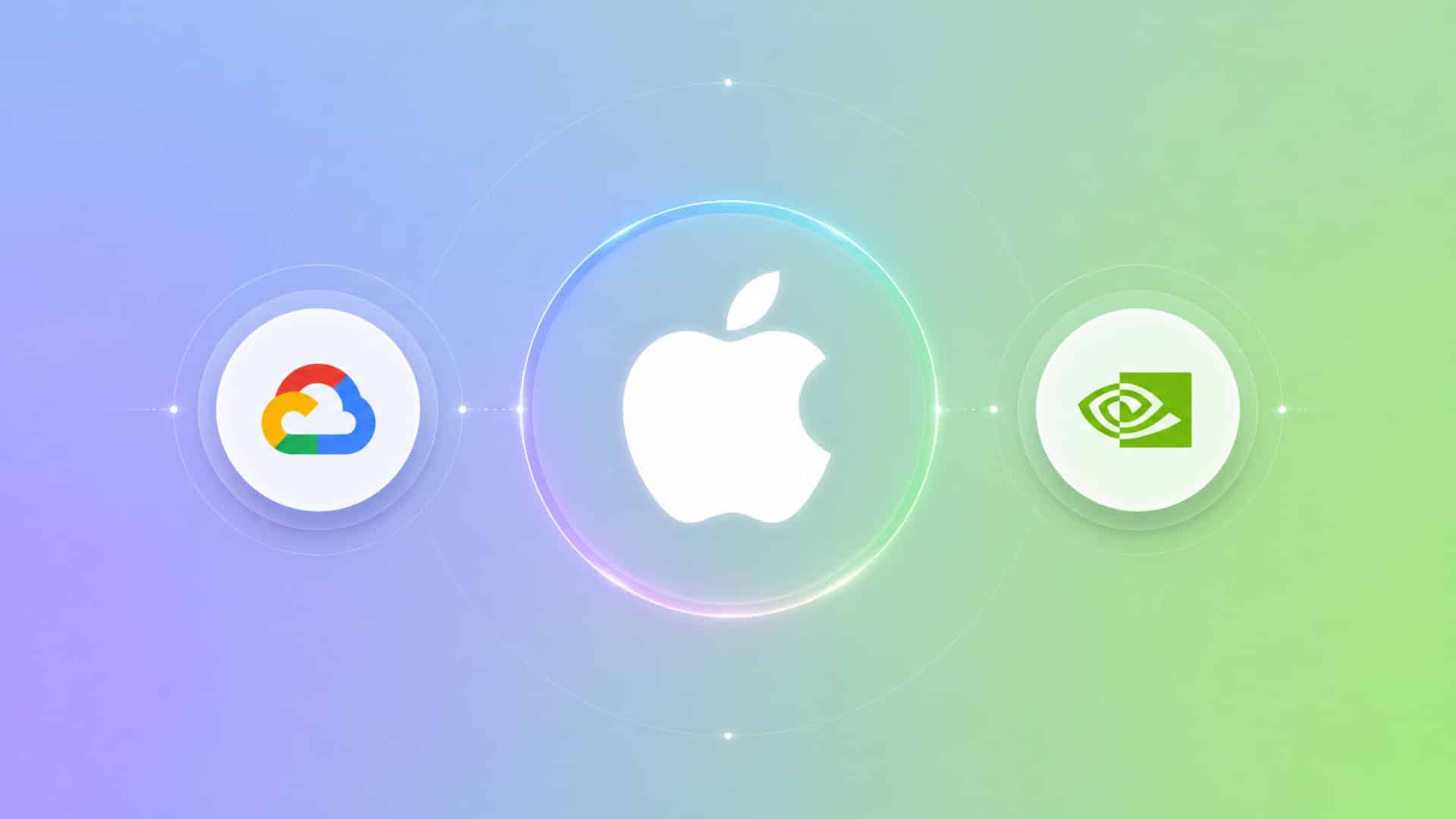
Despite advancements in on-device processing, certain AI tasks, particularly those involving larger models, necessitate substantial computational power beyond the capacity of Apple’s current infrastructure. To manage these demands, Apple is leveraging Google Cloud services for specific Siri requests in iOS 27. This strategic partnership allows Apple to handle complex AI computations efficiently while maintaining a seamless user experience.
Enhancing Security with Nvidia’s Confidential Compute Technology
To ensure data security during cloud-based processing, Apple has recently approved the use of Nvidia’s confidential compute technology. This system encrypts data as AI models process requests within Nvidia GPUs, providing robust privacy protections even when tasks are executed in the cloud. By implementing this technology, Apple reinforces its commitment to user privacy while expanding its AI capabilities.
Maintaining the ‘Private Cloud Compute’ Branding
Despite incorporating external cloud infrastructure, Apple plans to continue using its Private Cloud Compute branding for upcoming Apple Intelligence features. This approach underscores Apple’s dedication to privacy and security, assuring users that their data remains protected, even as the company integrates external resources to enhance AI functionalities.
Conclusion
Apple’s strategy for iOS 27 reflects a nuanced approach to AI development, balancing the benefits of on-device processing with the computational power of cloud-based resources. By collaborating with industry leaders like Google and Nvidia, Apple aims to deliver advanced AI features that are both powerful and privacy-conscious. As the tech community anticipates the official unveiling at WWDC, these developments signal a significant evolution in Apple’s AI capabilities.