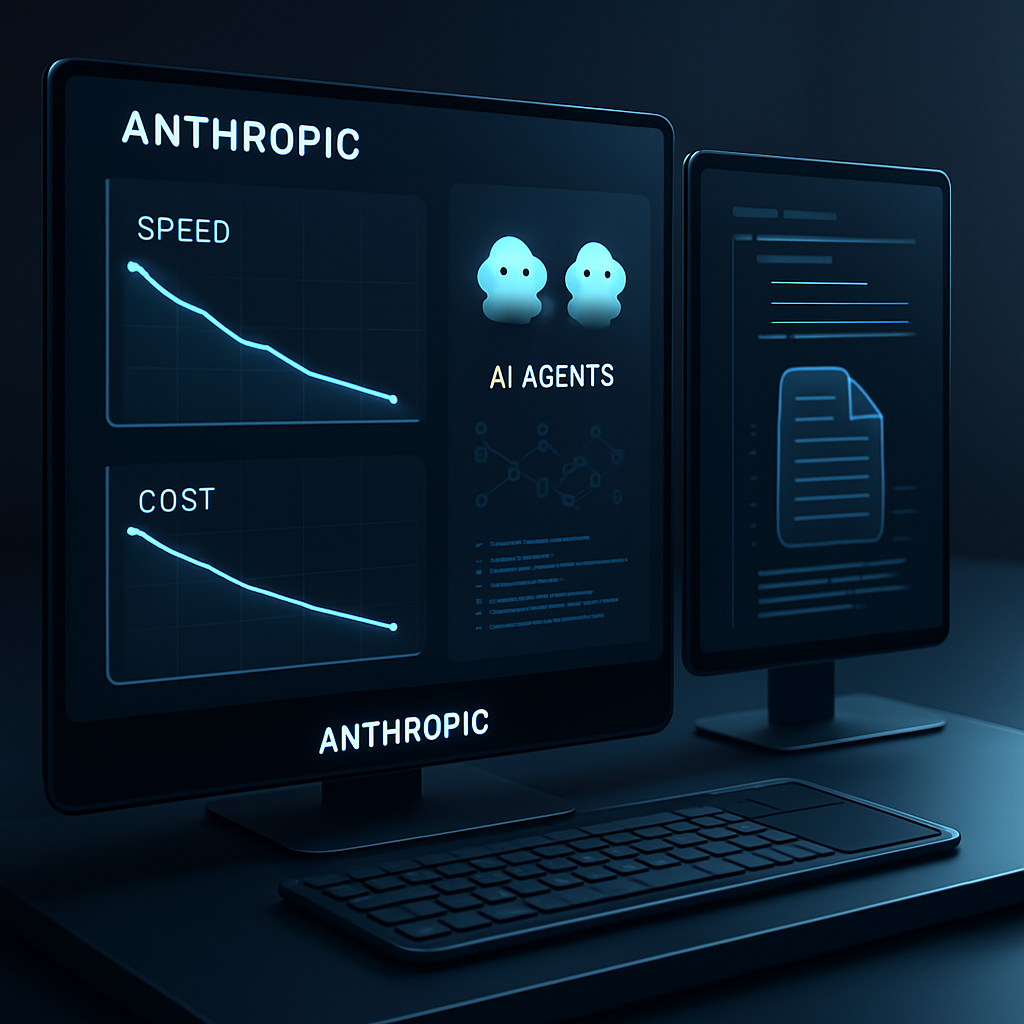
Anthropic has unveiled Sonnet 5.5, its newest mid-tier AI model designed for everyday use—coding, document creation, and general productivity. It succeeds Sonnet 5, which debuted roughly three months earlier, and promises to be both faster and more cost-efficient. Drawing attention to performance metrics, Anthropic positions Sonnet 5.5 as a more nimble workhorse in the lineup.
Performance Boosts and Cost Savings
One of the headline improvements in Sonnet 5.5 is speed. Anthropic claims that the new model runs about 30 percent faster than its predecessor and burns tokens more slowly—translating into lower operating costs. These changes aim to make Sonnet 5.5 more responsive in interactive tasks and more economical at scale.
Where It Fits in Anthropic’s Model Ecosystem
Sonnet sits below Anthropic’s more powerful Opus line, but 5.5 aims to encroach on Opus’s domain in areas where agility matters more than raw power. In internal benchmarks, Sonnet 5.5 outperforms Opus 5.5 when dealing with agentic coding workflows—where the model orchestrates multiple agents in a way that keeps costs manageable.
Anthropic is also bolstering Sonnet 5.5 with cybersecurity measures. The model reportedly achieves cyber capabilities comparable to the older Opus 5, and Sonnet 5.5 will be subject to the same safety and security protocols that already cover its higher-end counterparts—Opus and Fable.
Meanwhile, Anthropic plans to update Haiku—its smallest model—very soon, though no exact date has been announced yet. The company’s cadence underscores a competitive AI model release season, following new mid- and budget-tier models from other labs, including recent updated models like OpenAI’s Sol and Luna and Meta’s new AI for wearable devices.
Sonnet 5 was initially promoted for its cost-effective agent deployment, emphasizing enterprise and agentic setups. Sonnet 5.5 builds on that, shifting the narrative more toward speed and efficiency for standard productivity tasks—while still aiming to keep agent workflows in play when needed.
In short, Sonnet 5.5 looks like a stronger option for users who need AI help with code, documents, multitasking agents, and cybersecurity—all without paying up for a premium model. It’s part of a clear trend toward optimizing models for real-world work while managing cost and complexity.
Why this matters:For businesses and developers, the gap between model power and cost has been a key friction point. Sonnet 5.5 tightens that gap, putting faster, more secure AI within reach of more use cases. It also pressures competitors to sharpen efficiency, not just raw metrics. What to watch for next: real-world benchmarks, enterprise adoption, and how Anthropic balances performance with safeguards as it pushes its mid-tier models forward.