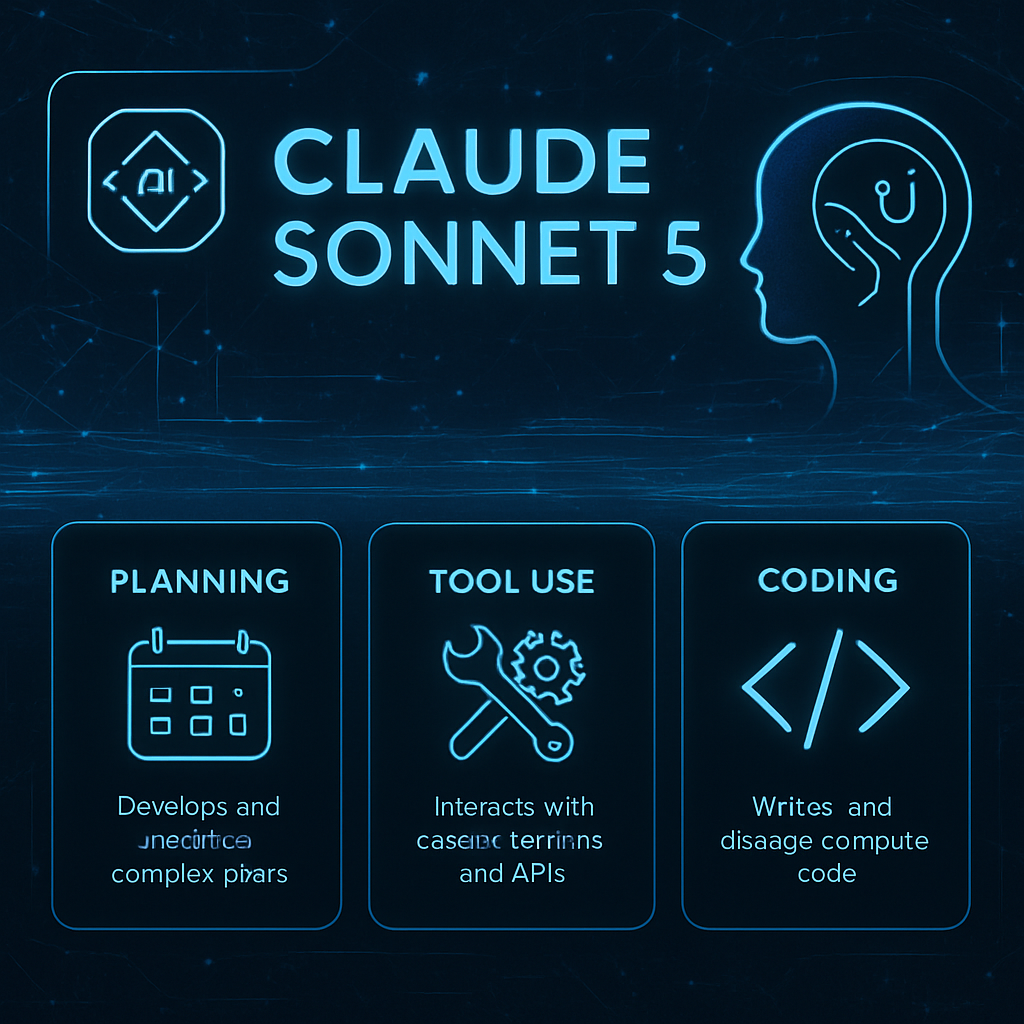
Anthropic has unveiled Claude Sonnet 5, the latest iteration in its AI model lineup, designed to deliver enhanced autonomous capabilities for a broad range of tasks. This release marks a significant advancement in the company’s medium-sized model offerings, bridging the gap between the smaller Haiku and the more robust Opus models.
Claude Sonnet 5 is engineered to perform complex functions such as planning, tool utilization—including browsers and terminals—and autonomous operation. These capabilities, which previously required larger and more costly models, are now accessible in this more efficient package. The model’s performance closely rivals that of Opus 4.8, offering a substantial improvement over its predecessor, Sonnet 4.6, particularly in areas like reasoning, tool use, coding, and knowledge work.
To encourage adoption, Anthropic is offering Claude Sonnet 5 at an introductory price of $2 per million input tokens and $10 per million output tokens until August 31, 2026. After this period, the pricing will revert to the standard rates of $3 per million input tokens and $15 per million output tokens. Additionally, the company has increased rate limits across its platforms, including Chat, Cowork, Claude Code, and the Claude Platform, to accommodate the higher token usage associated with more intensive tasks.
This launch comes amid a dynamic period for Anthropic’s AI models. The company’s most advanced models, Mythos 5 and Fable 5, have faced regulatory challenges. Mythos 5, known for its fewer guardrails, is currently available to select security researchers and platform owners. Fable 5, a safer variant, was briefly accessible to customers before being restricted by the U.S. government. Anthropic is actively working to restore access to these models in the future.
Claude Sonnet 5’s release underscores Anthropic’s commitment to advancing AI capabilities while making them more accessible and cost-effective. By narrowing the performance gap between medium and large models, the company is enabling a wider range of users to leverage sophisticated AI tools for autonomous tasks. This development reflects a broader trend in the AI industry towards creating models that are both powerful and practical for everyday applications.