Exploring Amazon’s Bee Wearable: A Blend of Innovation and Privacy Concerns
In the rapidly evolving landscape of artificial intelligence, Amazon’s latest venture, the Bee wearable, has garnered significant attention. This AI-powered device, designed to function as a personal assistant, offers features such as recording, transcribing, and summarizing daily conversations. While its potential to enhance productivity is evident, the device also raises pertinent questions about privacy and data security.
Introduction to Bee
Bee is a wearable AI device that can be worn as a clip-on pin or a bracelet. Its primary function is to record conversations, transcribe them, and provide concise summaries, thereby serving as an ongoing note-taking tool. This capability is particularly beneficial for individuals aiming to stay organized or those who may be forgetful. Additionally, when synchronized with a user’s calendar, Bee can send alerts and reminders about scheduled tasks and events.
User Experience and Functionality
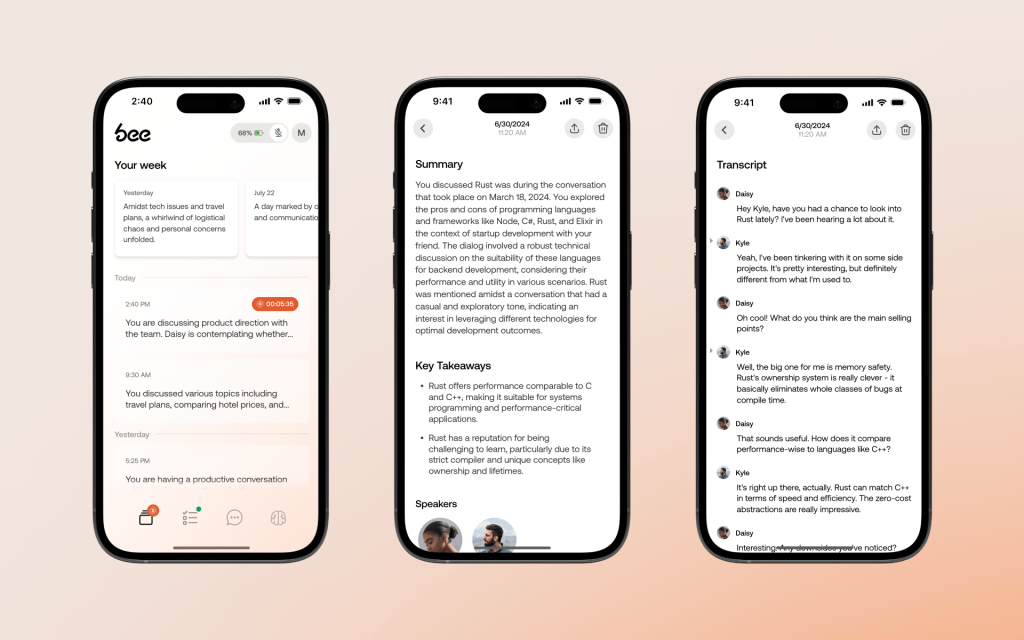
The operation of Bee is straightforward. Users power up the device, wear it, sync it with the Bee mobile application, and input basic personal information. The device features a built-in recorder that can be activated or deactivated by pressing a button. A green light indicates when recording is in progress, ensuring transparency. Once a conversation is recorded, the accompanying app generates an automated summary and provides a full transcription.
In professional settings, Bee demonstrates its utility effectively. For instance, during business meetings or interviews, the device can record discussions (with consent), and later, the app offers a segmented summary of the conversation. This feature allows users to review key points without revisiting the entire dialogue. However, it’s worth noting that similar functionalities are available through other transcription services like Otter or Granola, which also offer transcriptions and auto-generated summaries.
Performance and Limitations
While Bee excels in summarizing conversations, its transcription accuracy has room for improvement. Users often need to manually input the names of speakers, as the device doesn’t consistently identify who is talking. Additionally, some sections of conversations may be omitted, resulting in incomplete transcripts. These limitations suggest that while Bee is a promising tool, it may not yet be a comprehensive solution for all users.
Privacy Considerations
A significant concern surrounding Bee is its impact on personal privacy. The device requires extensive mobile permissions, including access to location, photos, contacts, calendar, and notifications. Users can also choose to share health data, such as sleep patterns and heart rate. The accumulation of such sensitive information, stored in the cloud, raises valid privacy and security concerns.
Bee’s privacy policy states that user data is protected through encryption both at rest and in transit. The company claims to implement technical and organizational security measures and undergoes third-party security audits. Despite these assurances, the potential for data breaches or misuse remains a concern, especially given Amazon’s history with data security issues.
Market Position and Future Prospects
Amazon’s acquisition of Bee signifies its interest in expanding into wearable AI devices, moving beyond its voice-controlled home assistant products like the Echo speakers. This strategic move positions Amazon alongside other tech giants exploring AI-integrated wearables. However, the success of such devices hinges on addressing privacy concerns and ensuring user trust.
In conclusion, Amazon’s Bee wearable presents a compelling blend of innovation and functionality, offering users a novel way to manage and organize their daily interactions. However, the device’s effectiveness is tempered by transcription inaccuracies and significant privacy considerations. As AI wearables become more prevalent, striking a balance between utility and user privacy will be paramount.