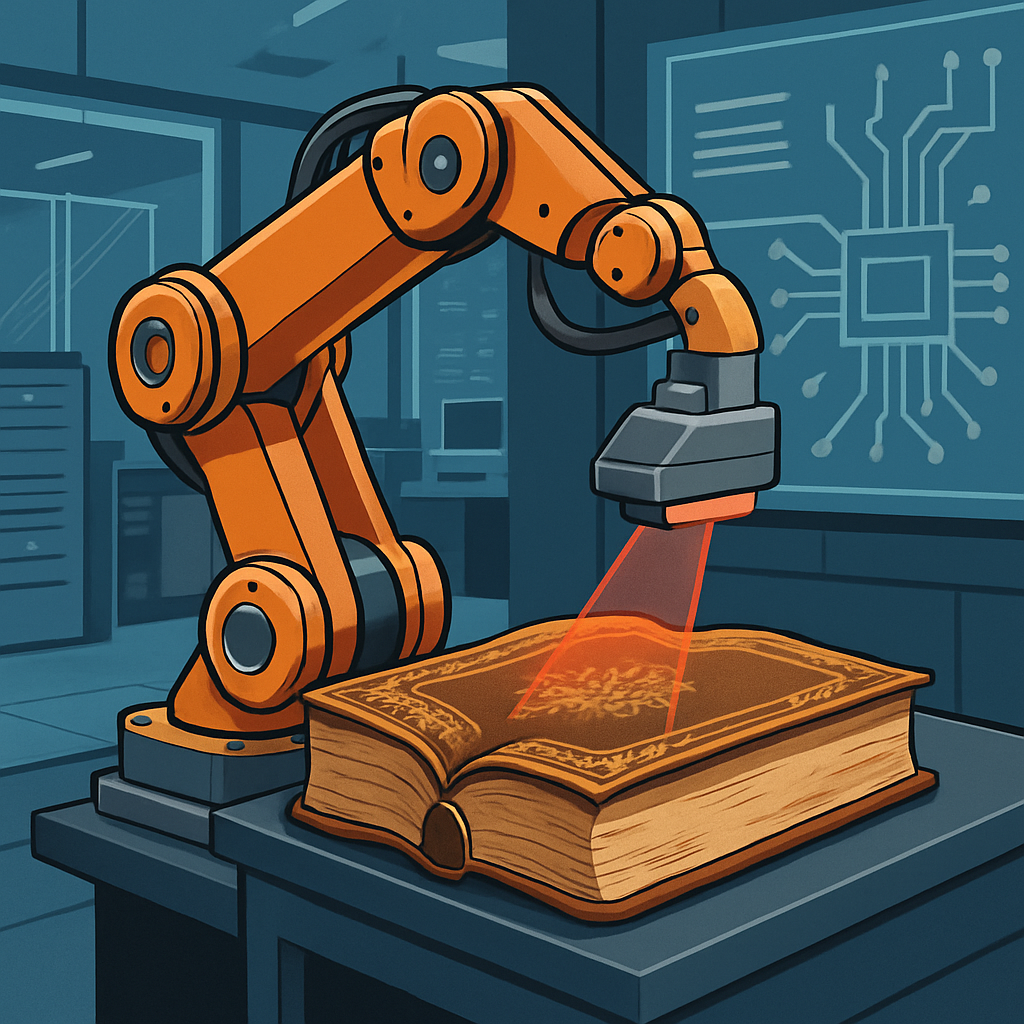
Amazon has recently come under scrutiny for its methods of training artificial intelligence (AI) models, particularly involving the acquisition and destruction of rare books. Reports indicate that the company is purchasing significant quantities of rare and out-of-print books, removing their bindings, and scanning the contents to enhance its AI systems.
Investigations revealed that a rare book, equipped with a tracking device, was traced to an Amazon facility in Las Vegas, known as VGT3. This facility is notably marked by a symbol depicting a dinosaur holding a book. In response to inquiries, Amazon stated that it “purchases books through commercial channels to improve the products and services customers use.”
The development of large language models (LLMs) necessitates vast amounts of textual data. While much of the internet has already been utilized for this purpose, rare and inaccessible books present a new reservoir of valuable information. These texts are particularly prized because they predate the advent of AI-generated content, ensuring the authenticity and originality of the material.
Utilizing older, human-authored texts helps mitigate the risk of “model collapse,” a phenomenon where an AI’s performance deteriorates due to training on AI-generated data. By incorporating genuine, human-created content, companies aim to maintain the quality and reliability of their AI outputs.
However, this practice raises significant ethical and cultural concerns. The destruction of rare books for AI training purposes poses a threat to the preservation of literary heritage. These books often hold historical, cultural, and scholarly value, and their loss could be irreplaceable. The balance between technological advancement and the conservation of cultural artifacts is delicate, prompting a broader discussion on responsible AI development practices.