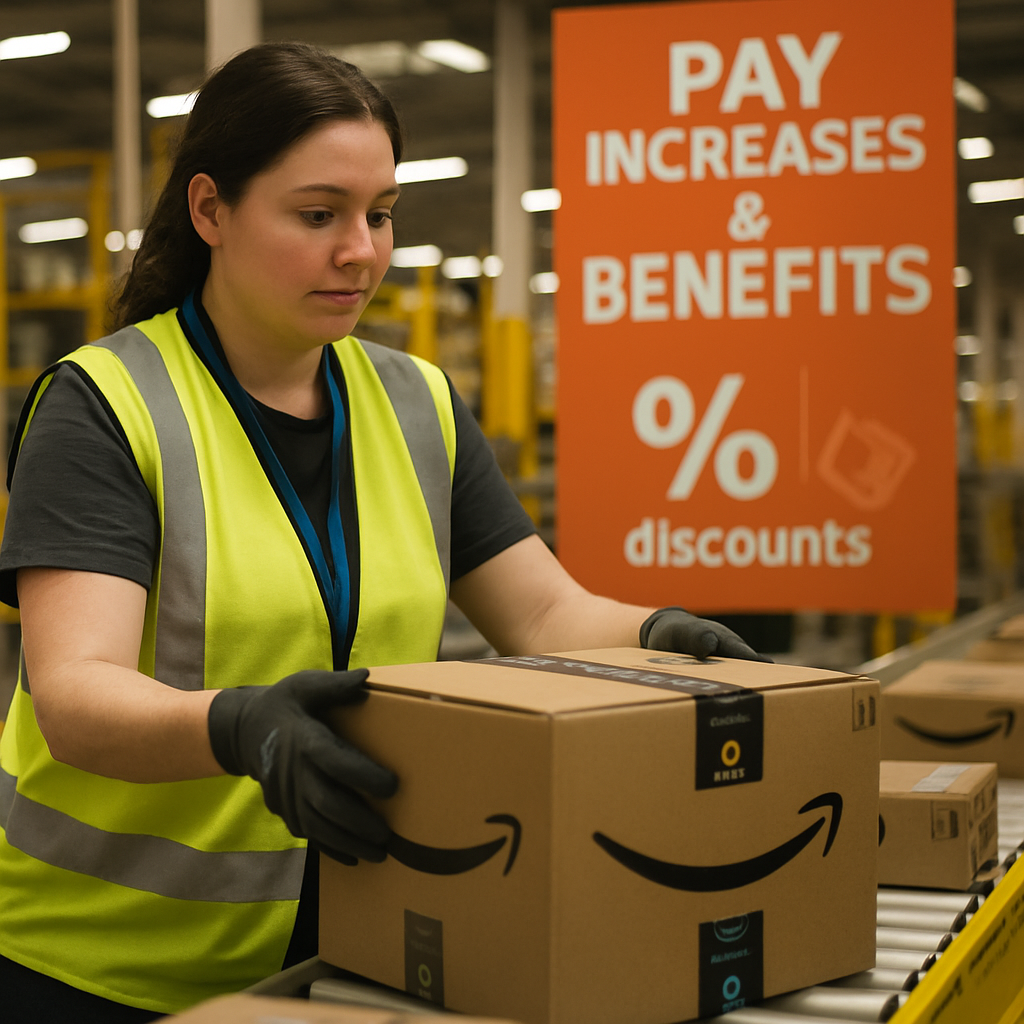
Amazon is increasing the base pay for many U.S. employees in its core operations—such as fulfillment center staff and delivery drivers—by $1 per hour. Effective immediately, the minimum starting wage will rise to $20/hour, while the company’s overall average hourly rate will now approximate $24/hour. In a company statement, Amazon described this move as part of a broader effort to sharpen its reputation for competitive pay. When factoring in its benefits package—including health care, education assistance, and a Prime membership—total earnings surpass $32/hour.
More Than Just Higher Wages
These salary increases are part of a $1.5 billion investment. While that sum sounds large, it’s only about 0.06% of Amazon’s current market capitalization, which exceeds $2.6 trillion. Alongside the pay bump, the company is rolling out additional benefits meant to strengthen its appeal to employees and smooth day-to-day life.
Among the new perks: staff will gain access to Day 1 Financial, a more affordable banking service, and become eligible for membership in First Tech Federal Credit Union. Amazon is also sweetening the deal when it comes to employee discounts—20% off in Whole Foods physical stores and 10% off online grocery orders. These are added to its existing offerings, which already include free Prime memberships, prepaid education programs, and health insurance.
Reception and Realities
Despite the company’s framing of the raise as a major win, some workers aren’t celebrating just yet—particularly with the new Whole Foods discount. Retail prices there are traditionally higher, and some employees argue that even with discounts, savings may not be meaningful. One worker even joked that Whole Foods would be “almost the same” as a regular grocery store under the discount scheme.
For Amazon, retaining staff and managing labor costs are increasingly central challenges—especially in light of rising living expenses and competition from other employers. The company has been under pressure to show that its compensation and benefit structures keep up with inflation and cost-of-living pressures.
Overall, while the $1/hour raise may not dramatically shift wage trajectories on its own, the combined value of the benefits could make the total compensation more attractive—if employees perceive those perks as accessible and meaningful.
Why This Move Matters: Amazon’s raise may not be headline-shaking when viewed purely as a rate hike, but it echoes broader labor-market trends. As other companies struggle to retain talent, compensation—both wage and non-wage—is becoming the frontline in employer competition. Observing how this plays out in Amazon’s turnover rates, operational margins, and employee satisfaction will reveal whether such a modest wage bump combined with perks is enough to meet workers’ growing expectations.