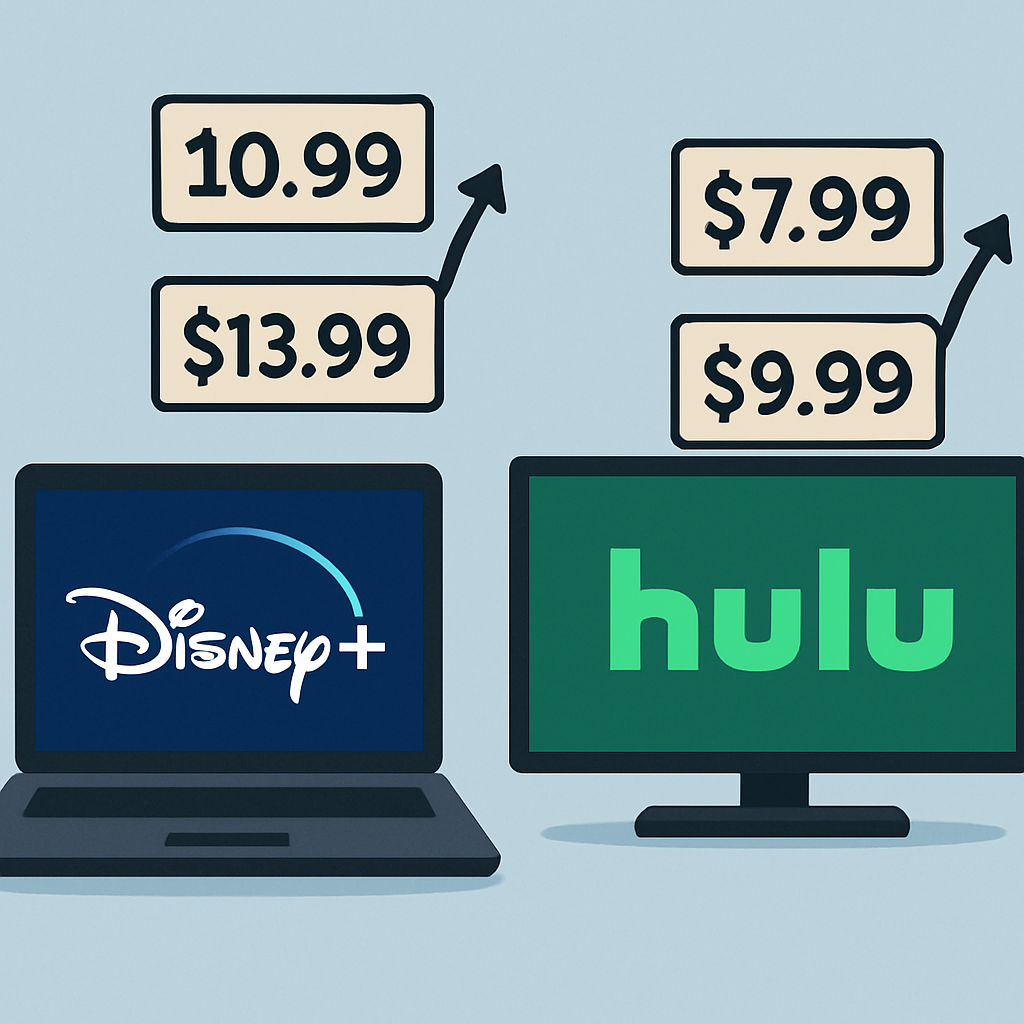
Streaming giant Disney is implementing new price hikes across its Disney+ and Hulu platforms starting later in 2026. Both ad-supported and ad-free plans are affected, though the biggest jump involves ad-free subscriptions, which will cost subscribers roughly $2.50 more per month—a rise near 13% over current rates.
What’s Changing?
Here’s how the adjustments break down:
- Disney+ no ads: rising to $21.49 (up $2.50/month)
- Hulu no ads: also $21.49 (up $2.50/month)
- Disney+ & Hulu bundle without ads: $21.99, a $2 increase
- Disney+ with ads: $12.49, up $0.50
- Hulu with ads: $12.49, up $0.50
- Disney+ & Hulu bundle with ads: remains unchanged at $12.99
The bundled ad-supported plan is the lone exception among these changes—it’s staying the same price despite other increases. The bundled ad-free option still sees a modest hike of $2/month.
When It Takes Effect
Notifications about the price changes may hit subscribers’ inboxes beginning Wednesday, September 23, 2026. Individual billing changes will roll out around that same time.
Why This Matters
This marks another round of increasing costs for those who opt-out of ads, signaling Disney’s push to monetize its content more aggressively. With ad-supported plans costing less, the shifts deepen the divide between streaming tiers—users who want uninterrupted viewing will pay a premium.
Streaming companies often raise prices periodically to cover rising content costs, licensing, and inflation. As more platforms lean into hybrid monetization models—mixing ads and subscriptions—these kinds of tiered adjustments are becoming more common.
For now, customers paying for ad-free access should expect the biggest impact, while those using ad-supported bundles escape further increases—though even those subsidies seem increasingly under pressure as platforms balance revenue streams.
What to Watch: If you’re subscribed to the no-ads versions of either service, prepare for the $2.50 monthly uptick. On the other hand, bundled ad-supported subscribers won’t see any increase—at least this time. Going forward, streaming companies may push more aggressively into ad funding to offset the revenue lost by subsidizing cheaper tiers.
Analysis: These price changes underscore how streaming services are banking on subscription tiers to drive more revenue, especially amid rising production and licensing costs. For consumers, it further sharpens the choice between tolerating ads or paying increasingly steep premiums. Disney’s strategy here may well set a precedent—other players in the streaming space will likely watch closely and possibly follow suit.