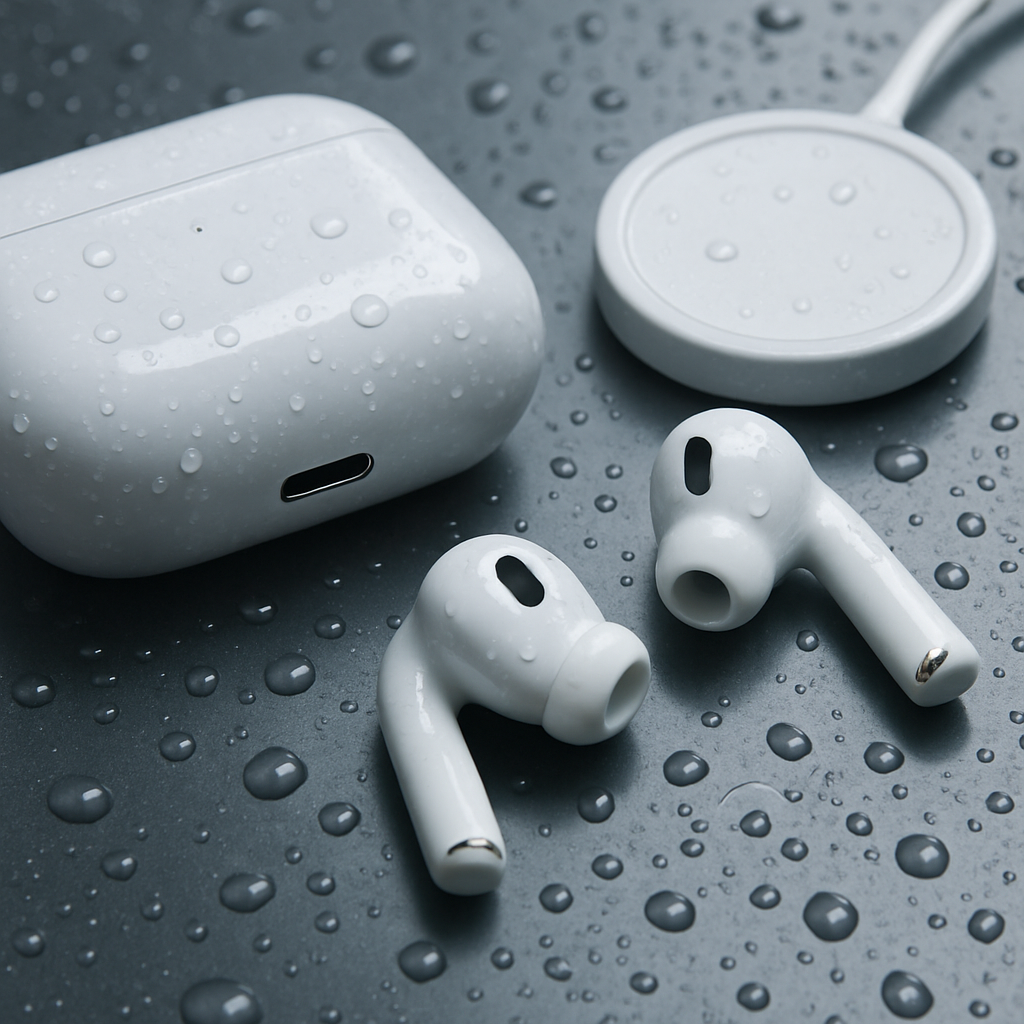
Apple’s latest entry-level earbuds, the AirPods 5, introduce one big change back-dropped by familiar design: Active Noise Cancellation (ANC) is now standard even at the base $129 price point. The higher-end version with the Wireless Charging Case costs $149. Both bring enhancements—but there are trade-offs in comfort, charging, and whether the extras are worth the upgrade.
Design, fit & durability
Externally, AirPods 5 look identical to the previous generation: the same open-ear, stemmed design without in-ear silicone tips. Though the fit’s carry-over means transparency mode is more natural for many, ANC is challenged by increased outside sound entering the ears. The stems allow for squeeze controls, and on the $149 Wireless Charging Case model, a swipe gesture for volume. A notable boost in durability comes from the move from IP54 to IP57 rating, speeding up resistance to dust, sweat, and brief immersion.
Sound quality & noise suppression
Audio performance follows the precedent set by the prior AirPods 4: neutral tonal balance, clear highs, controlled bass. Under similar volume levels—even after boosting in-flight—the sound stayed clean without distortion. For those wanting more punch, EQ adjustments under iOS help, especially with the bass slider pushed up. Transparency mode is especially strong thanks to the open fit, offering a more natural ambient sound than sealed tips typically allow.
ANC—now in all AirPods 5 models—is substantially better than before. Apple claims up to 50 percent more external-noise removal compared to AirPods 4 with ANC, enabled by a new multi-port acoustic architecture and upgraded Adaptive EQ. In practice, the upgrade makes a difference, though AirPods Pro 3 still outperform the AirPods 5 overall in supressing low-frequency rumble on flights and in noisy zones.
Features, battery & pricing
Both models use Apple’s H2 chip, offer Spatial Audio with head tracking, Conversation Awareness, Live Translation, Adaptive Audio, and hands-free Siri AI. Sync across Apple’s ecosystem remains instant thanks to iCloud integration. Users benefit from all these at the entry price—a stark contrast to before, when ANC was hidden behind a higher tier.
Battery life depends on the version. The base $129 model lasts about 4 hours on a single charge with ANC active; with its charging case, that climbs to around 20 hours. The Wireless Charging Case version adds an extra hour (≈5 hrs ANC-on) and stretches total active playback with case to about 22 hours. The $149 model also brings wireless charging (Qi & Apple Watch compatible), a speaker for tracking via Find My, and on-stem swipe volume controls—key extras not available on the standard model.
Pricing pushes value forward. AirPods 5 base at $129 match the old entry AirPods 4 price, but now include ANC. The $149 charging case model is cheaper than the old AirPods 4 with ANC, which launched at $179 with equivalent case. Pre-orders are open now, and both arrive in stores Friday, September 18.
Pros include greatly improved transparency, better ANC, voice control, compact case, and an open-ear design that many find more comfortable. Cons: Having two versions feels duplicative; lack of lanyard attachment on the case is a minor but noted omission.
Verdict
AirPods 5 represent one of Apple’s best value shifts: bringing premium features like ANC down into the base tier, alongside stronger water resistance and longer battery in the higher model. For anyone still on AirPods 3, AirPods 2, or older 4s, the jump makes a lot of sense. If you already own AirPods 4 with ANC, the upgrade’s benefits may be incremental—better ANC, modest battery gains, nicer case—but likely justify the switch only if those extras matter. Either way, the AirPods 5 lineup disrupts the previous pricing structure and raises expectations for what entry-level earbuds can deliver.