AI workflows—automations tying together language models, internal systems, and data sources—are under the microscope after researchers uncovered a method for outsiders to access sensitive corporate information without breaking into the model itself. This technique, dubbed Workflow Identity Hijacking, leverages permission gaps between external requesters and the privileged identities used within AI processes.
How Workflows Become Stealth Attack Vectors
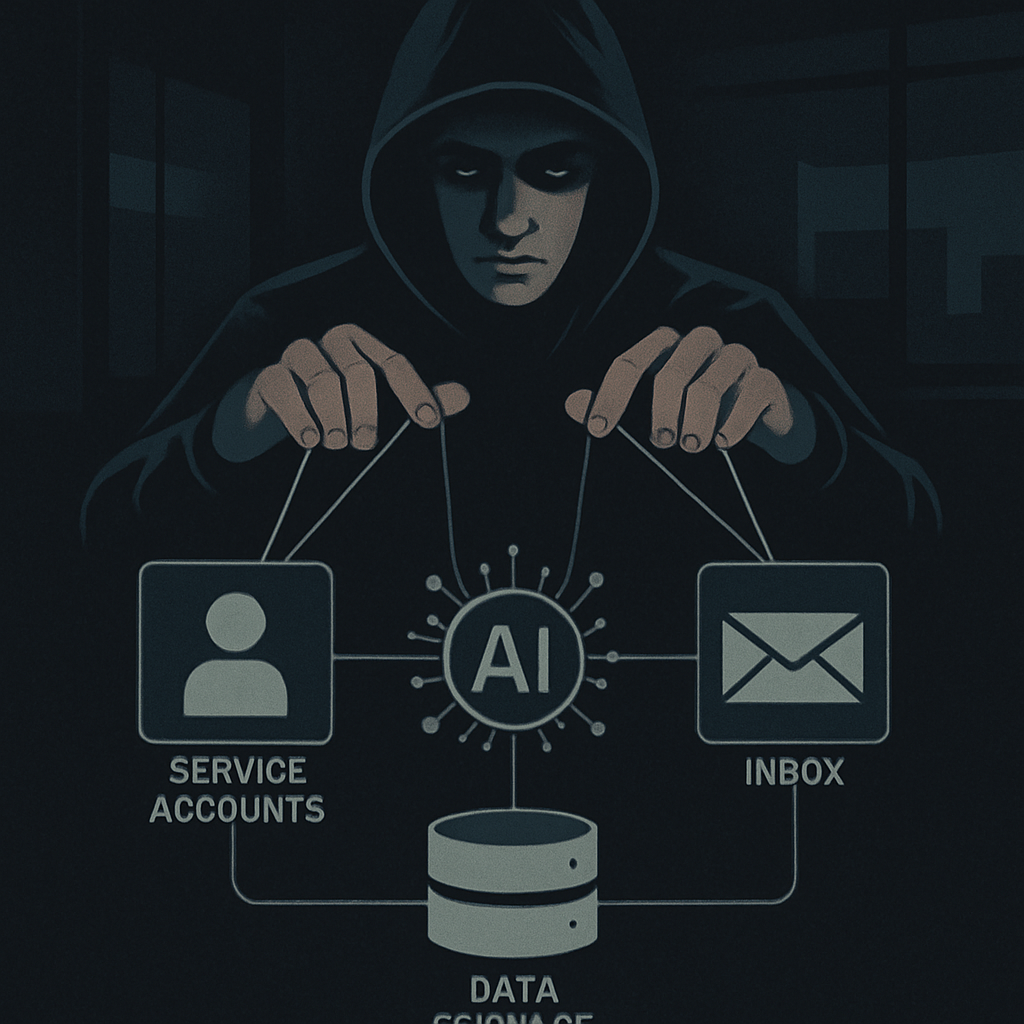
Many enterprise AI workflows are triggered via public channels—support inboxes, shared forms, web chats, GitHub issues. An attacker submits a seemingly harmless request, like asking for sales numbers, which a workflow then dutifully processes using internal credentials or service accounts. Since the attacker isn’t tampering with the language model’s behavior (no prompt injection, no jailbreak), traditional defenses often miss it. The model sees a valid request and returns data it shouldn’t.
The exploit arises because those workflows often have long-standing, elevated access—admin API keys, privileged integrations, or overarching service accounts—while there’s little or no verification that the requester has the right to receive the data. Security controls typically focus on preventing malicious language-model prompts, not on authorizing the person behind the prompt.
Strategies to Mitigate the Risk
To counter this threat, companies should map all AI workflows and pinpoint external or untrusted sources of input. The identity of the requester must travel through every stage of the workflow. That means replacing static, powerful credentials with scoped, short-lived tokens tagged with particular permissions. At every step where sensitive information is accessed—especially before any data leaves internal systems—authorization checks are essential.
Another key change: treat all AI outputs as untrusted. Even if the model is part of an internal workflow, its outputs should never trigger actions automatically without passing through additional access controls. Especially dangerous are systems that fetch private emails, financial data, or other proprietary information and then automatically respond or share it with external requesters.
Separating the logic that retrieves data from the logic that sends responses to external parties can help reduce accidental leaks. For example, workflows that gather internal metrics or email content should not also be responsible for responding directly to customer-facing channels—unless absolutely necessary and with enforced checks every time.
This exploit differs from more familiar AI attacks. In prompt injection attacks, adversaries seek to trick a model’s instructions. With Workflow Identity Hijacking, the attacker’s request may seem legitimate by language-model standards—what’s exploited is not the model’s behavior but the path the request takes and the permissions granted beyond it.
What this means: security teams reviewing AI governance and risk must consider identity propagation and privileges at each workflow stage, not just the model endpoint. These threats are especially potent now as AI is deeply embedded in customer support, operations automation, and email handling.
Organizations building and deploying AI workflows should ask specific questions: who wrote the workflow? who owns the credentials it uses? what sources feed its input? which accounts handle its output? These may seem basic, but they’re often overlooked in favor of focusing on AI model safety, prompt filters, or behavior-based controls.
By redesigning workflow architectures—using identity-aware tokenization, limiting scopes, treating output as potentially harmful until verified—companies gain far better control over AI automation. It’s not enough to secure the model; one must secure the entire chain.
This emerging vulnerability shows AI defense needs to shift focus. Until now, much of AI security zeroed in on the models themselves—prompt engineering, output monitoring, jailbreak prevention. That’s still important, but the boundary between what a human/user is asking and what the workflow is allowed to do matters more than ever. The future of AI security will depend on enforcing identity, privilege, and isolation across every link in the automation chain.