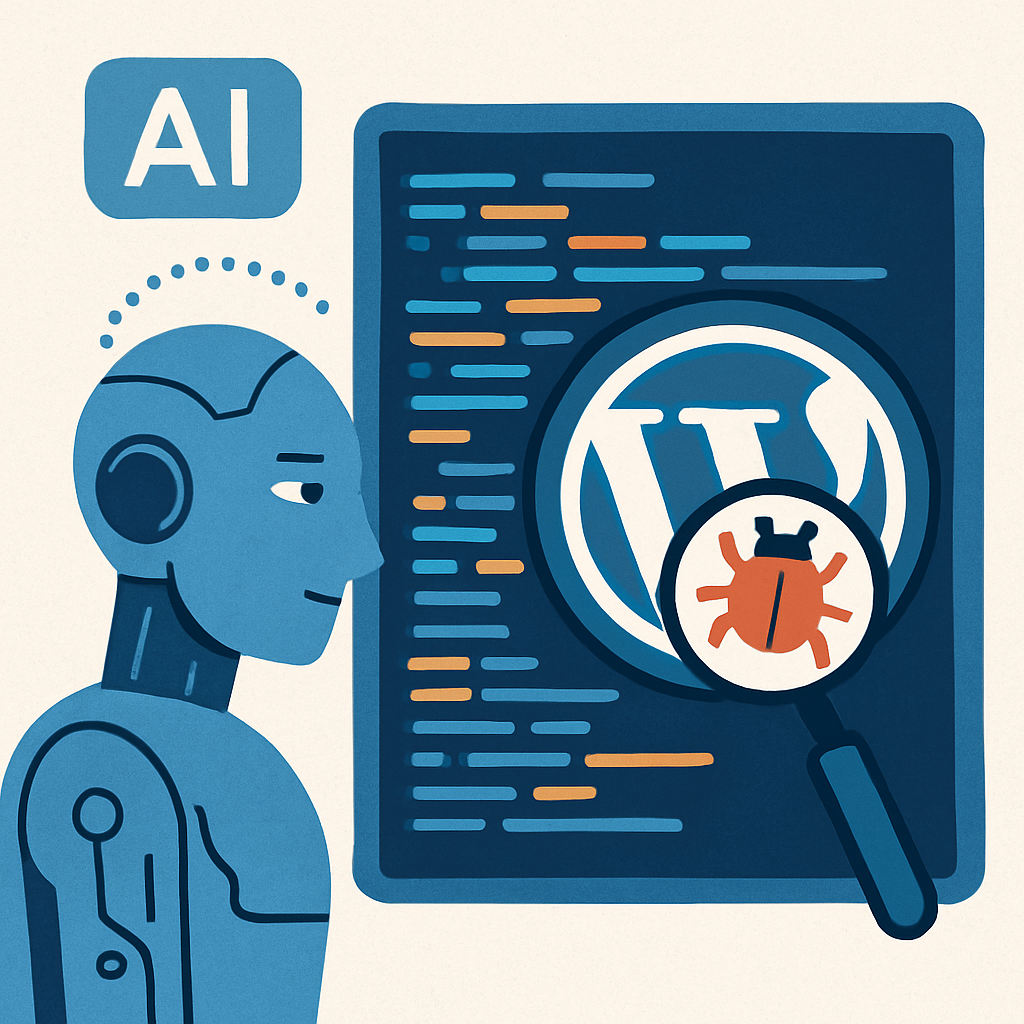
Recent developments in artificial intelligence have demonstrated its potential to revolutionize cybersecurity. A notable instance involves GPT-5.6 Sol Ultra, an advanced AI model, which identified a critical pre-authentication remote code execution (RCE) vulnerability in WordPress. This discovery was achieved with an investment of approximately $25 in AI resources, underscoring the efficiency and cost-effectiveness of AI in vulnerability research.
Researchers at Searchlight Cyber employed GPT-5.6 Sol Ultra to conduct an in-depth audit of the WordPress source code. Utilizing four AI agents over a span of at least six hours, the model successfully uncovered a complete exploit chain. This chain enables an unauthenticated attacker to escalate privileges to an administrator level and execute arbitrary code on susceptible WordPress sites.
The potential impact of this vulnerability is substantial. Given WordPress’s extensive use—powering over 500 million websites globally—a default-configuration RCE poses a significant threat. The researchers estimated that the damage from exploiting this vulnerability could reach up to $500,000, reflecting the high value typically associated with zero-click or pre-authentication RCE vulnerabilities in widely used software.
Technical Breakdown of the WordPress RCE Vulnerability
The attack vector originates from WordPress’s Batch API, accessible via the /wp-json/batch/v1 endpoint. This API processes multiple REST requests within a single HTTP request. A misalignment between validation results and matched REST handlers, due to an error-handling condition, allows an attacker to validate one request while executing it against a different endpoint handler. This desynchronization enables bypassing the parameter sanitization safeguards employed by REST API routes.
Further analysis revealed an issue within the posts endpoint. Specifically, an author_exclude value could be sent to a database query without proper escaping when provided as a scalar rather than the expected integer array. To circumvent the Batch API’s restriction on GET requests, the AI model devised a nested batch request, effectively bypassing method validation and leading to a pre-authentication SQL injection vulnerability. This vulnerability allows reading data from the WordPress database.
Escalating from SQL injection to RCE involved a series of sophisticated steps. The model exploited WordPress’s in-memory post cache and the oEmbed caching mechanism to create controlled database-backed post records. These entries were then converted into special customize_changeset objects. Changesets in WordPress can apply configuration changes under the authority of a specified user. By forging a changeset associated with the administrator user ID 111, the exploit temporarily caused WordPress to assume administrator privileges during request processing.
The final phase of the attack leveraged WordPress hooks and a crafted post hierarchy cycle. A forged post caused WordPress to invoke the parse_request hook, replaying the malicious batch request while still holding temporary administrator privileges. During this second pass, the attacker could create a new administrator account and install a malicious plugin to gain code execution.
Searchlight Cyber delayed public reporting to provide defenders with time to address the issue. Independent researchers, including Calif and Hacktron, successfully reproduced the full exploit chain before the proof-of-concept code was published on GitHub.
This case exemplifies the dual-edged nature of AI in cybersecurity. While AI models like GPT-5.6 Sol Ultra can significantly enhance vulnerability detection and remediation efforts, they also highlight the need for robust security measures to prevent potential exploitation. As AI continues to evolve, its role in both offensive and defensive cybersecurity strategies will undoubtedly expand, necessitating continuous vigilance and adaptation from security professionals.