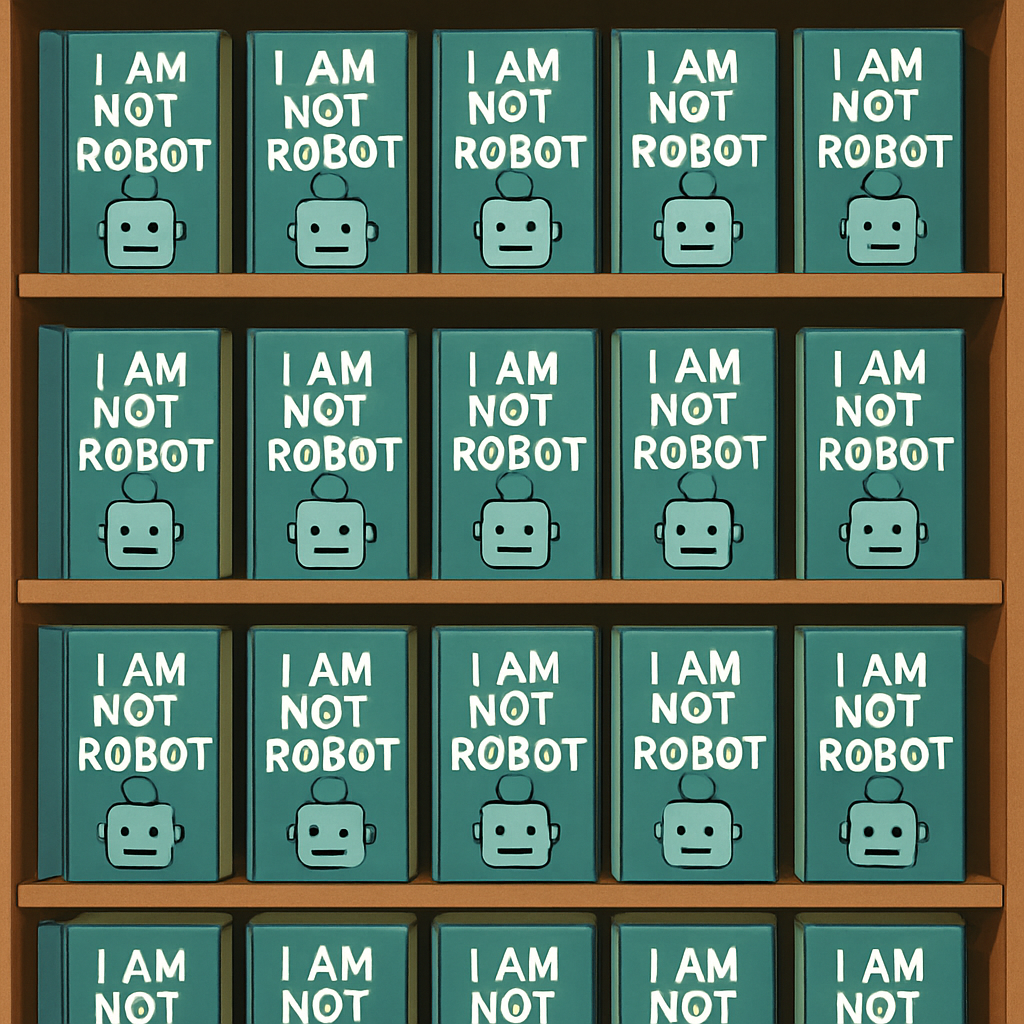
Joanna Stern, a prominent technology journalist, has recently encountered a troubling issue on Apple Books: the proliferation of AI-generated copies of her latest work, “I Am Not a Robot: My Year Using AI to Do (Almost) Everything.” These unauthorized versions mimic her book’s cover and content, with some even published under slight misspellings of her name.
This phenomenon isn’t isolated. Two years prior, journalist Kara Swisher faced a similar situation when AI-generated knockoffs of her book, “Burn Book: A Tech Love Story,” inundated Amazon’s platform. These imitations replicated both the cover and content, leading to significant confusion among readers. Swisher’s intervention prompted Amazon to address the issue, but many authors without her influence continued to struggle with such infringements.
In Stern’s case, after discovering over ten AI-generated copies of her book on Apple Books, she reported the issue to Apple. The company responded by removing the counterfeit titles. However, the problem persists, with new versions continually appearing. Apple has stated that its policies strictly prohibit content that misleads customers or infringes on copyright, emphasizing transparency and disclosure rules around AI-generated content on its platform.
The rise of AI-generated content has introduced new challenges in digital publishing. While AI offers innovative possibilities, it also facilitates the rapid creation of counterfeit works, undermining authors’ rights and misleading consumers. Platforms like Apple Books and Amazon must enhance their detection and enforcement mechanisms to protect original content and maintain trust among users.
This ongoing issue underscores the need for robust policies and technological solutions to combat the misuse of AI in content creation. As AI tools become more sophisticated, the potential for abuse grows, making it imperative for digital platforms to stay ahead in safeguarding intellectual property.