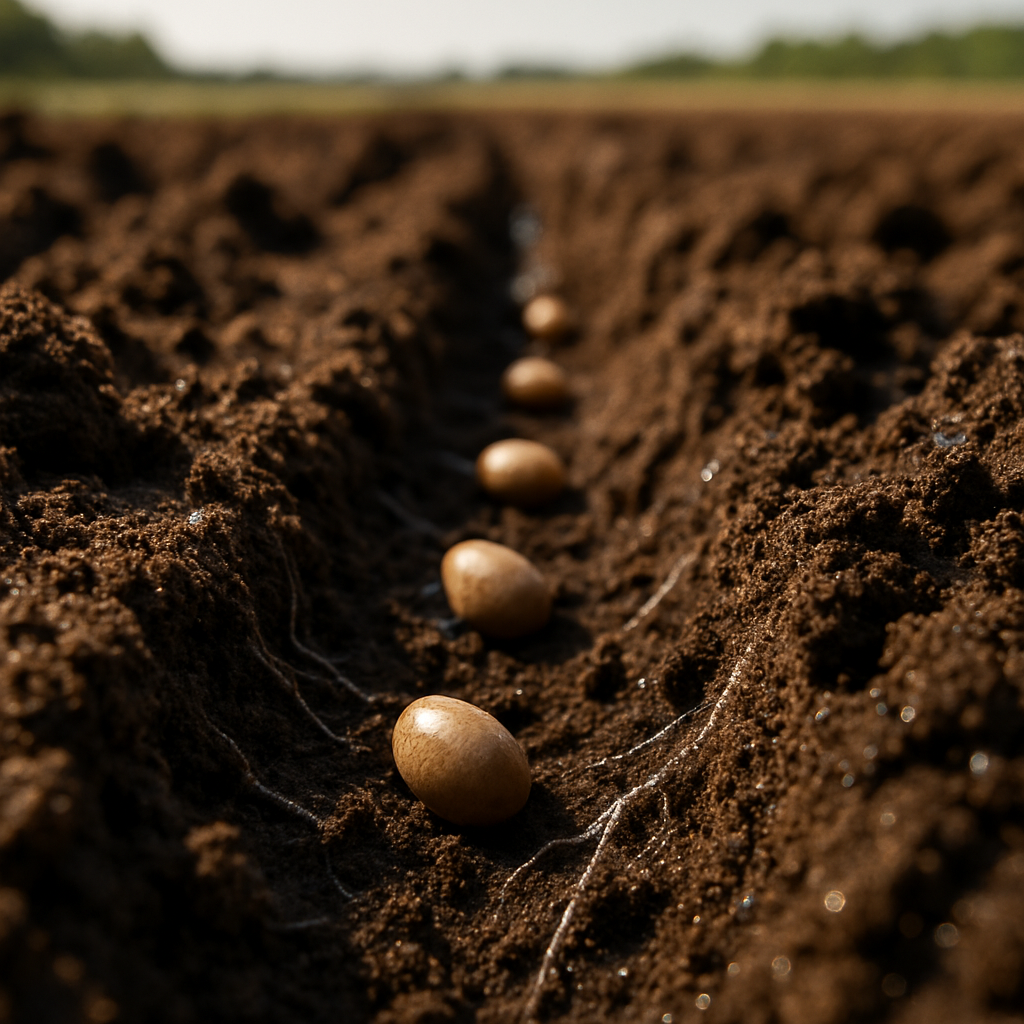
Farmers battle soil compaction regularly — fields packed tight after repeated plowing or heavy machinery can lose between 20% and 60% of potential yield. Traditional tilling helps, but it’s labor-intensive, costly, and damages soil structure over time. A new startup, Muju Earth, is aiming to break that cycle with an alternative called the Aeropod: a seed-sized soil aeration solution that works without robotics or mechanical tilling.
The Aeropod is about the size of a fingernail and is designed to be planted alongside crop seeds using the same seeding equipment — without needing to till beforehand. Once in the ground, its structure responds to heat, moisture, and pressure: it splits open and forms channels that allow air, water, and roots to move more freely. The company claims this improves soil health and acidity, while reducing tilling costs by more than half.
Trials, costs & early markets
Lab tests have already been conducted, and Muju Earth is launching paid field trials in the UK this fall. Nine farmers are participating now, and over thirty are on a waitlist. The startup’s first commercial target is onion growers, who are especially vulnerable to losses from compacted soil.
In cost comparisons, plowing (including labor, fuel, and machine wear) generally runs about £250–£400 per hectare. Aeropods, by contrast, are projected to achieve similar effects for roughly £100 per hectare. Muju Earth’s founding idea came out of research at Imperial College London, where co-founders Ifeoluwa Afolayan and Wangyang Hu focused on making aeration as simple as sowing a seed — a model intended to be user-friendly and equitable for farmers at any scale.
Market fit & adoption
Beyond growers, Muju Earth is drawing interest from firms producing biologic amendments — microbial or living additives meant to improve soil. These work best in aerated soil, and pairing with Aeropods could boost their effectiveness.
So far, the demand is coming from farmers themselves. Much of the early traction has been organic — inbound interest rather than traditional marketing. Farmers reportedly grasp the potential immediately: improved aeration, health benefits for soil, and tangible cost savings.
The startup is one of 200 companies in the upcoming Startup Battlefield competition at TechCrunch Disrupt in San Francisco this October. Twenty finalists will present on the main stage, with Muju Earth among them.
What it signifies: The Aeropod reflects a broader push in agriculture toward low-impact, high-efficiency tech that heals rather than harms. Soil compaction is a hidden drag on sustainability and yield, and solutions that reduce tillage without robotics offer huge upside. Key to watch: real-world performance in mixed soil types, how the price holds up over scale, and whether farmers outside niche crops like onions find it compelling. If it delivers, this could shift how we think about soil health across the board.