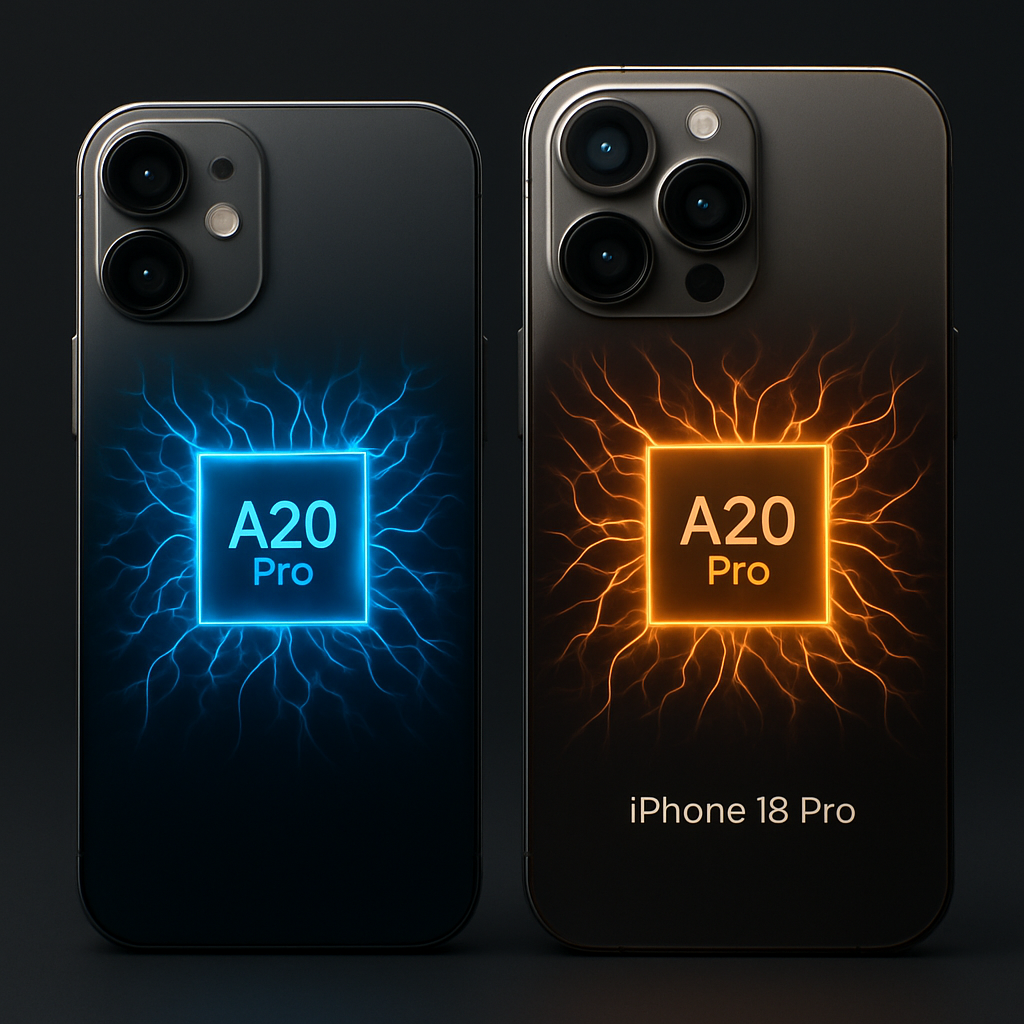
Apple’s next leap in Siri AI might finally arrive thanks to its powerful A20 Pro chip, introduced with the iPhone 18 Pro and the foldable iPhone Duo. While Siri AI launched in the iOS 27 beta cycle back in June, it remains in beta across Apple’s hardware line-up—slated for public release before the end of September. Yet, many users are finding its performance promising but not quite game-changing. The A20 Pro could close that gap.
What A20 Pro Brings to the Table
The A20 Pro isn’t just another speed upgrade. It features six CPU cores, seven GPU cores, and two Neural Engines—doubling the AI compute compared to the A19 Pro. This change gives it headroom for intensive tasks, especially when it comes to natural language processing and other AI tasks running locally on the device rather than offloading to cloud servers.
One of the biggest improvements comes in memory bandwidth: A20 Pro offers roughly 50% higher memory bandwidth than the A19 Pro. This is major, because local AI workloads—especially language models—often hit bottlenecks when memory access lags chip compute. With higher bandwidth, those AI tasks can flow smoother. And with two Neural Engines instead of one, the chip can handle machine learning tasks about twice as fast as the previous generation.
Siri AI Today: Progress & Pain Points
In real-world testing using iOS 27 betas on devices powered by the A19 Pro, Siri AI delivers a noticeable upgrade over classic Siri. It takes context from what’s on screen, interacts with apps more deeply, and its responses are more expressive. But despite the improvements, users report it still stumbles on tasks that feel basic—some expected to work, others that earlier assistants might have handled with ease.
Because Siri AI is still in beta and under continuous iteration, it’s unclear how much more polish Apple can realistically add in coming weeks. But those testing it believe the A20 Pro’s enhanced on-device processing may tip the balance toward consistently strong performance—lower latency, faster responses, more capable interactions without depending as heavily on server processing.
Why On-Device AI Matters
Apple has emphasized that delivering more AI work locally promises benefits in speed, privacy, and reliability. Features like Siri’s more lifelike voices already rely on models that run on the device. As companies push toward ambient, context-aware assistants that can work even without perfect connectivity, chips like the A20 Pro are becoming more than just incremental upgrades—they’re foundational infrastructure.
The A20 Pro might not immediately make Siri AI flawless, but it raises the floor of what’s possible. In the near term, users might notice snappier dictation, quicker responses, more fluid conversations, and fewer separations between what Siri can and can’t do. In the longer run, phones with this kind of hardware may unlock functionalities Apple hasn’t yet shipped—but has been quietly building toward.