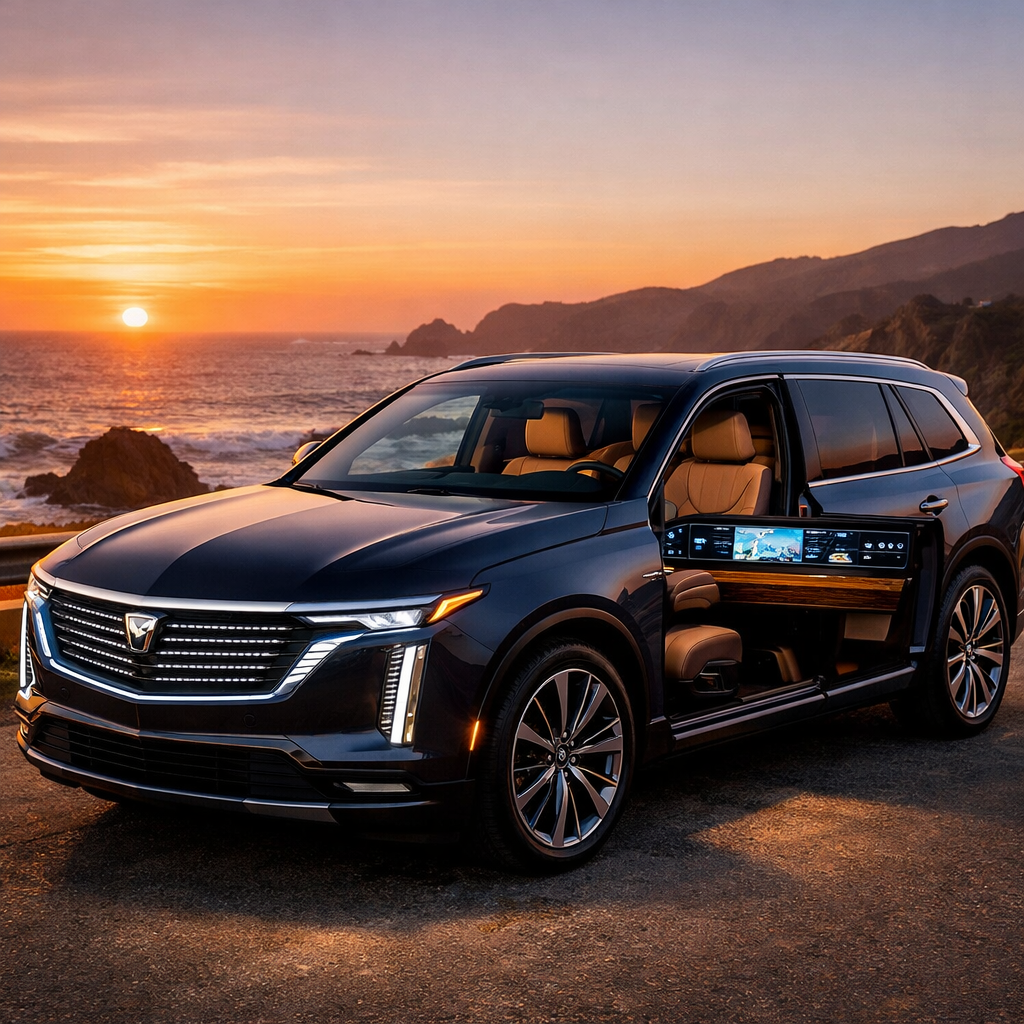
The 2027 Cadillac Vistiq is turning heads — and not just with its imposing three-row presence. From behind the leather-lined steering wheel to the massive 33-inch display dominating the dashboard, this EV blends upscale design and executive-level comfort in a way that makes the buyer feel like they’ve splurged, even when they haven’t blown past six figures.
Premium Finish, Powerful First Impressions
It feels more luxurious than your average electric SUV. Rich wood trim, fine-grain leather, and even an adaptive seat and steering wheel heater that scales with outside temperature show Cadillac hasn’t sacrificed comfort for function. The audio, a top-tier AKG setup—assuming you stream high-quality content—pushes the Vistiq further into luxury territory. And those front seats? Loaded with massage functions, especially a “wave” setting that practically kneads out stresses.
Behind the wheel, it excels. Four-wheel steering and a long wheelbase help it navigate tight parking spots with grace. While it’s not going to rival a sports SUV, the ride is composed. The chassis handles city roads, winding stretches, and freeway cruising better than you would expect from a giant three-row luxury EV.
Tech Strengths, Weaknesses, and Real-world Trade-offs
Cadillac’s Super Cruise driver-assist system performs well on well-mapped roads, though it’s not bulletproof. Inconsistent internet connectivity can interrupt its operation—something I experienced during a week in New York when the car had no online access due to setup issues. The result? No navigation, no maps, and no streaming audio. Plus Super Cruise was disabled for much of my commute out of the city.
Infotainment relies on Android Automotive, which is responsive, though some quirks remain—like the voice assistant speaking different dialects depending on whether it’s navigating or answering a query. Still, once connected, it’s polished and functional.
Performance, Charging, and What You Get for the Price
The Vistiq uses GM’s Ultium platform, now five years old. That means good engineering but some aging, especially in charging. Its 102-kWh battery, with a standard NACS port, hit a max of about 165 kW at a Tesla Supercharger (from ~18% state of charge) after preconditioning. That boosts it to 80% charge in about 36 minutes—respectable, but behind what newer EVs with ultra-high voltage systems are achieving. With mixed city-highway driving in temperatures between 40-60°F, energy efficiency landed at 2.9 miles per kWh, a strong result for a vehicle this size.
All told, the price is compelling. The Vistiq tested came in at $83,256, including options like second-row captain’s chairs and an onboard charger. Compared to cheaper EVs like the Kia EV9 GT-Line (about $74,580 with destination charge), it offers far superior luxury; versus high-end rivals like the Escalade IQ, it feels like a bargain. But that edge might be slipping.
Competitive Pressure Ahead
GM has reportedly paused platform updates as it rethinks its EV strategy. Meanwhile, competitors are refining more advanced architectures. For instance, some new EVs backed by ultra-high voltage electrical systems now achieve charging speeds that far outpace what Cadillac can deliver. Other automakers are also catching up in range, efficiency, and charging.
For now, Cadillac has created an EV that punches above its price class. It offers an upscale driving experience, impressive tech, and respectable performance. But in the fast-moving EV sector even a luxury model like this can get outpaced—if price stays steady while rivals sprint ahead.
This Vistiq makes a strong case that you can get close to flagship luxury without flagship prices. But with GM slowing platform evolution, and rivals gaining ground on charging speed and efficiency, what feels like a steal today could feel ordinary tomorrow. If you’re considering one, acting now may lock in the best value.