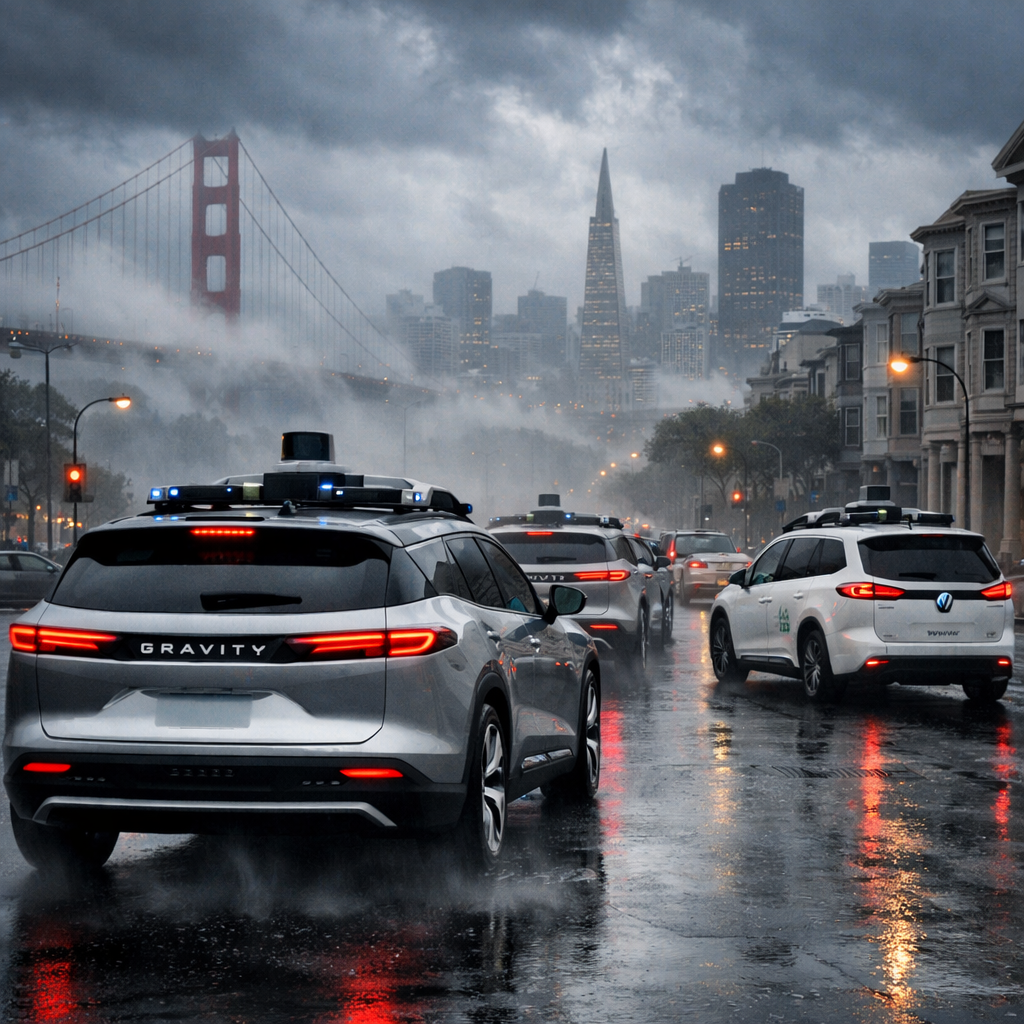
Uber and Nuro have launched tests of driverless Lucid Gravity SUVs on San Francisco’s public roads, moving into territory long dominated by Waymo. The initial fleet will comprise just a few dozen vehicles, but the goal is scaling to hundreds as commercial deployment rolls out next year.
More Robots, More Risk
This expansion adds fresh visibility to San Francisco’s already crowded autonomous vehicle scene. The city, a pioneer in AV deployment, has seen extensive testing by Waymo, Cruise, and others—making this move by Uber and Nuro a significant escalation. The companies’ AVs must navigate not just traffic, but public sentiment and regulatory sensitivities, especially as operational issues arise.
For Waymo, this influx comes at a delicate moment. The company recently issued a software recall impacting over 4,400 vehicles. At the same time, it has paused its robotaxi service in San Francisco due to anticipated storms and flooding. These events highlight technical, logistical, and climate-related challenges for companies operating fully autonomous fleets in dense urban settings.
What’s Driving the Shift
Uber is also upping its robotics play beyond SF: in Las Vegas, its ride-hailing app now includes services from Zoox and, soon, Motional. These developments align with broader strategic bets on autonomous transportation by multiple stakeholders in the same markets.
Nuro’s involvement adds to the competitive pressure. While Waymo has long focused on robotaxi services, Uber and Nuro’s tests—especially with upscale electric SUVs like the Lucid Gravity—could redefine expectations for comfort, scale, and route flexibility.
The broader autonomous vehicle industry has always balanced technical innovation with public trust, regulatory approval, and operational stability. San Francisco is a laboratory for all of that—and signs suggest the next test won’t be primarily about technology—though that’s still hard—it’ll be about people, policy, and climate.
Analytical angle: Uber and Nuro’s incursion into Waymo’s established territory underscores the accelerating race in urban autonomy. Success won’t depend solely on hardware or software—it will hinge on how each company handles real-world tests, adapts to unforeseen disruptions (like weather), wins over regulation and public trust, and scales operations. What to watch: how San Francisco’s residents react, how storms or other infrastructure stresses are handled, and whether Waymo responds with tighter service architecture or new safety innovations.