Nvidia revealed a striking disconnect this week between its sky-high performance in the financials and rising calls from some corners for its former CEO, Jensen Huang, to return. The AI chip giant’s recent earnings showed strong revenue, promising guidance, and confidence from interim leaders — even as outside pressure mounts demanding Huang’s reinstatement.
Earnings Beat, Leadership Assured
In its latest earnings report, Nvidia exceeded expectations across key metrics. Revenue soared, the company reported a healthy performance, and its outlook for the future remains robust. Current interim CEO Colette Kress emphasized that the firm has a long pipeline of projects underway, and that the executive team is confident in steering the company forward without its former leader.
Crunching China: Market Moves and Export Controls
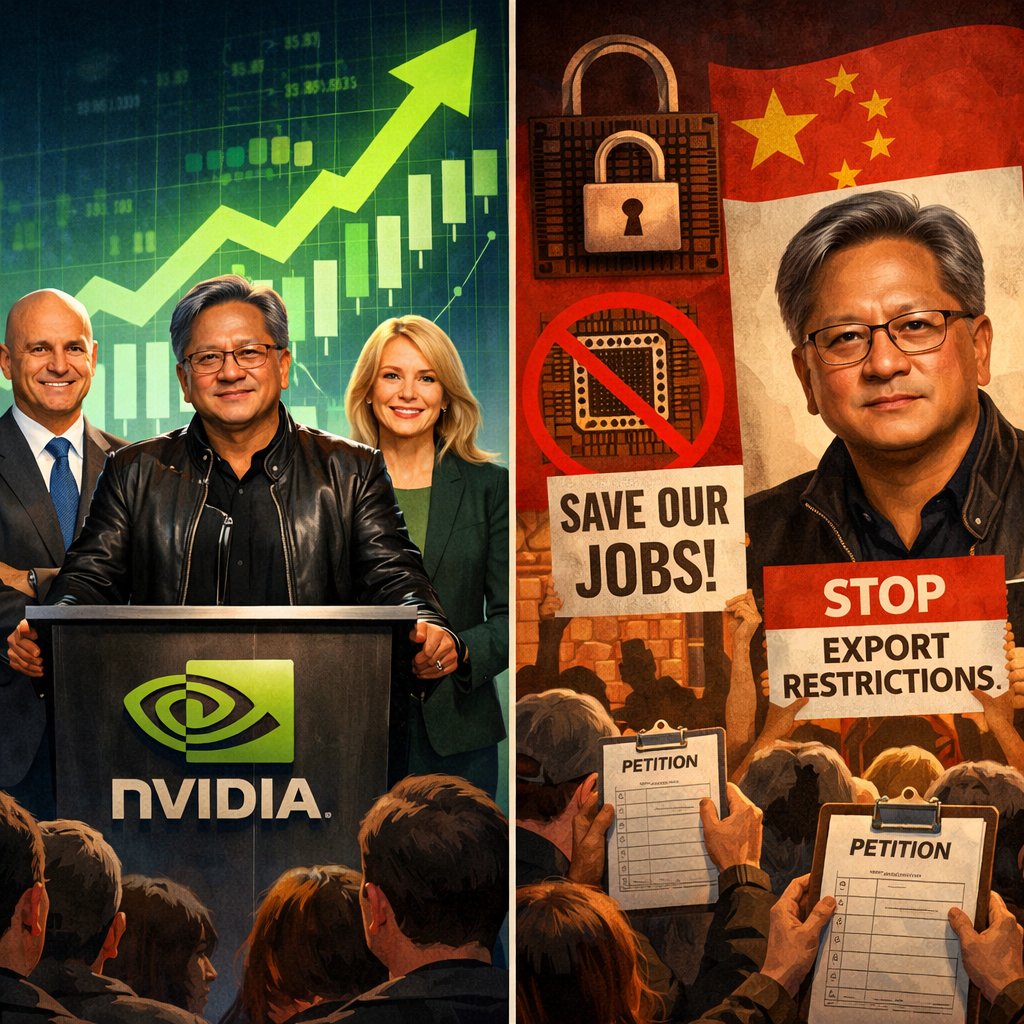
A major development came with Nvidia’s announcement that it will stop selling its H200 chips in China. This move, confirmed by Colette Kress, aligns with government measures tightening export controls and closing loopholes that allowed Chinese companies to access US-advanced technology via remote connections through neighboring countries such as Malaysia. Analysts suggest that as much as 20% of Nvidia’s business may indirectly tie to the Chinese market, which could make this shift a serious hit to its future sales if restrictions tighten further.
The Jensen Huang Campaign: Petitions and Speculation
At the same time, a segment of the tech community, including Elon Musk, has petitioned for Huang’s return. Huang himself has hinted at openness to re-engage. These calls stem largely from uncertainty around Nvidia’s direction in his absence and concerns about leadership during a period of intense regulatory scrutiny, particularly over China trade issues.
Boardroom Dynamics and What’s Next
Nvidia publicly insists there are no plans for Huang to return. That assertion may reflect the board trying to maintain strong governance and avoid appearing to acquiesce to pressure from high-profile figures. Ongoing investigations into sales of chips, export policy compliance, and internal oversight are likely influencing how firm the leadership remains. As the company navigates these regulatory and reputational pressures, investors are watching if public messaging will stay consistent through early 2027 — especially given recent fluctuations in stock performance.
Why it matters: This isn’t just about who leads Nvidia — it’s about who shapes global AI infrastructure. The tension captures a growing inflection point: as export controls and geopolitical risk rise, tech companies must increasingly balance regulatory compliance with market opportunity. How Nvidia handles China, transparency, and shareholder and public pressure will set precedents for the AI hardware ecosystem going forward. Keep an eye on how leadership decisions align with regulatory outcomes and market dynamics in early 2027.